Young Musicians Are Changemakers!

The culminating project in this entire Antarctic water and music themed semester is something the students I teach got REALLY excited about. I wasn’t sure how they would react – I feared groans and eye rolls, complaining and apathy. Instead I got students choosing to work outside of music class (despite my telling the students they would have class time to work) and a buzz throughout school that came back to me in discussions with my colleagues and the parents of the students!

I wanted students to combine the knowledge we gained through studying how music can help create change (both through sonification of scientific data and by studying celebrity musicians who have used music as a platform to create change and raise awareness).

To synthesize their learning, students created their own music, websites, and projects centered around causes they care deeply about – each one connected to the theme of water to match our water theme for the year. Whether it’s access to clean water, reducing pollution, or protecting aquatic life, their causes were chosen because they felt a personal connection and a desire to help. I gave the students the opportunity to choose their own community service project to design, encouraging them to think creatively to solve the problems they connected with.

We were guided by the United Nations Sustainable Development Goals and the Catholic Works of Mercy, helping students think both globally and spiritually about what it means to care for our world and for one another.

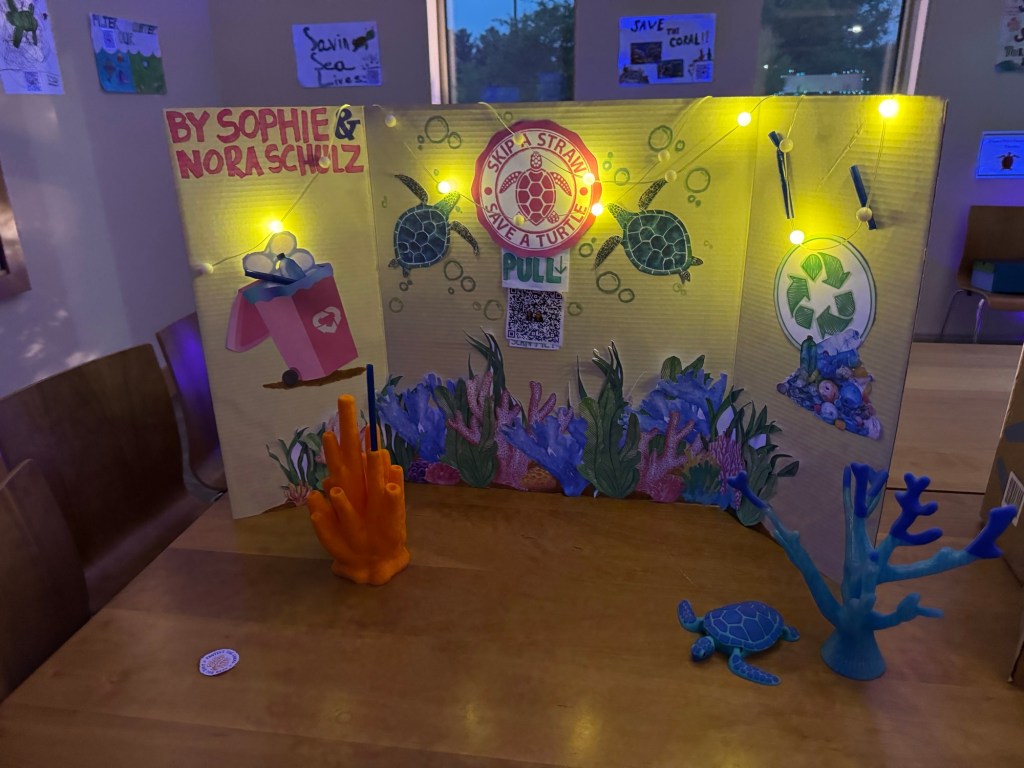
We then created a “Dreams Room,” set up in a room located in our church and setup for viewing during our all-school spring concert. Audience members were able to walk through and see our students’ hopes and dreams for a better world displayed—and ways our audience could help bring those dreams to life. Some students suggested supporting organizations through donations, while others encouraged simple but powerful actions like changing habits at home, or joining a local cleanup. Audience members scanned the QR code on each poster or display to visit the students’ website. From there, they found the students’ research, why the students felt that was an important problem to help solve, what they asked people to do to help, and hear their songs. 
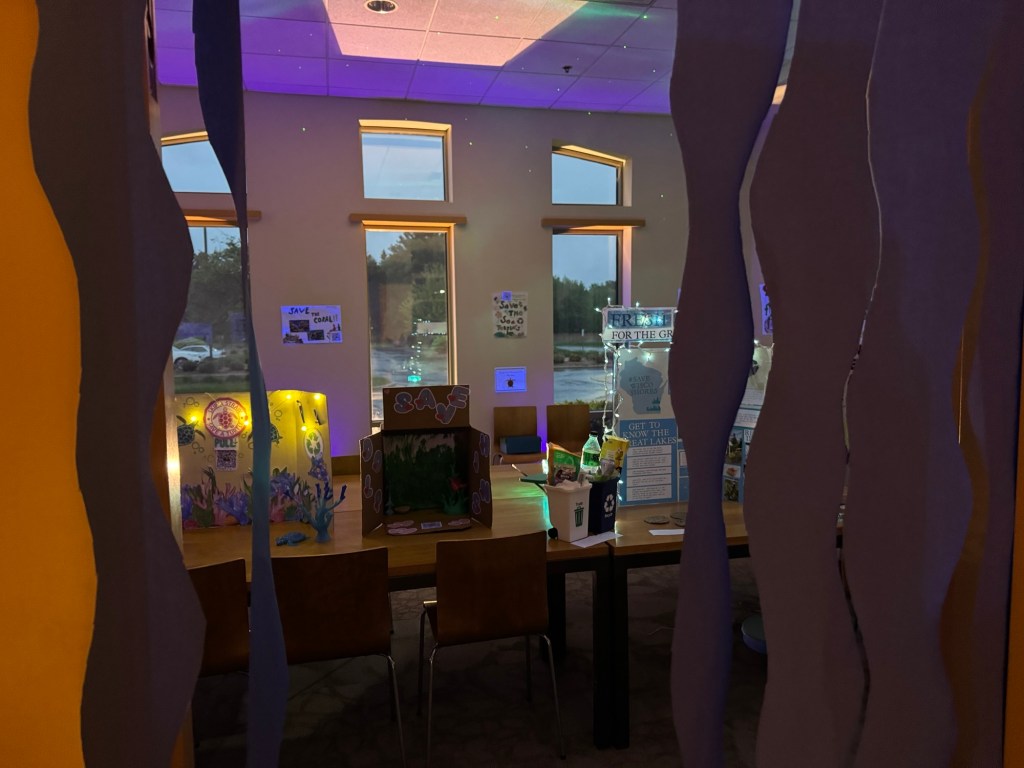
Entering the Dreams Room through the Ocean Wave entrance!
Most students did posters to display their QR codes, so we made sure to make use of our mood lighting to make the room even more fun!

This experience was a big hit – the room was packed after our spring concert. Some students even went above and beyond – creating bracelets or coasters from recycled materials to sell in order to raise additional money for their organization, while also helping solve the trash in our waterways problems. One group made brownie bites and sold those for additional money towards their organization. Another group formed a Bark River Cleanup club and set monthly meetings. They will alternate buying pizza for all who come to the meetings.

Coasters and 3D printed recycling bins bring this local waterway project to life
I learned so much from this project – it was fun to have the students be the teachers
Another beautiful display from our students!

After surveying the students at the conclusion of the project’s display period, students loved this project. Students talked about how exciting it was to find something they cared about to work towards. Many of them mentioned how they were really skeptical about how they could possibly make a difference in the world through a music class project, but were so excited to see how much impact they had. Every single student said they couldn’t wait to take action on an issue they found important again. I really don’t know who is more inspired by this project – the students, the adults who visited the Dreams Room, or me! I can’t wait to modify this and try a variation of it next year!
Traveling to Senegal? Here’s what you should know!

Found yourself going to Senegal for a Fulbright program? Maybe you are looking for a new adventure and are going to become a tourist to Senegal. Either way, here are the things I packed and wanted to know that will help others as they prepare for a trip to Senegal.

Packing list: 1) Grayl water bottle – I brought this, but we purchased bottled water before we left Dakar in enough of a quantity that I didn’t need this. It was nice to know that I had it in case I used up my water, though. Piece of mind is everything when dealing with water you cannot drink coming out of the sink!

2) Insect repellant – I brought hefty spray with DEET. My travel companions had DEET wipes – these were the best!

3) Pepcid chewables – a friend had recommended taking these daily as a preventative medication. I packed it and used it when I needed it, but did not use it as frequently as she mentioned.

4) Liquid IV – I drank one of these each night before bed to replace the fluids and electrolytes I lost sweating all day. Senegal is hot, even if you are not in the hottest desert areas. Even with the ocean breezes when we were out of the school, I was sweating a lot.

5) Febreze – I bought a travel-size spray bottle of Febreze to spray my clothes. I only packed a week’s worth of clothes, but was there for 2 weeks. As a result, each outfit got worn twice, and there weren’t much for laundry options. Febreze prevented me from being stinky while being sandwiched in the back of a car with my two travel companions.

6) Toilet paper – Bring it. You will need it. They don’t use it. ‘Nuff said.

7) Hand sanitizer – same story. And, do you really ever travel without it?

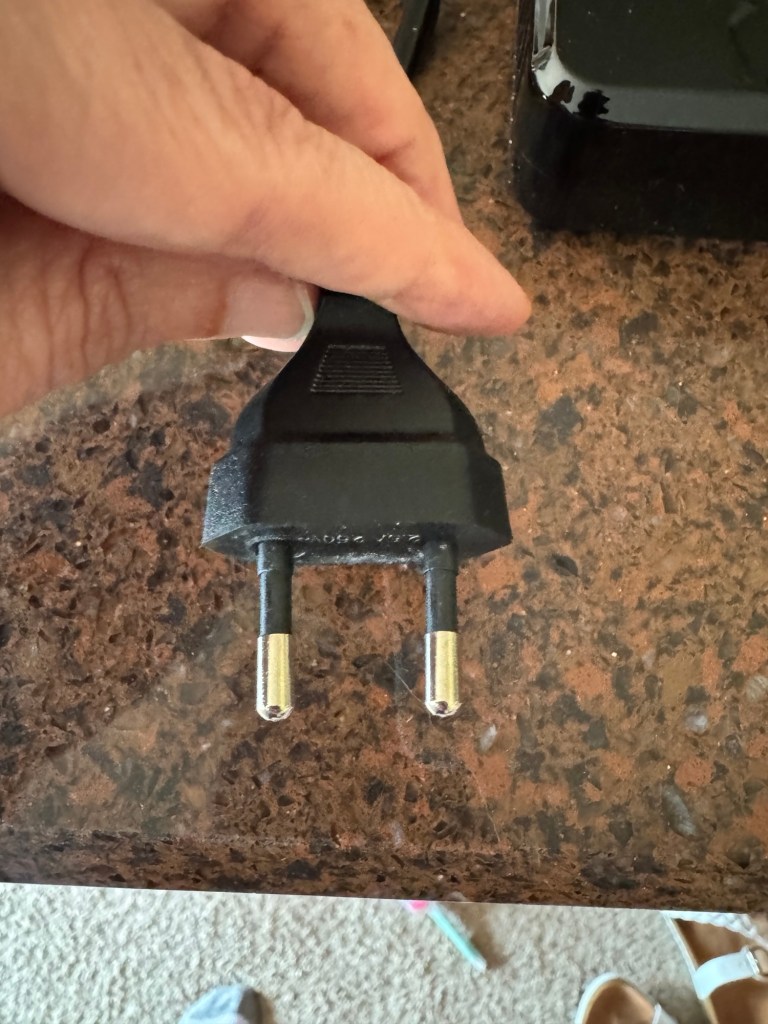
8) Power adapter AND converter – you will need this one:

You need a converter AND adapter
The Internet provided conflicting advice- this is the plug I needed

9) While we’re talking about power – bring a power bank for your phone. You will take so many pictures and videos and your phone will constantly be looking for wifi and cell coverage that the battery will drain fast. You don’t want to be without battery power while you are out exploring. I usually gave my phone an extra zap of charging during lunch just so I could top off the tank, so to speak.

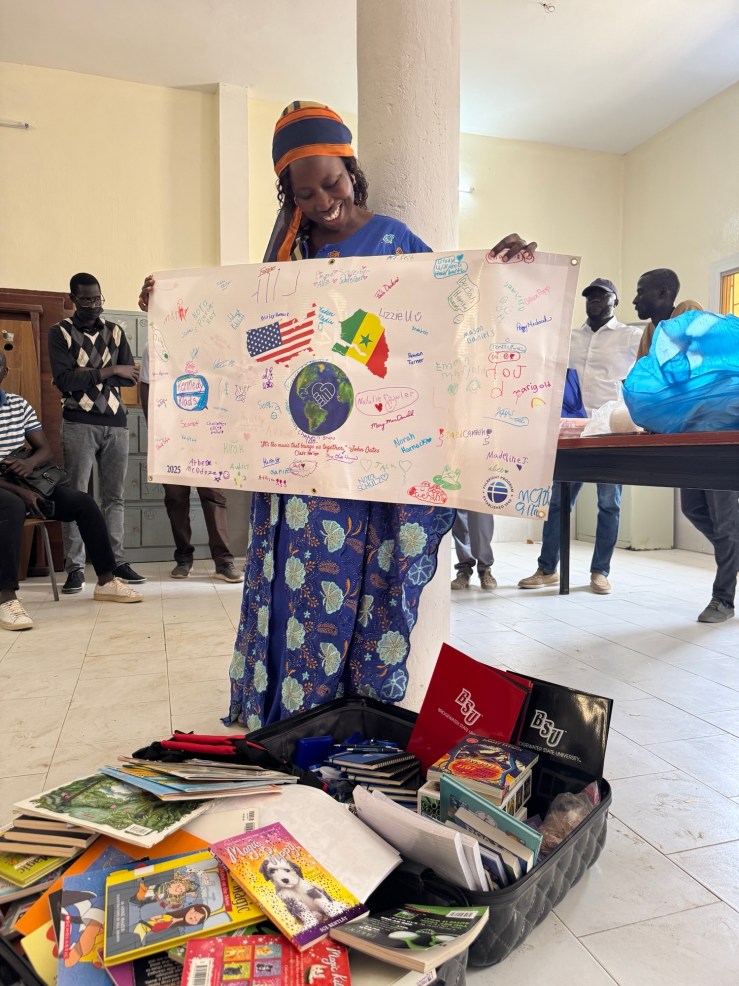
10) If you are traveling for a Fulbright, you will need to bring gifts for your host teacher, the students, etc., as they will be showering you with gifts and you want to be able to reciprocate. For this, all teachers who host Americans have been to the US, so I asked my host teacher what she missed from being in the US. She mentioned certain lotions and chapsticks she can’t get in Senegal, so I brought a bulk thing of Carmex for her (her preferred chapstick). I also collected books, card games, and other English learning aids from my school families to donate to her school. I know one of my travel companions brought chalk as well, as supplies are hard to come by. For the students, I had the students I work with make postcards for the Senegalese students – they talked about their favorite things and what they do in their free time. Sara had her students make postcards and then had a QR code for students to scan with their phones to see pictures of her students. I also had the students from my school design a sticker that represented Senegal and the US together, and had it made through Sticker Mule. I handed those out to everyone, and adults and students alike loved them. The students also really loved trying American candy! We were there for Easter, so I also brought jelly beans to share with my host teacher’s family who had us over for Easter dinner. I did not want to come empty handed! Hopefully this helps get you started with some brainstorming.

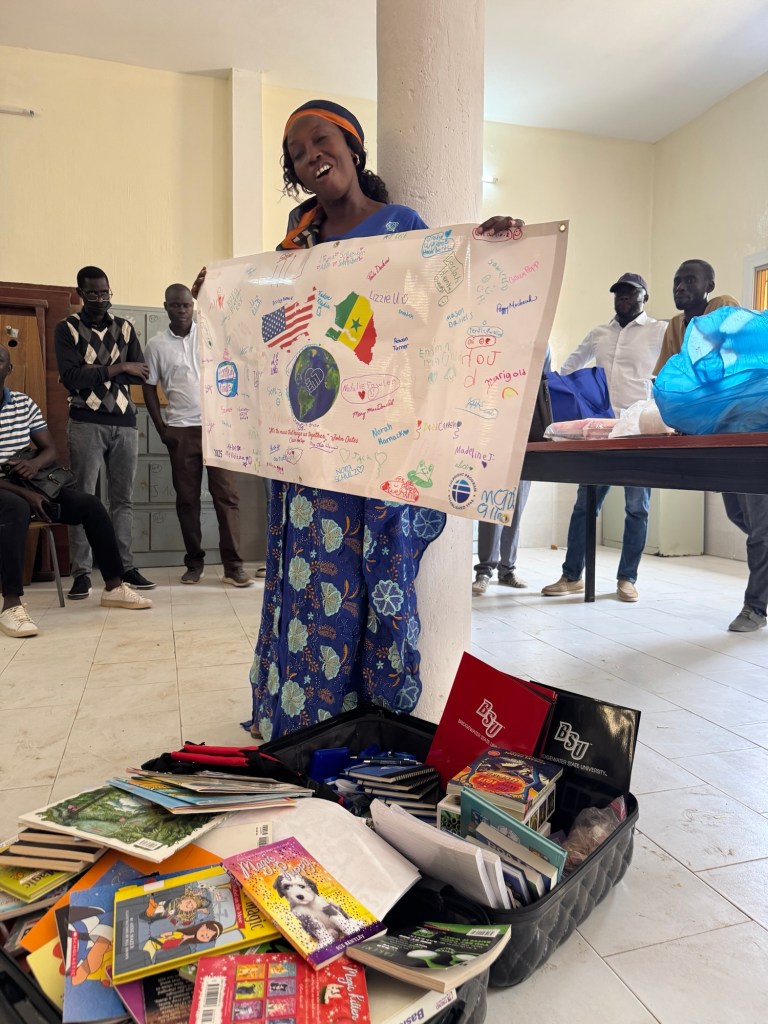
Our donations and a banner that all of the students in my school signed

11) Dramamine – even if you have never been carsick in your life, the roads are very bumpy and rough and the driving is a bit more erratic, so people in my cohort who don’t usually have a problem with this found themselves struggling a bit. Bring some just in case.

12) Snacks – the eating schedule in any foreign country tends to be different than what you are used to. It’s always good to have snacks because you never know when your next meal will be. Even knowing this, we sometimes had to fight off hangry feelings!

13) Your adventurous spirit – travel to any foreign country is a gift. You obviously wouldn’t choose to do so if you weren’t adventurous. However, sometimes when you get tired, you just want to curl up and go with what you are most comfortable with- whether it’s a meal choice, an activity choice, or choosing to just go back to the hotel. Fight these impulses. Traveling somewhere different is tiring, both mentally and physically, but make the most of your experience. Try the weird-looking food; go to one more museum. You won’t regret it when you are back in the comfort of your own home. I promise.

Other tips for travel beyond what to pack- I sprayed all of my clothes with permethrin. I had a friend who happened to have an extra bottle of the stuff, so I sprayed all of the clothes I was bringing. It helped a lot.

I got the following immunizations: from the travel clinic – yellow fever and typhoid. From Walgreens – meningitis, a measles/mumps/rubella booster, hepatitis A, and hepatitis B. The travel clinic recommended that I get the other vaccines from Walgreens due to the fact that the travel clinics do not accept insurance (mainly because insurance doesn’t cover the usual travel immunizations), so the ones insurance does pay for can be received at Walgreens. The travel clinic also gave me a prescription for the anti-malarial pills and a basic antibiotic for any stomach issues I might develop while traveling and eating things that are different than at home.

Be prepared to negotiate – both market purchases and taxis involve haggling. It was not uncommon to offer a seller 1/3 of what he or she was asking as my offer. My host teacher and the country host both said we would end up paying more because our skin was white and they knew we were American. Do not be afraid that you will insult the seller, as this is part of the back-and-forth that takes place. If you watch two Senegalese people haggle, there is a very awesome rhythm to it, and it looks heated. It isn’t, and both parties usually smile at the end.

ATMs – if you plan to use ATMs for local currency, some of our cohort had a hard time finding some. The one in our hotel was broken most of the time. It is hard to exchange money in some areas. There is a currency exchange in the airport, and we had one in our hotel. I changed over all of the money I got from my Fellowship, hoping that I wouldn’t go over that amount. It was totally fine. Many of my colleagues had a hard time, and Senegal is not known for taking credit cards anywhere (including stores, taxis, museums, and restaurants).

GPS is inaccurate in Senegal. Drive times are very wrong and routes your driver will take are often not in the maps. Make sure your itinerary is not tight time-wise, as you will not get it all in.

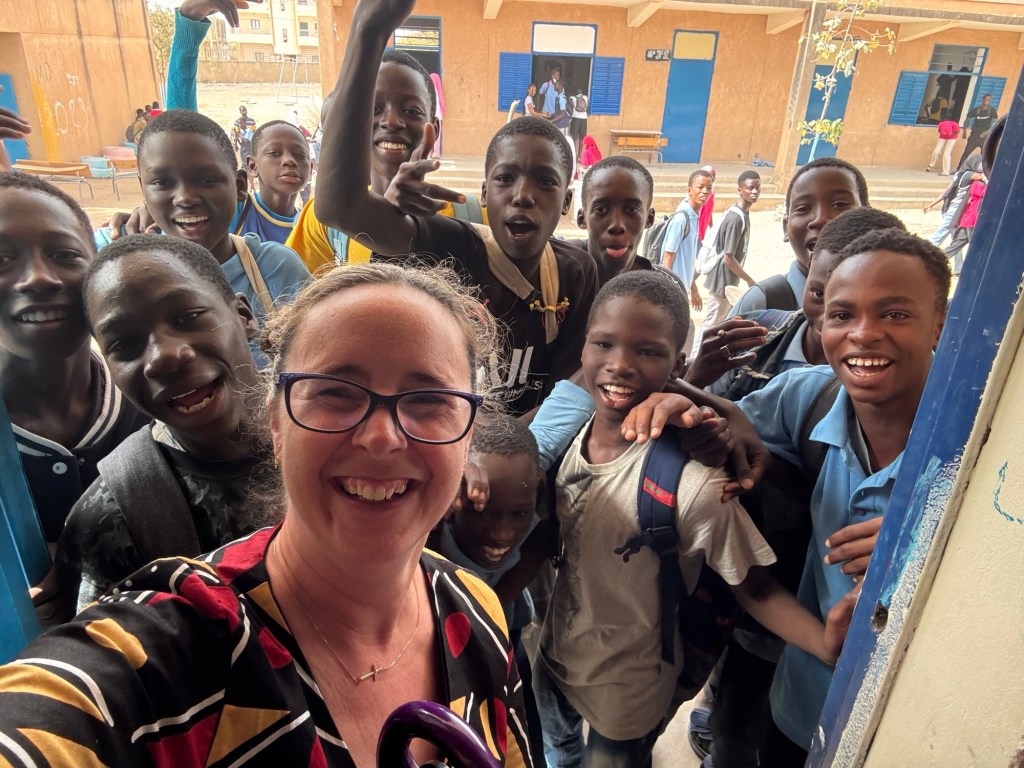
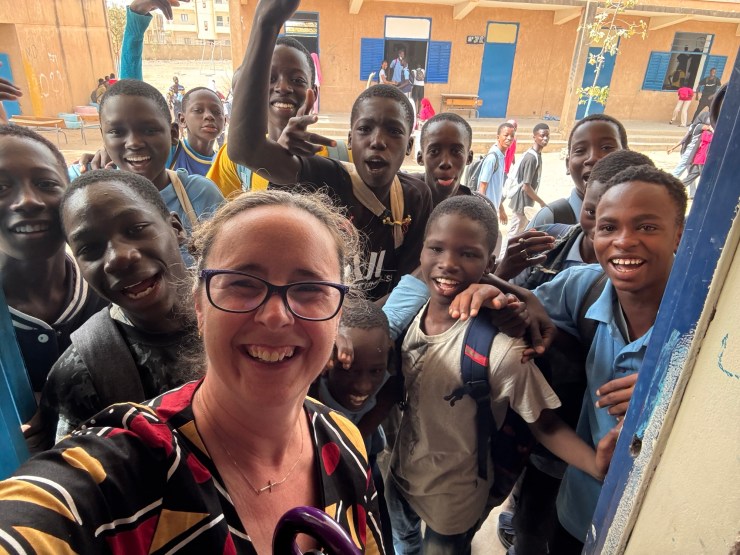
Going to a school? Know that the students will laugh when they see you. It took me a long time (ok, like a few uncomfortable minutes) to realize that they weren’t laughing AT me- they were nervous to meet me. Don’t be afraid to approach students (they’re going to call you over to them anyway) and just talk to them – they will be nervous about their English skills and you will be nervous about your Wolof and French skills, but it will be so rewarding for you both!

Trust your instincts- some of our cohort members had moments that were really rough. There are bad people everywhere in the world- people who will try to take advantage of your desire to help. If it starts feeling wrong, contact your IREX in-country consultant. They will help you, and they can’t do that if you don’t tell them what is going on as it is happening. Don’t wait until you return to Dakar.

If you are a Fulbright fellow- finish your website deliverables before you leave for your trip. Then you can just focus on your guiding question, and enjoy the experience. When you get back home, you will be so busy processing what you just did that you won’t really want to hammer that out, too.

What Teranga really means

Teranga. This word means the world to the Senegalese. Roughly translated to ‘hospitality,’ it is the mantra of the Senegalese people. However, I think teranga means so much more than hospitality, based off of what I saw.

Teranga is greeting people – all people – with a smile. Differences in religion and skin color are respected and encouraged. Muslims and Catholics are married regularly in Senegal, and it is not uncommon for families to have Catholics and Muslims both.

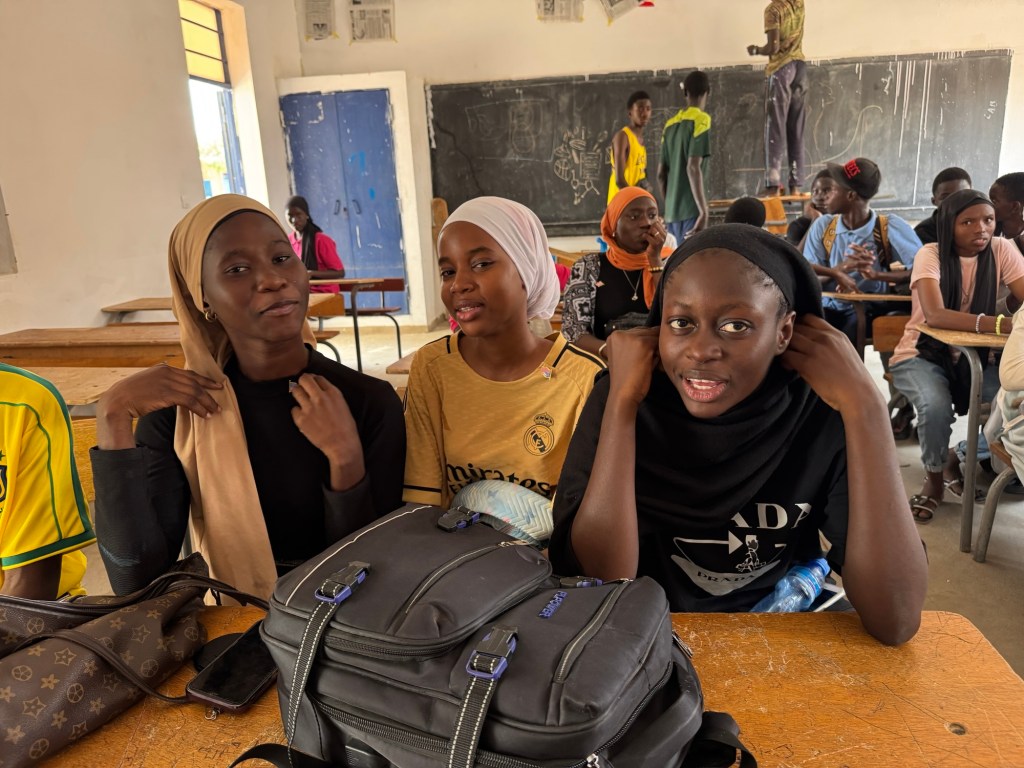
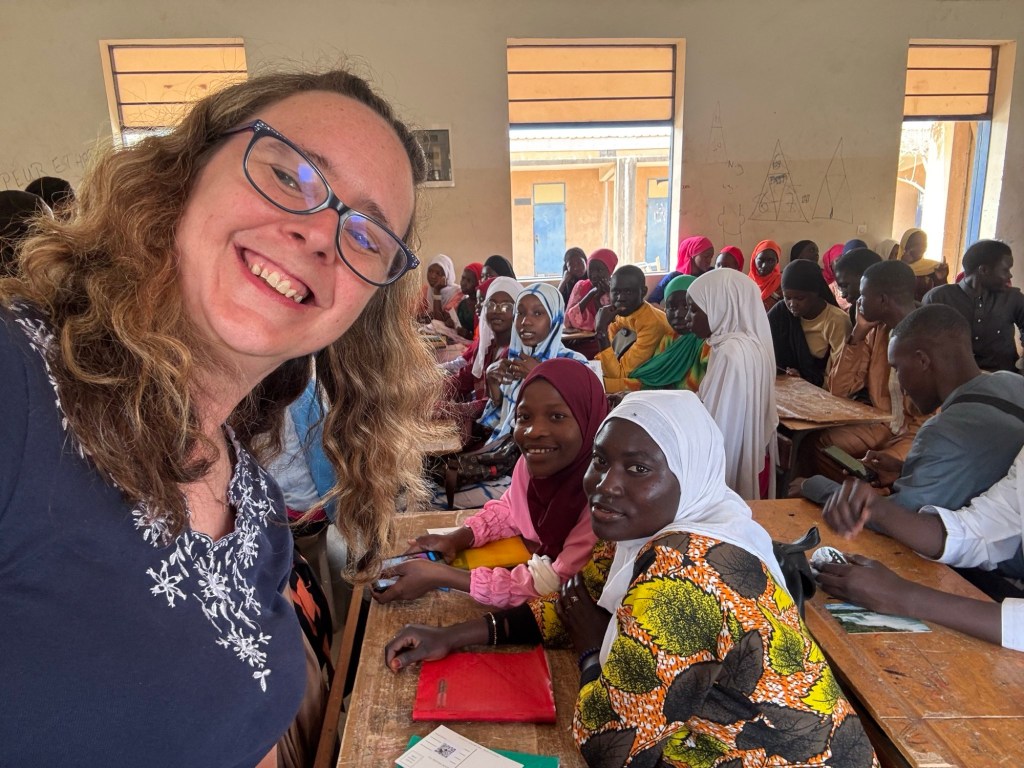
We had just arrived to the school and these girls called us over – they wanted to meet us right away!
This is a picture from our welcoming ceremony – people were seated behind us and standing, stretched out on both sides of the canopy! The community came out to greet us!

Teranga is sharing your meal with anyone who needs it – whether you have a lot or not. This includes the neighborhood children, friends, family, and people you have just met a few hours earlier.

This is how meals are shared – all together in one bowl. Meals are a community event!
These cute girls joined us for lunch one day, as my host teacher usually invites them to eat lunch when they come around
These fishermen invited us to dinner one night as we walked past.
The fishermen eating their day’s catch, and sharing it with us!
There is no possible way that fish could be any fresher than this – eating it fresh off of the fishermen’s boat, grilled on the beach while sitting in their fishing hut.

Teranga is giving gifts to an American even if your family doesn’t have much to give.

Snacks to try and bracelets from multiple students
A different day of bracelets from other students
This group of girls gave Sara and I makeovers. Then, we held a dance party, and they were so respectful of our space – they would always remind each other not to crowd us too much. They would grab our phones to take videos and pictures of us having fun. It is one of my favorite memories, as these were students we did not get to teach during our time at the school – they were from the middle school side of the school. They were not comfortable with their English, but we all understood fun and the joy of being together.

Teranga is acknowledging someone’s strengths, particularly if they are different than your own. Students would often point out the really good musicians in their classes once they heard I was a music teacher, and encourage their classmates to sing for me.

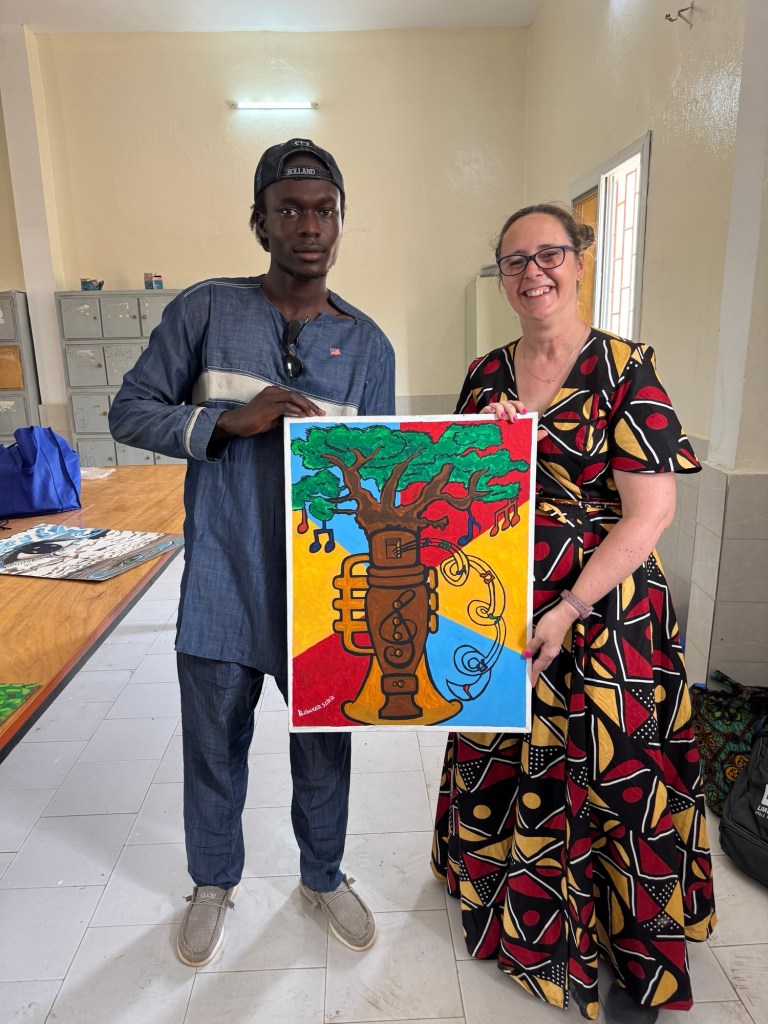
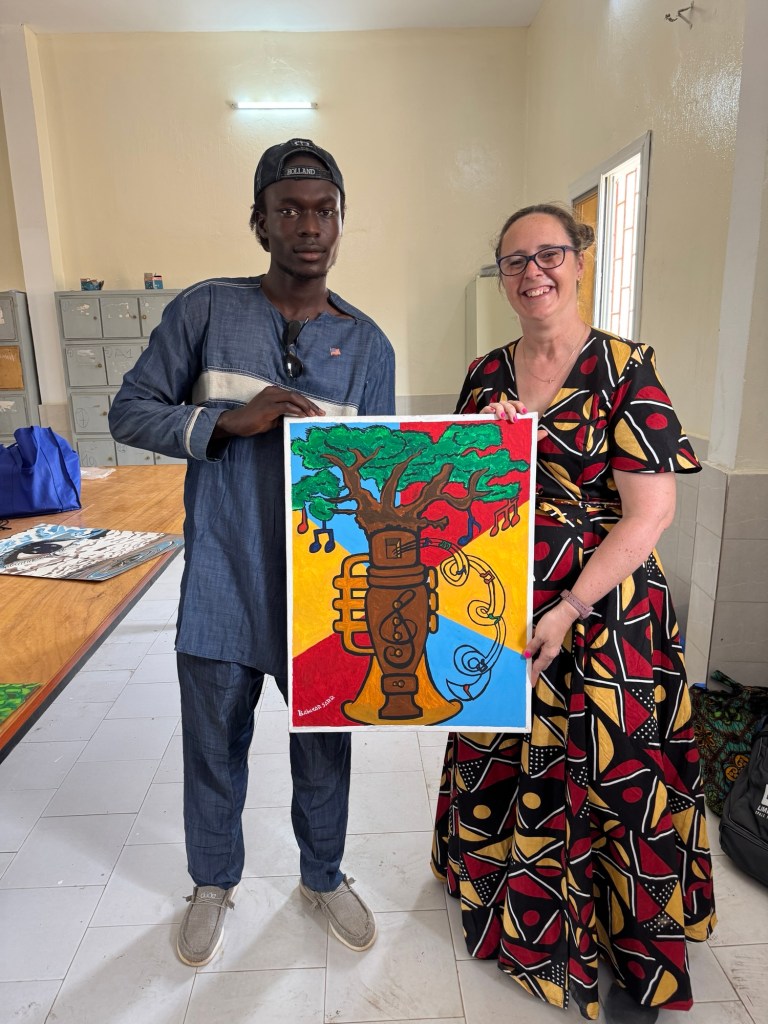
This artist used his gifts to create an original piece of artwork for each of us!
This music class met on a day it wouldn’t normally, with a teacher who came in special just to show me what music looks like in Senegal schools (because my school placement did not have music). The teacher isn’t even their music teacher – he is the president of the country’s music teacher association, and he ran class with these students he didn’t know just for me!

Teranga is welcoming foreigners into your closed building for a tour. We toured so many buildings that were closed, just because we were from the United States. Can you imagine how we would react if someone from another country wanted to get into one of our locked buildings? The police would be called; it would make the news!

This is the room where the president of Senegal meets with VIPs in the Dakar International Congress Center (where the president makes all of his public addresses). The building was closed when we toured it.

Teranga is helping others – whether you know them or not – with whatever they need, just because you are right there.

These two students traveled to Dakar to attend the English Day event we were going to be at!
Our wonderful host teacher told me at the end of our stay that she doesn’t like water. She told me then that she was really not a fan of being on boats, either. I was surprised by this, as she took us on this incredible sunset boat cruise in a bird sanctuary, and she took us on a boat tour of Pink Lake. That’s an incredible amount of teranga to do something you don’t enjoy in order to show your guests everything your country has to offer!

Teranga is SEEING someone – truly seeing who they are, what makes them happy, what type of person they are. Although I only spent 2 weeks in the country, there were people who figured out what my beliefs, strengths, and style were better than people I’ve known for years in Wisconsin.

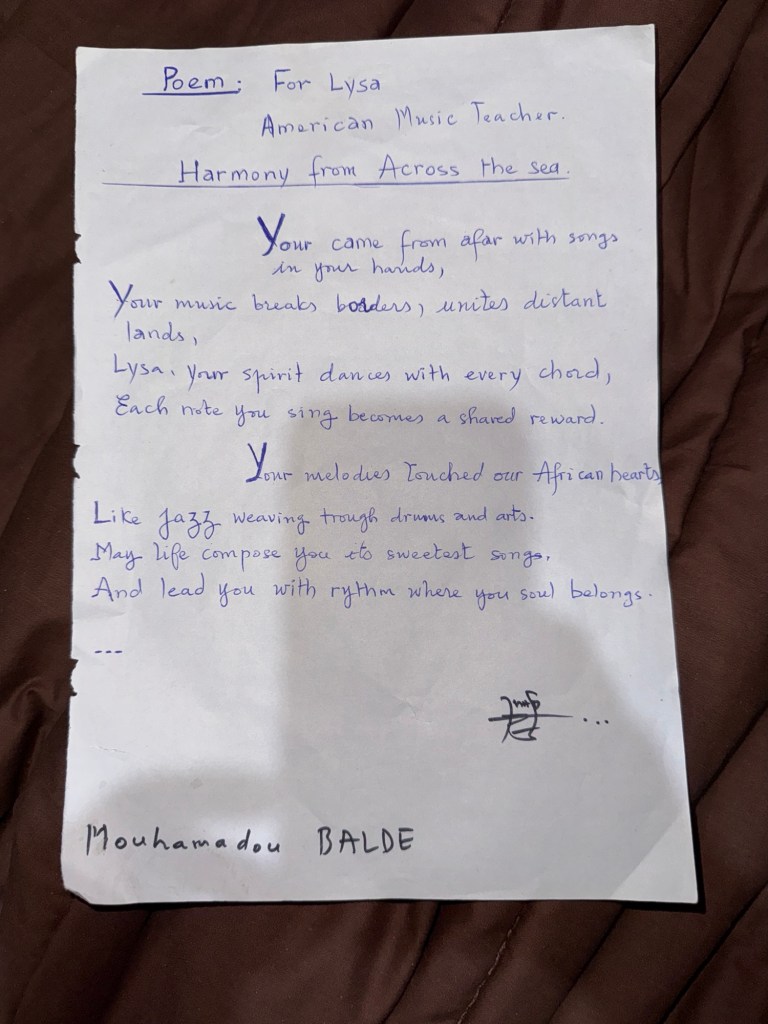
This boy wrote the sweetest poem to me, and wrote one for each of my travel companions, too.
Wow.

Teranga is always greeting someone when you meet them. It is rude not to smile and offer a lengthy greeting each time you arrive, pass someone, or want to talk to someone. This was an important part of our school day – each morning, we greeted the other teachers and the headmistress. If you have a simple question for someone, you must first greet them and take an interest in them – not just walk up and ask your quick question, no matter how hurried you are.

The mayor of the city wanted to meet us when he heard we were in his area.
These two sweet girls came running up to Sara and I to give us hugs. We then danced with them for a while.

Along those lines, teranga is having a smile for everyone. I know I have been back to the US for a while, but I really meet all of those smiley greetings and friendly faces! Senegalese people understand the importance of building relationships!

These boys heard me playing the trombone for one of our classes, and hung outside the classroom door watching. Music always brings people in….

What school is like in Senegal

The absolute best part of the Fulbright Teachers for Global Classrooms program is visiting the schools, getting to know the students, and getting to teach with our host teachers!

Because of this experience, I really got to see what school in Senegal is like. These are my observations to help paint a picture of what life is like for Senegalese teachers and students. I know many of the people I’ve talked to have asked about schools in Senegal, so here you go!

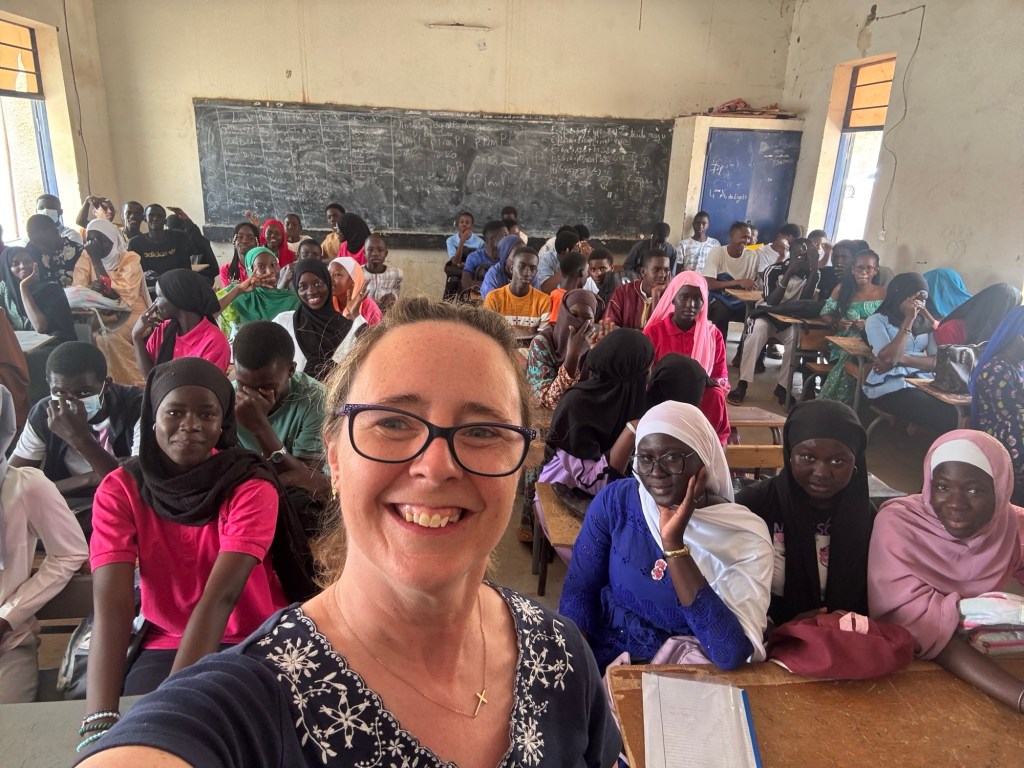
1. There are anywhere from 60-90 kids in a class. I was in a school that housed middle and high school students, and the high school students all sat three to a desk. The room is FULL!

This is before class, so there are a few students still coming in!

2. Everyone walks to school. It is really cool to see all of the students parading down the dirt road to get to school each day.

Coming into the school in the morning

3. Teachers use a chalkboard and chalk to teach to their students. There aren’t projectors, wifi, computers, etc. in every classroom, though there were 3 computers in a room that could be used if someone needed them. However, don’t feel sorry for these teachers – they are incredible teachers regardless of what resources they have! In fact, I learned a lot by watching these masters hold the attention of a room packed full of students.

My wonderful host teacher, teaching English

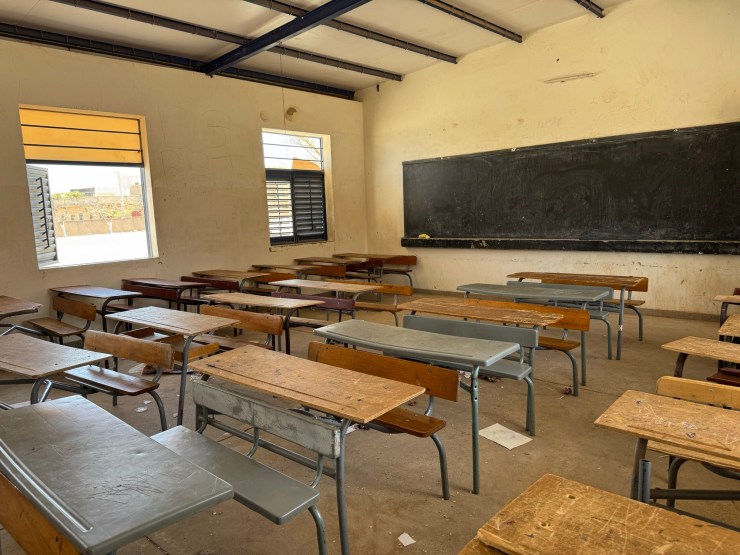
4. The classrooms have an open-air feel, as they don’t have window glass, and the doors are kept open for cross breeze. It never felt really hot in the classrooms, despite it being in the 90s temperature-wise, and having no air conditioning.

Windows with no glass – only shutters

5. On Fridays, students can wear whatever clothes they would like, rather than the school uniform they wear the other days of the week. Friday is a religious day, so students come to school in fancy dresses and formalwear. It is very different than what the students in my school choose to wear on their Fridays (jeans and t-shirts)!

School uniforms
Friday attire

6. School break runs from June to October, as this is the rainy season. There is a lot of sand and dirt everywhere, and the classrooms would get horribly hot if they had to close up the windows and doors, so students have off.

The school!

7. Students have free periods in their schedule, where they hang out in the courtyard and just talk. This is unsupervised time.

Students just hanging out, waiting for their next class

8. Food is sold for students during the day, and students eat it during their free blocks.

Snack food – lots of nuts and fruits
More snack foods
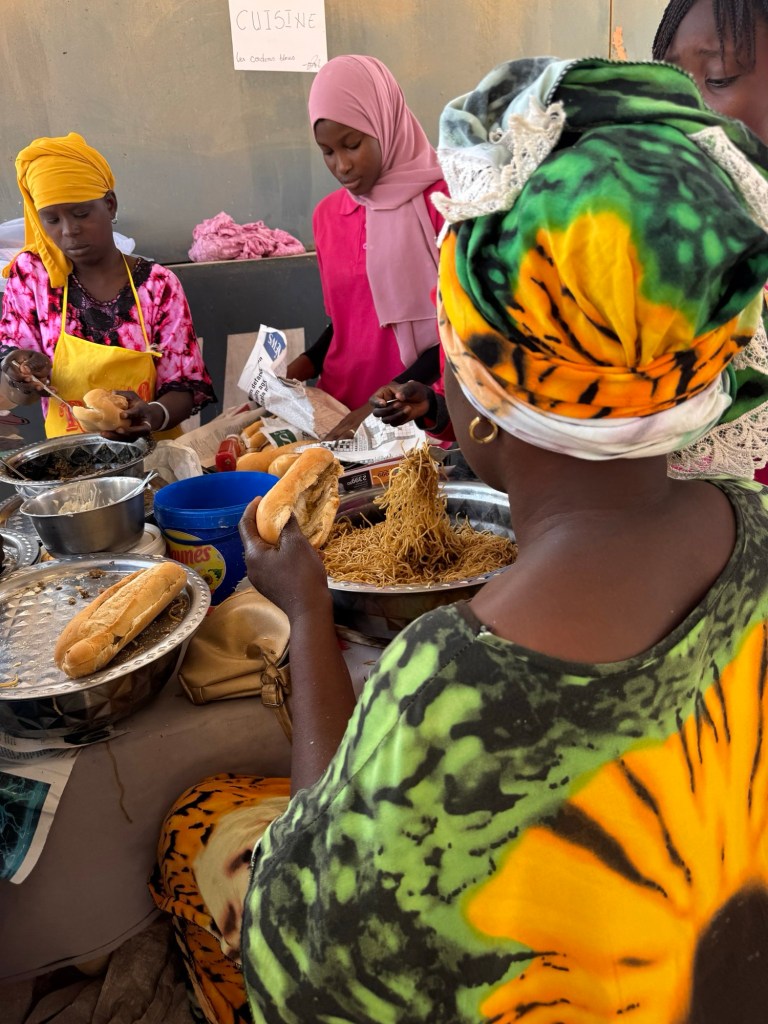
Making sandwiches to sell to students, as well – they were delicious!

9. Substitute teachers don’t exist. If the teacher can’t come in (illness, family event, conference, etc.), then the students just don’t have class that day.

My community school placement

10. Punishment (both in class and with the headmaster) involves students kneeling on the ground with their head up against the wall or blackboard for a length of time. I did see this, but did not take pictures of that! It’s bad enough being in trouble – no one wants to see a picture of themselves in trouble on the internet!

11. Students generally like school. The majority of them have a positive attitude in class and really participate in classroom discussions.

They’re ready to learn!

12. The headmaster or headmistress (principal) is the teacher in the building with the most seniority.

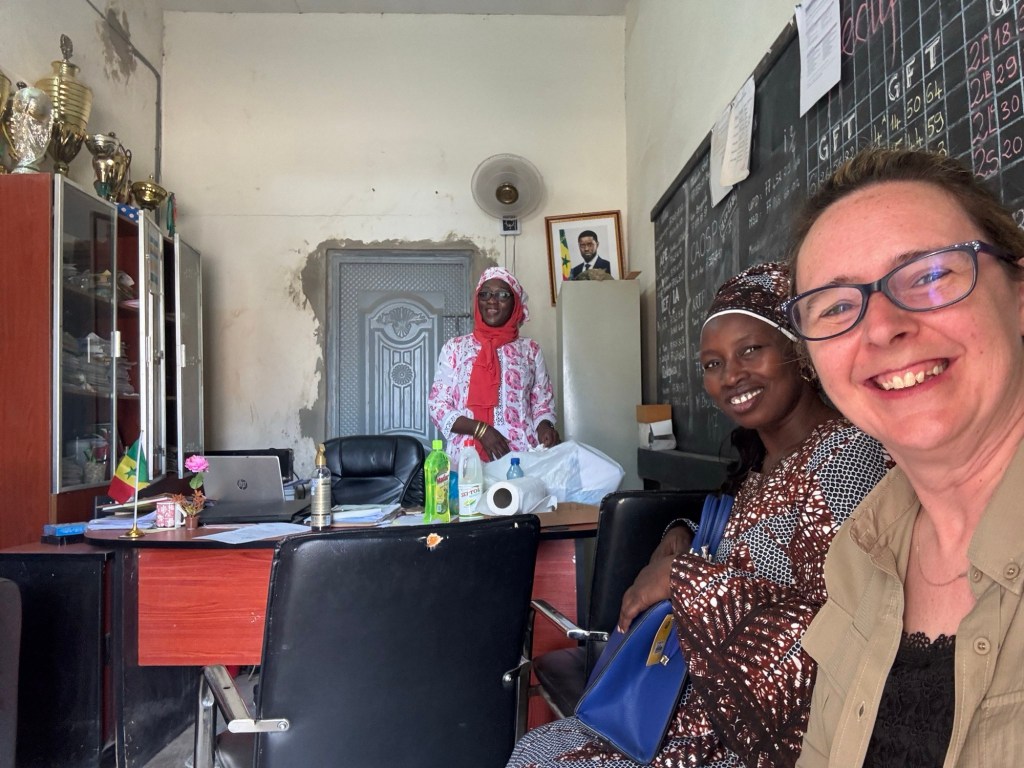
In the headmistress’s office with my host teacher, waiting for school to start
The headmistress, thanking us for our time in Diamniadio

13. Teachers in Senegal are placed in their first teaching job. After that, they can choose to go wherever they would like to teach when an opening comes up.

This is the college my host teacher went to in order to become a teacher.

14. Teachers are required to retire when they are 60 years old. The teachers are very upset about this, as once you are a teacher, you may not hold another job. Once you stop working your teaching job, you can’t make money anymore, so people go from a decent wage to getting paid nothing and living in poverty.

Farewell, Senegal!

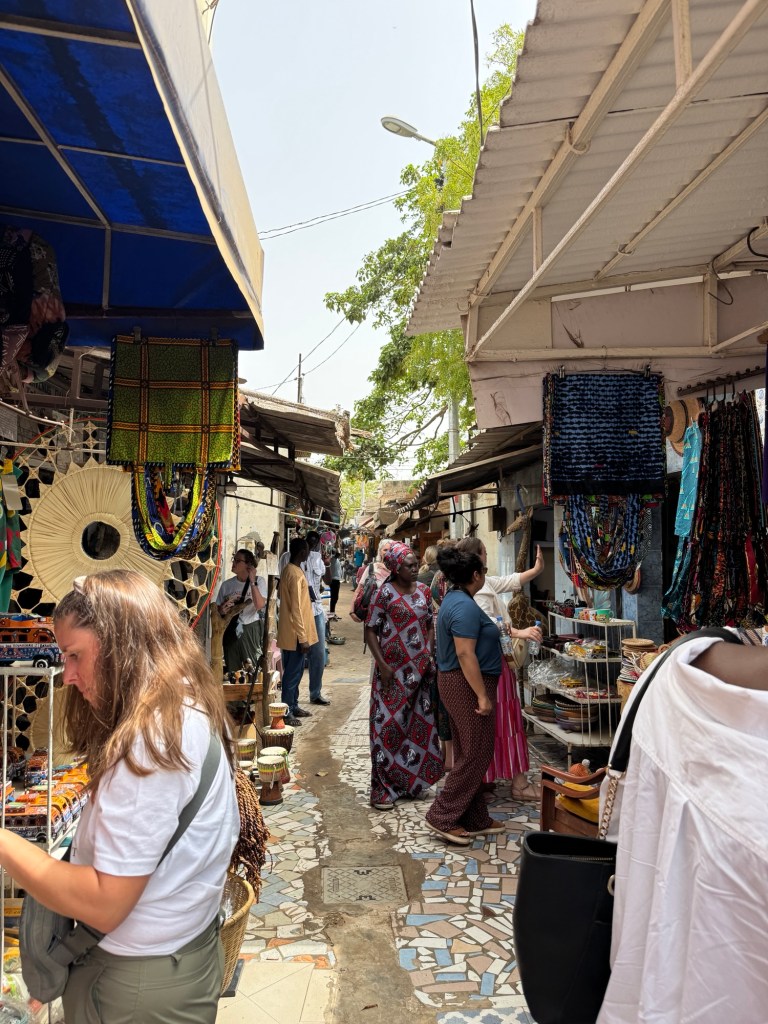
The last day in Senegal. So bittersweet! This morning we went to the market. My host teacher Sophie was invited to come along to help our big cohort out, so it was wonderful to see her again. I had one objective today- obtain an authentic djembe. However, I did not want to do this until we were done in the market, because who wants to carry that while others shop?

Soumbedioune Market
I see djembe…don’t give away my intentions….

After the many purchases of things none of us really needed until we got into the haggling spirit, we went in search of Senegalese snacks to bring back to our students. It seemed fitting that we brought American snacks for the Senegalese students, so why not continue that exchange of ideas and culture with some snacks for our students, too?!?

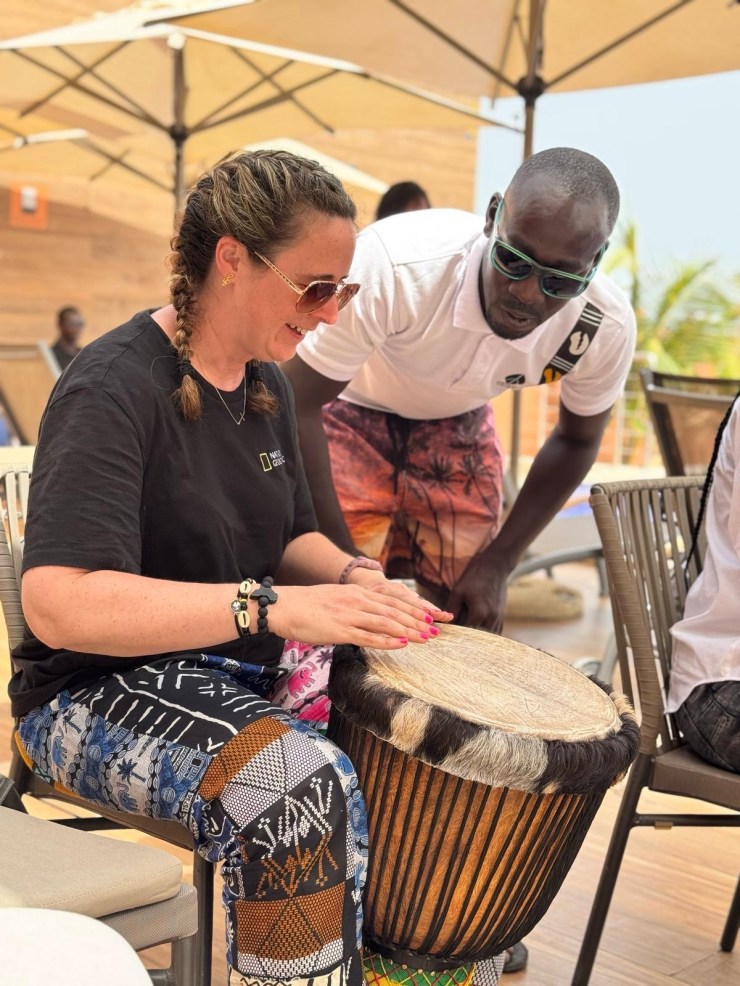
Once done spending more CFA (their currency), we started packing. I took a break in the afternoon to lead a drum session by the pool.

Jamming out

One man came over and helped my friend with her kes-kes. I asked him if he drummed, too, and he said he did. He sat down at my drum and played for us. He then offered me my own private drum lesson! It was so awesome. What a great way to end the trip!

This is ridiculously cool

I’m now on my way to the airport. My plane takes off at 11 tonight (6 pm CST), and I’ll be in Paris before making it to the US. Stay tuned to find out when I’ll get to land. I hear there’s spicy weather expected on Monday, so please let it happen before or after my flight arrives!!!

Last view of the ocean right outside of my hotel room, as I carry my bags out to the van.

Wow, What a Day!

Have you ever been on a journey, either physically or metaphorically, that was so full and rich that you knew it would take you a long time to unpack mentally? That’s what this Senegal adventure has been. As I got to talk to each member of my cohort about their experiences here, it is always a story of joy and despair, frustrations and surprises. In every travel situation, there are always things that go a little differently than planned, and that has always been part of the adventure. It is also why I feel so strongly about traveling with my family- it teaches resilience and perseverance, just as my parents taught me the same skills through our family travels when I was a kid.

Our first structured event back in Dakar took place this morning, and it was a debrief session on our experience. We talked through what we went through and how to process our experiences in ways we can communicate it to people who haven’t been to Senegal and won’t necessarily understand with the depth that experience brings. We looked at how our views have changed through what has happened, and how to process the complex layers of emotions we have. It was a very powerful session that felt necessary and appreciated.

On the ferry with friends!

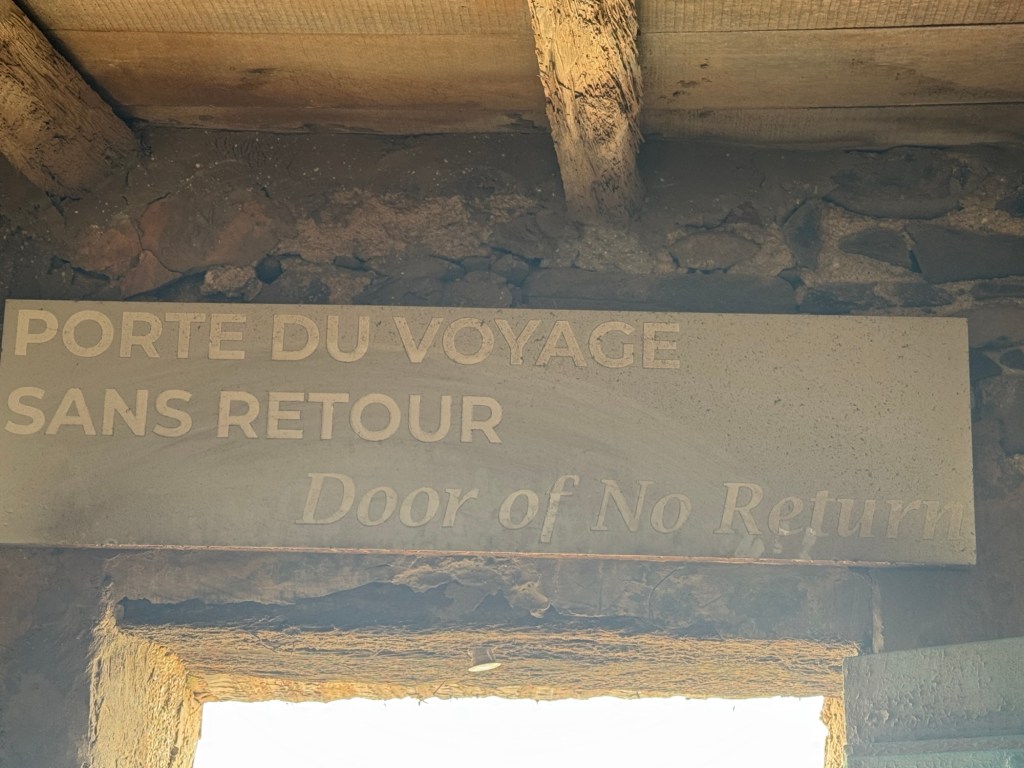
To lighten things up a little, we then went to Goree Island for a tour of the whole island, however there was also the dark and moving visit to the House of Slaves. This is the point of no return for slaves as they were sent from that spot on Goree Island to their next stop in the slave trade. Seeing spaces smaller than my master bathroom that would house 40-50 slaves was an experience that left a lasting impression on me.

Looking out the Door of No Return and getting chills
Door of No Return
40-50 slaves were held in this space until the ship came to take them away

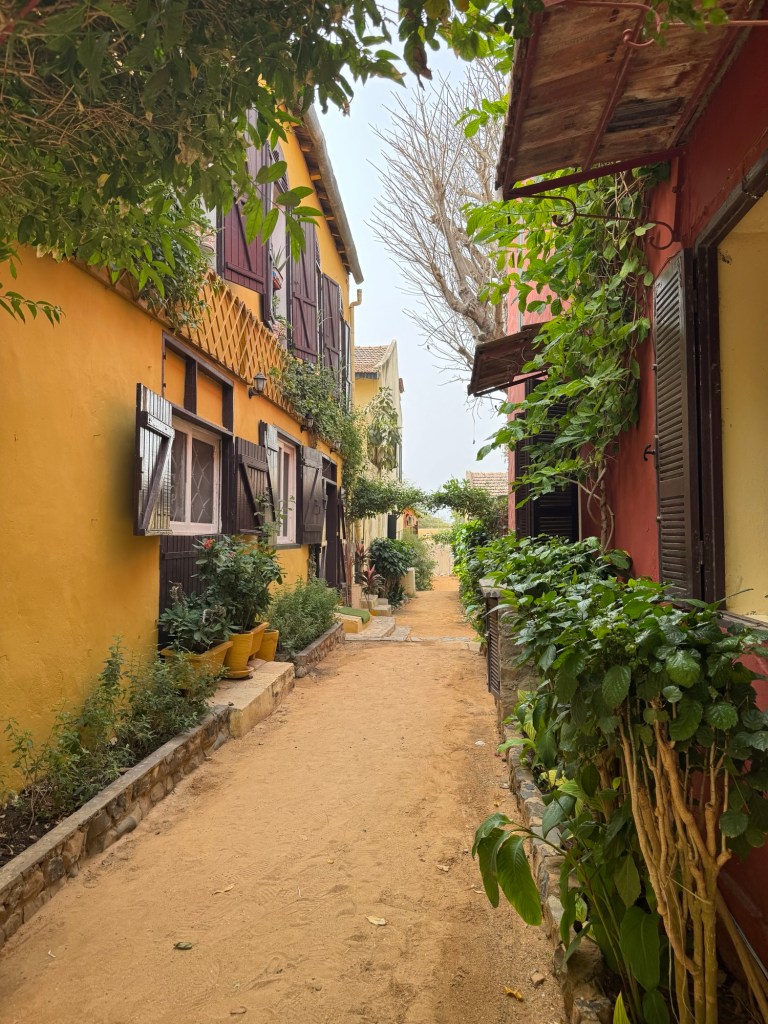
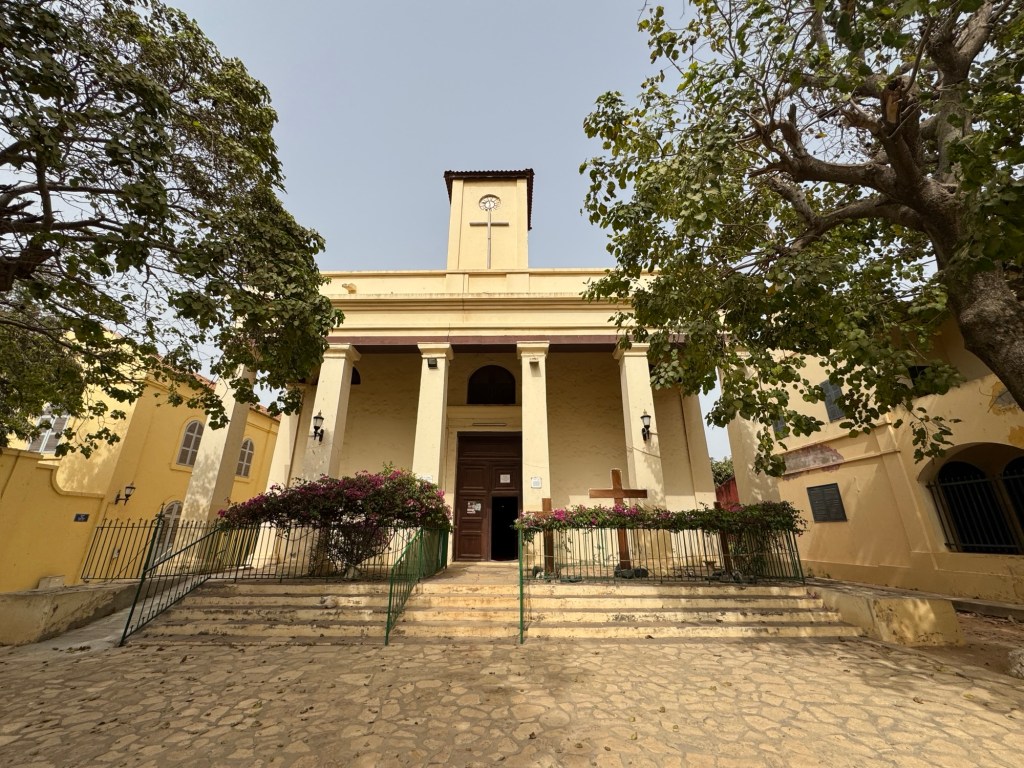
While on the island, we got a tour of some of the artists’ work, famous houses, and the first Catholic Church of Senegal. It was a beautiful island that cars are not allowed on. We took a ferry to get there, and the souvenir of the trip were these instruments that featured two seed-filled balls held together by a string, called kes-kes. I’m pretty sure everyone in my cohort ended up buying at least one set! I got a lesson on how to play mine, and you’ll be happy to know that I’ll practice on my three flights home starting tomorrow. I’m sure the people around me won’t mind as I perfect my craft. Maybe I’ll get a seat to myself…or a free upgrade…

Goree Island is beautiful!
First Catholic Church in Senegal
Getting my lesson with the kes-kes
The kes-kes master

We ended the evening with dinner and more incredible conversations as we all work to process the things we saw and the beliefs that have changed us. As I start packing up my belongings to get ready to go home, I can’t help but be grateful for this opportunity, and honored to be put with such a fantastic group of teachers.

Also, bissap cheesecake…I am grateful for bissap cheesecake

Back in Dakar!
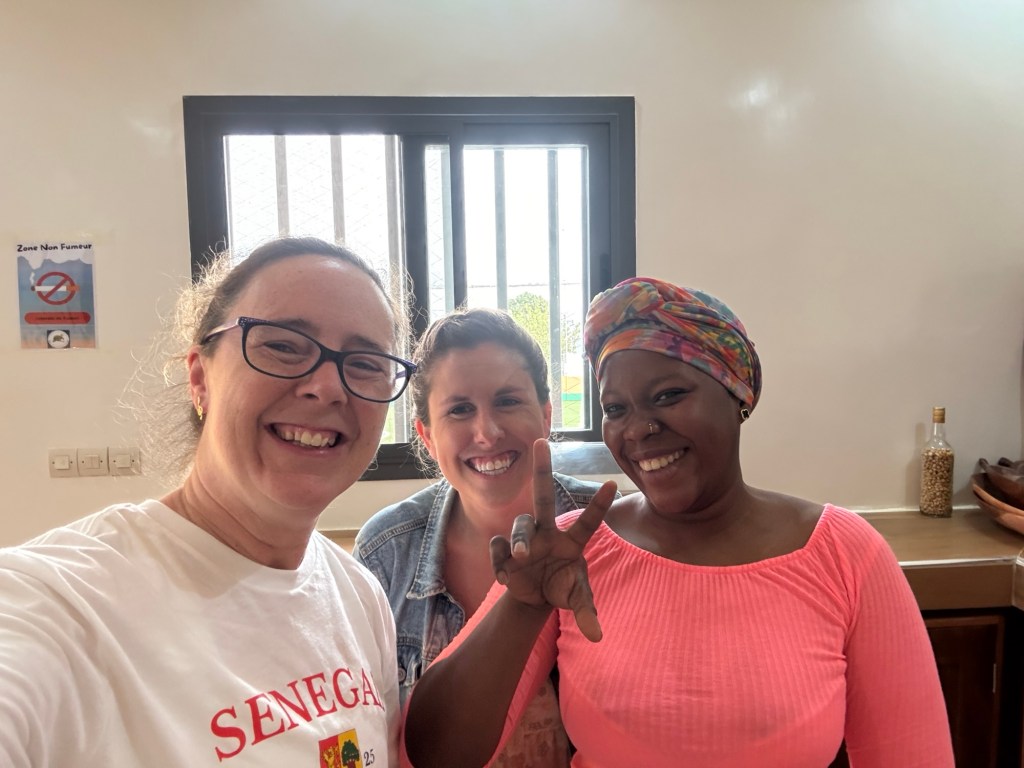
This morning we said goodbye to our sweet hotel staff. My favorite was a woman named Roumy- she was always smiling, would greet us no matter the time every morning and every night when we came back to the hotel, and was always apologizing for her English (which was better than my French). We had the best half English/half French conversations I’ve ever had! When we left, all of the hotel staff came out to take pictures, hug us, and see us off. The hotel owner called us on the phone to say goodbye and wish us well. It was quite an event!

Roumy!!! Sweetest woman in the planet!

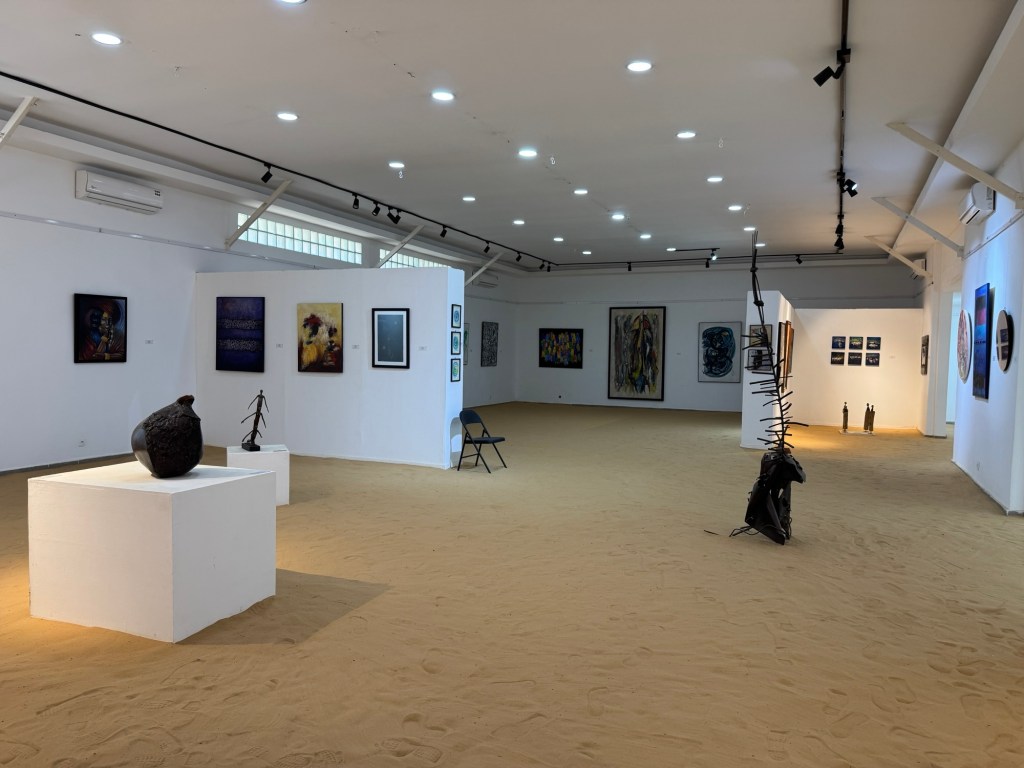
We got checked back into our hotel in Dakar, and then got to go to Village des Arts, which is a center for artists to create, display, and sell their art. There weren’t many artists present today, as Friday is a holy day for Muslims. The ones that were open showcased mixed media art, welded sculptures of iron, furniture made from tires, and very intricate ebony carvings and sculptures. We also got to go into the gallery, which featured art from artists in their teens all the way up to 98 years old!

Checking out one of the artist’s workspaces
The gallery (it has sandy floors)
Chair and table made from tires
These are made from wood!

We then ventured out to a Lebanese restaurant, and had a delicious lunch. I had some really good sausage in a pomegranate sauce- it was tasty. After lunch, we returned back to the hotel to await the arrival of all of our friends to hear about their community visits. You know how it is when you are reunited with an old friend after a few years of not seeing each other? That’s what it felt like to see the other members of our cohort. It was great hearing stories of funny things that happened, unexpected moments of joy, and even moments that were sad. Everyone’s story was different, but we all will leave changed by the depth of this experience! I am so grateful to be a part of this unbelievable program, and hope to encourage others to apply, too!

Back in Dakar! I can hear drumming on the beach!
The Final Day In Diamniadio

Well, the day I’ve been dreading has come- the last day with the students of Ousmane Sow High School in Diamniadio (the city is pronounced Jem-NAH-joh). All of these sweet, curious, adventurous students gave us the best goodbyes we could get. Sara and I were treated to makeovers, and we were honored in ceremonies. It was bittersweet, as it was an amazing day and I’ll be happy to get back to my own family, but I’m also so sad to leave. That’s the sign of a great adventure, though. Sometimes when you go to new places, you leave a little bit of your soul behind.

A beautiful school
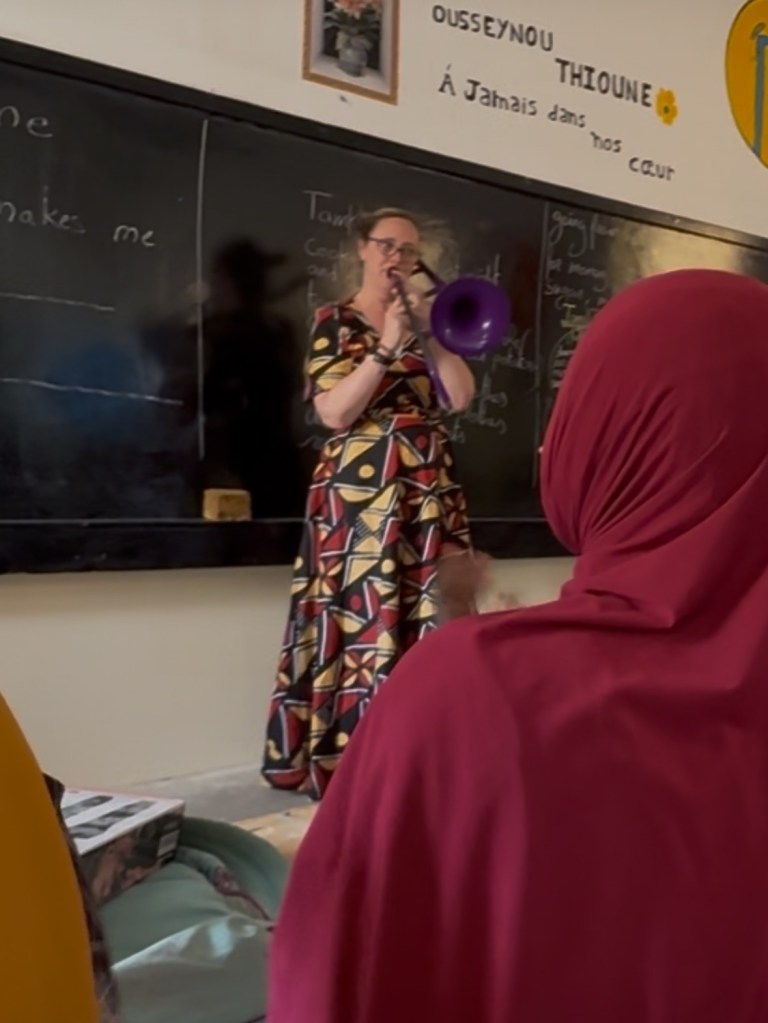
The purple trombone rides again
I played a series of songs for the class and asked them to tell me how the music made them feel and why. Every single song I played, they answered that the music made them happy. Music is beautiful, indeed!
These boys heard the trombone playing and hung outside the classroom door, so I went and jammed with them for awhile after the lesson inside the classroom was done!
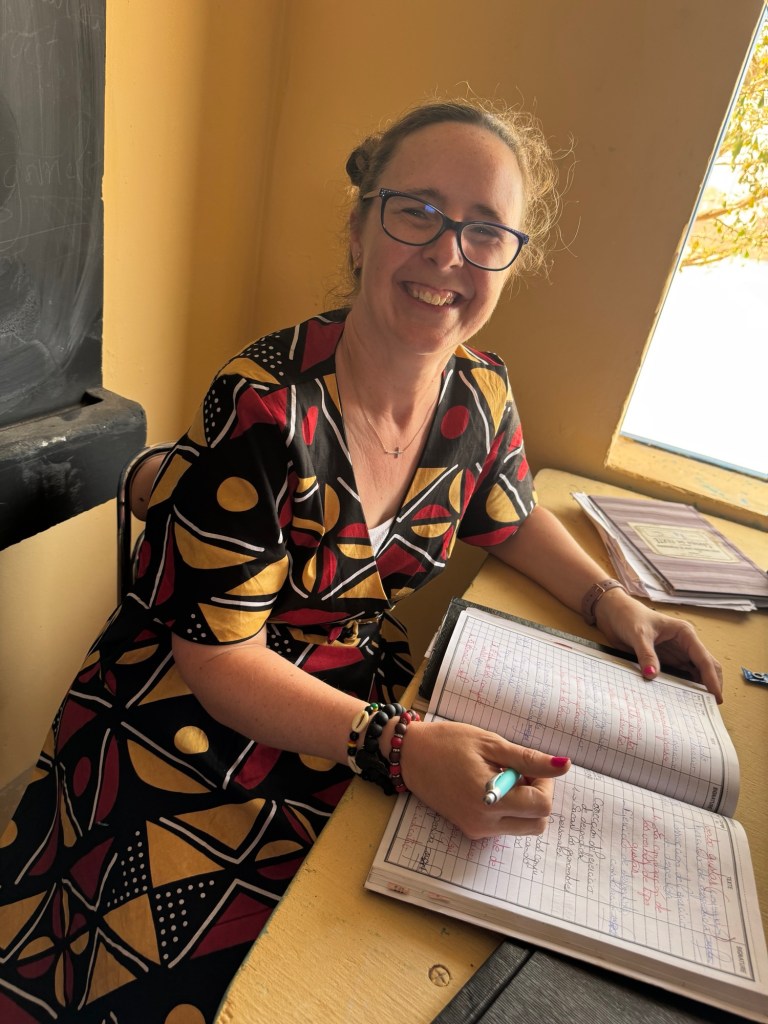
Filling in the lesson plan report for the day in the official book the school keeps
Sophie, presenting the donations we gave her to the school
This artist made each of us a painting to bring home. How cool is the music on this one?!?
The students started checking out all of the English books right away. The school will be starting an English library with our donations!
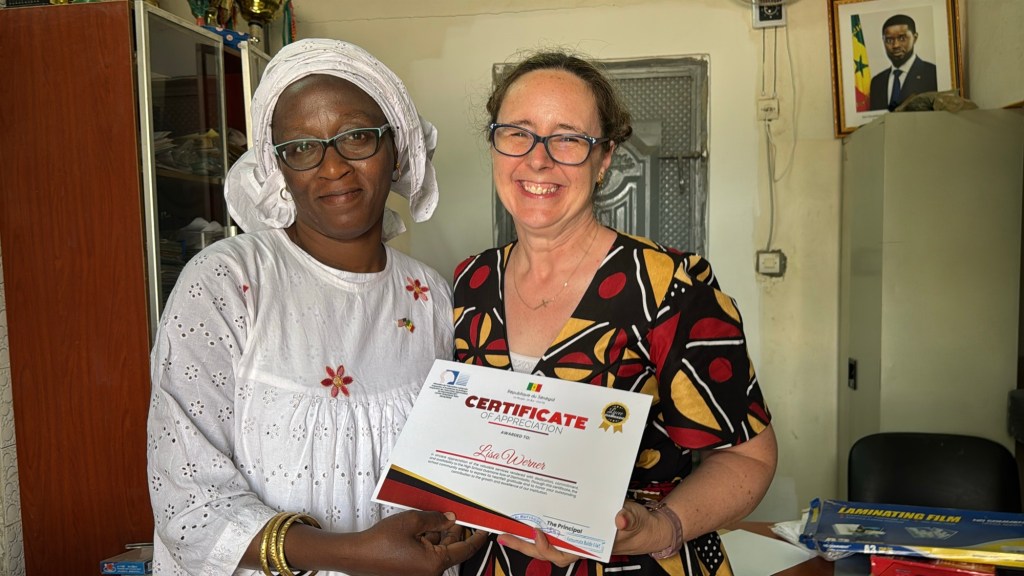
The headmistress of the school, giving me a certificate of appreciation for my work at their school
One of the students wrote a poem for each of us. The poem which wrote for me made me feel like he was peering into my soul. It moved me to tears!
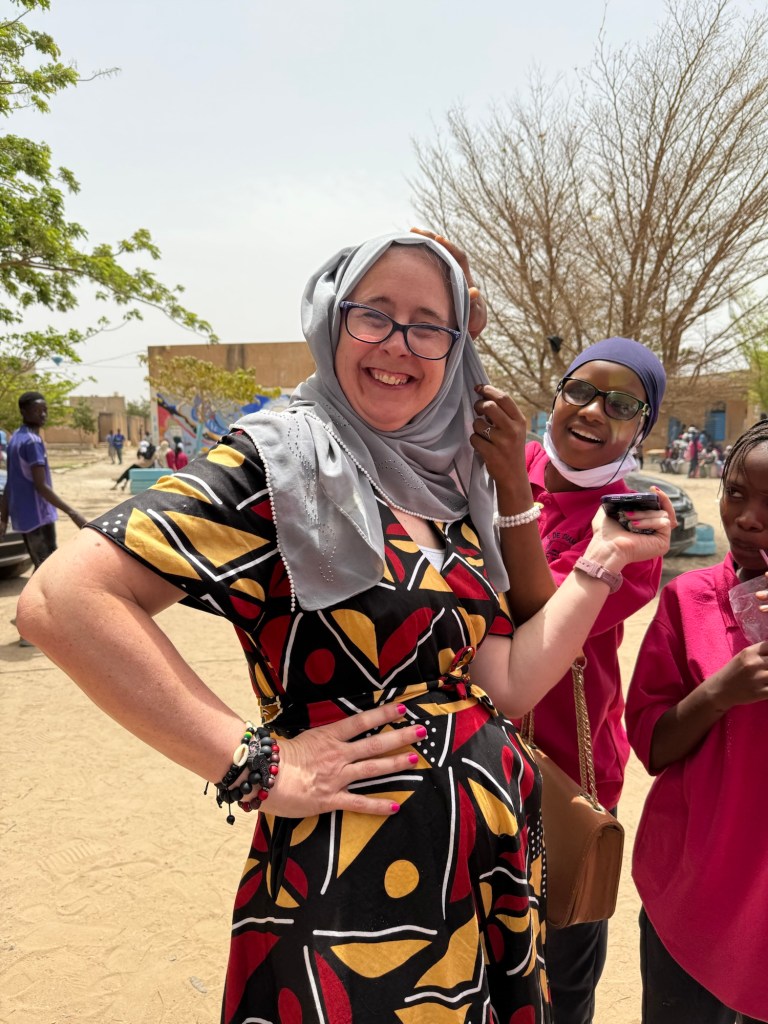
This girl was so excited to fix me up. Sara said I look like a nun!
Sara and I, after our new makeovers and dance party with these beautiful girls
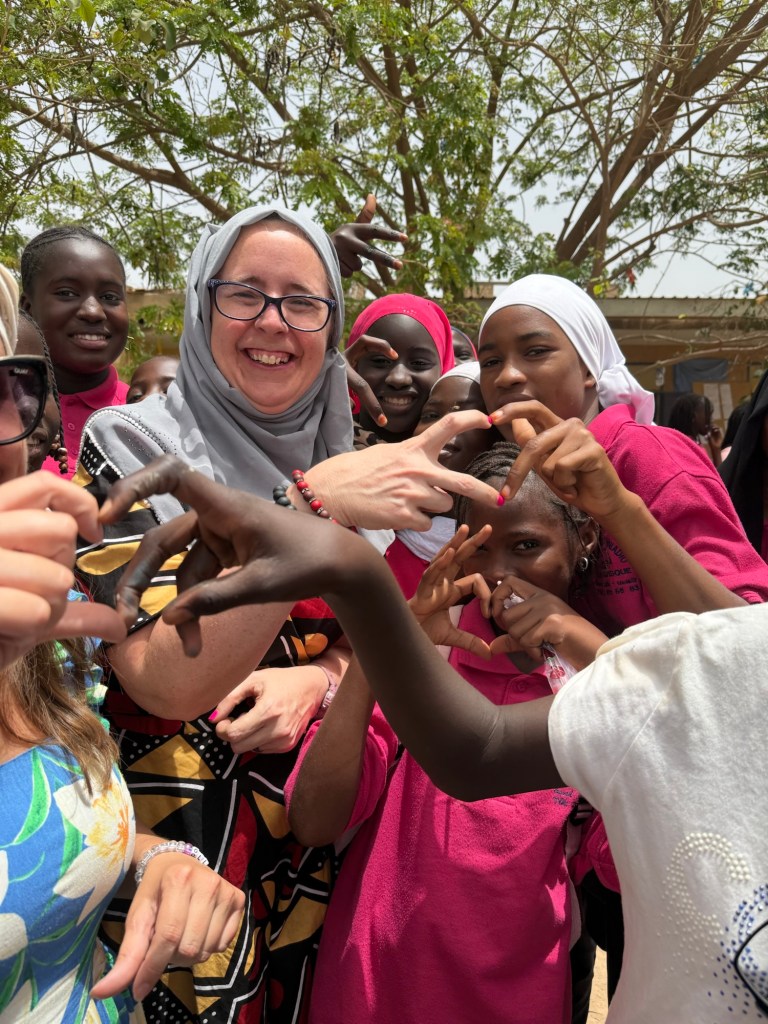
I love this picture so much – one of those spontaneous moments that the girls thought would be a great way to take a picture with us

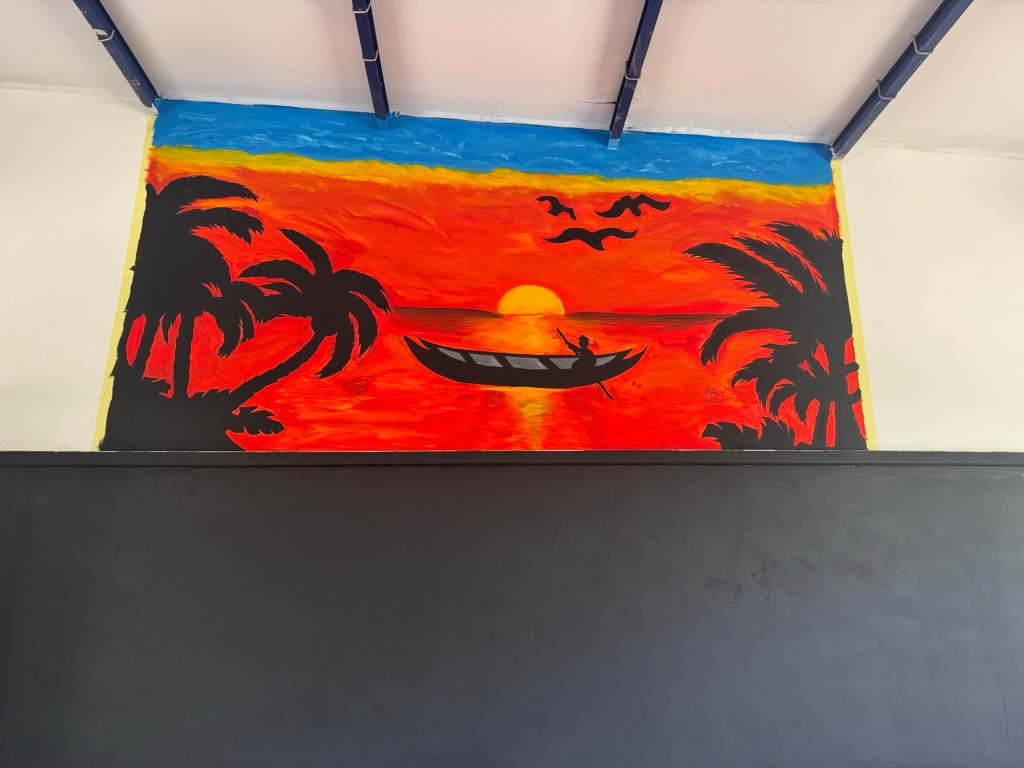
After we had our ceremonies, Sara and I went to check out the beautification process that was going on at the school. Each classroom was competing to see who could make the most beautiful rooms. The students were cleaning, painting, and designing gorgeous murals, all while trying to keep their work a secret from the other classes. Sara and I were the only ones allowed into some of the classrooms because the students didn’t want word to get out about what they had done. It was so fun to see the pride the students had in their work!

Wow….painting above the chalkboard

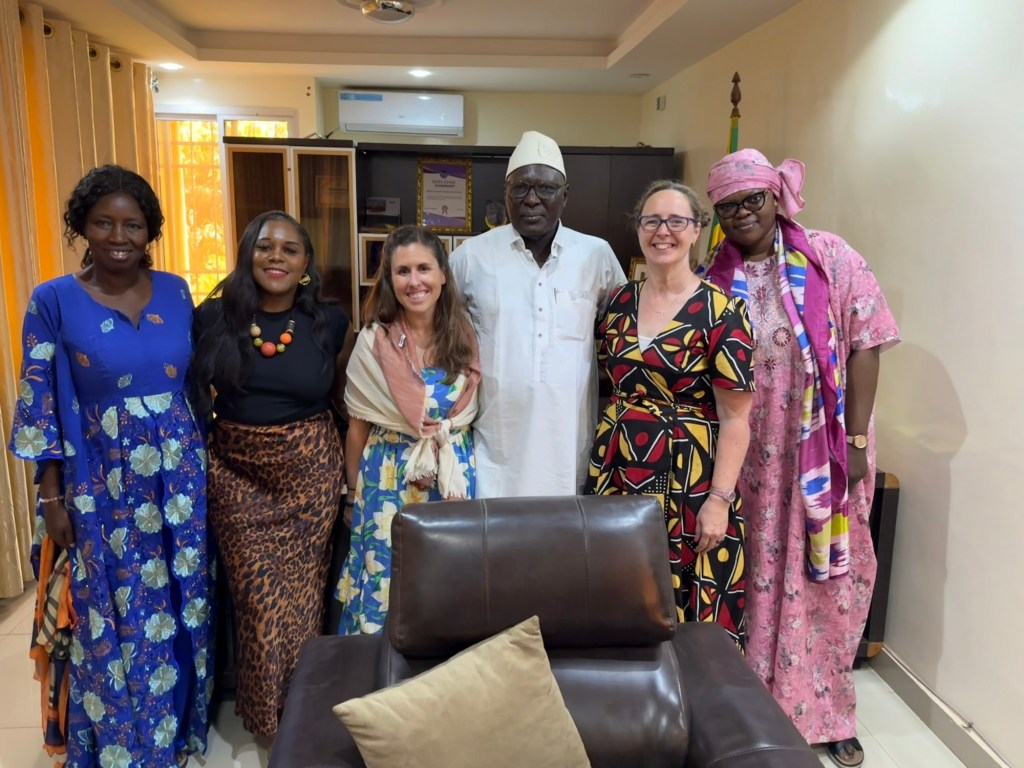
After the fun of all of that, we were taken to the mayor’s office, where we had a meeting with him. He expressed his gratitude in what we have done for the students in his city and how important continued collaboration would be to us both. I appreciated the importance he put on education!

Meeting with the mayor!

Then it was off to lunch at Sophie’s house (this time we had Thebougienne with 3 different kinds of fish and fresh mangos for dessert). So delicious! After such a great lunch, we were off to have our final adventures. We went fabric shopping and then stopped by Sophie’s tailor to get our traditional Senegalese dresses made. We visited a friend of Sophie’s who is an artist and got to view her work. Then we stopped back to visit Sophie’s mom again. Finally, it was time for dinner. Sophie took us back to Solome beach for a buffet. It was a beautiful night with the breeze and the ocean waves crashing right next to us. What an incredible journey this has been! Just a few more days left to wrap up the program, and then I get to go home and share this experience with the students and staff at my school! More than anything though, I’m looking forward to hugging my family! I’ve got some great surprises to bring them!
On the way to our dinner spot

The Days Are Rapidly Coming To An End

Today we got to co-teach 2 classes and meet with the English club. Sara and I taught the classes the “Hokey Pokey,” and surprisingly the oldest students liked it the best! It is really fun now, as we have made connections with the students- knowing their names and a bit about their family lives. One student I talked to today was nervous for her baccalaureate exam and she wants to become a nurse. Another student really wants to be a famous singer in America (and she sang for me- she definitely has the voice for it)! Her two friends want to be her manager and her wardrobe specialist. Another student wants to move to Canada after his exam because his brother moved there. I have always liked listening to the dreams for the future that the students I work with have, and I can’t wait to share with them how similar their dreams are to the Senegalese students.

These three promised to keep making music together and to remember me when they are famous!

English club was lots of fun! They sang a lot of songs for us, and since they were singing the “ABC song,” I taught them “Twinkle, Twinkle Little Star” since it has the same melody. I handed out more of the stickers and letters from the students at my school, and we gave them American flag pins, as well.

Wearing his sticker from my school proudly!

After English club, we got to go to Sophie’s house for lunch. She had one of her student’s moms make lunch and clean while we were at school, so it was all ready when we got there. We had mafe, which is a delicious beef, peanut butter, and tomato sauce stew served on rice. It’s very delicious!

Mafe lunch!
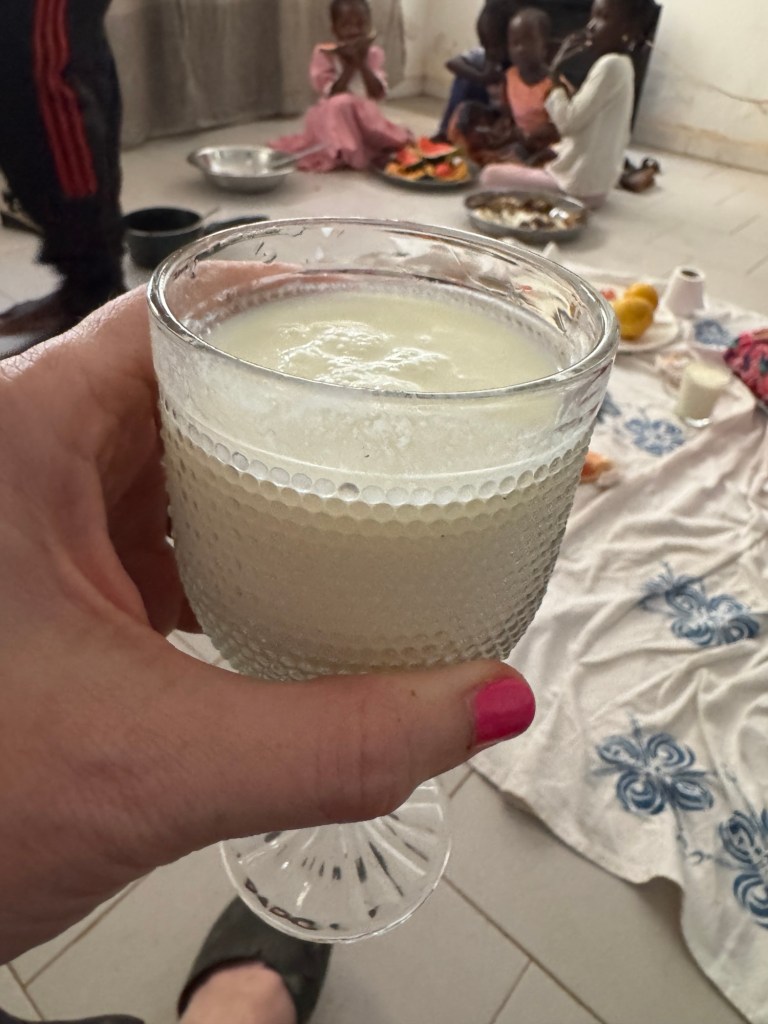
Milk…not like ours! It was chunky and you added sugar to it to your liking.

With full stomachs, it was now time to venture back into Dakar for some exploring. First, we visited the Museum of Black Civilizations, which had some great exhibits from all over Western Africa.

Artwork called “Big Senegalese Family” – from one of the museum exhibits

Then we had a special treat- we went to the National Theater. It is named after a Senegalese drummer- Doudou Nolaye Coumba Rose. I have to check out his music when I get a chance. When we walked up to the theater, they were very clearly setting up for a big event. When we walked in, we learned there was an energy conference- there were exhibits being set up about solar panels and wind farms. As soon as we got in the building, we heard drumming and I got excited! We climbed up some stairs, wandered around some twisting corners, and found a drum group practicing for a show they have tomorrow night. It was FANTASTIC! Then we watched a dance group practice for that same performance and they were amazing, as well. What a treat!

The drummer outside of the theater
The drummers and dancers together! My WiFi is particularly spotty tonight, so I’m not even going to try to upload the videos! I’ll add them when I get back home

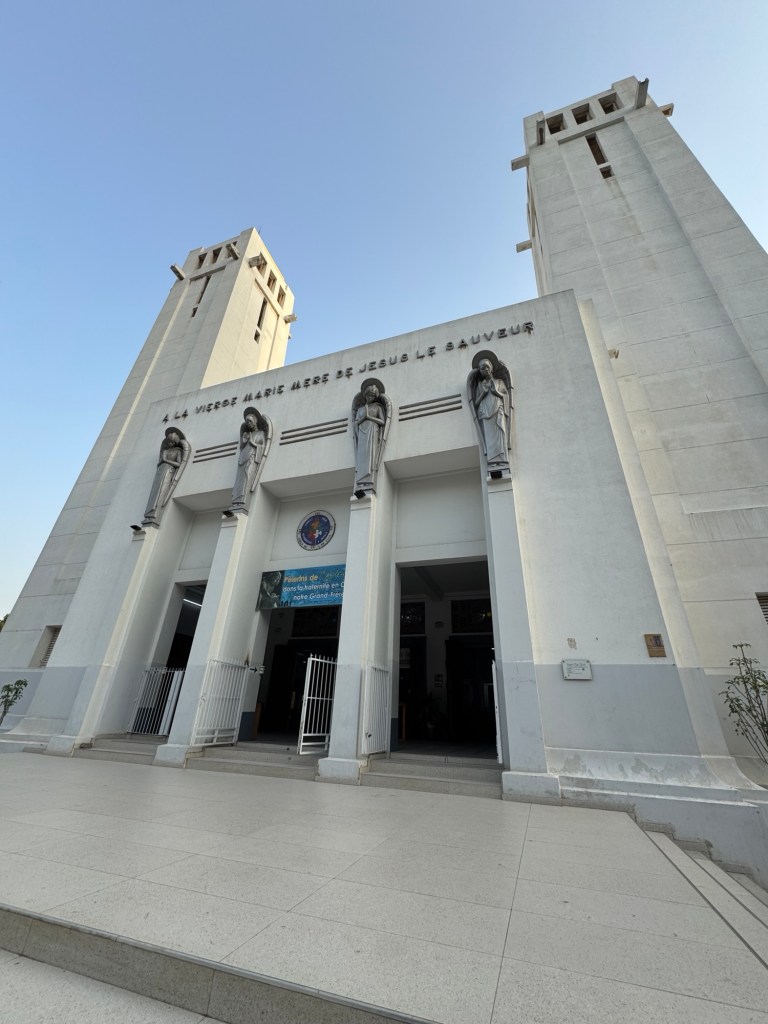
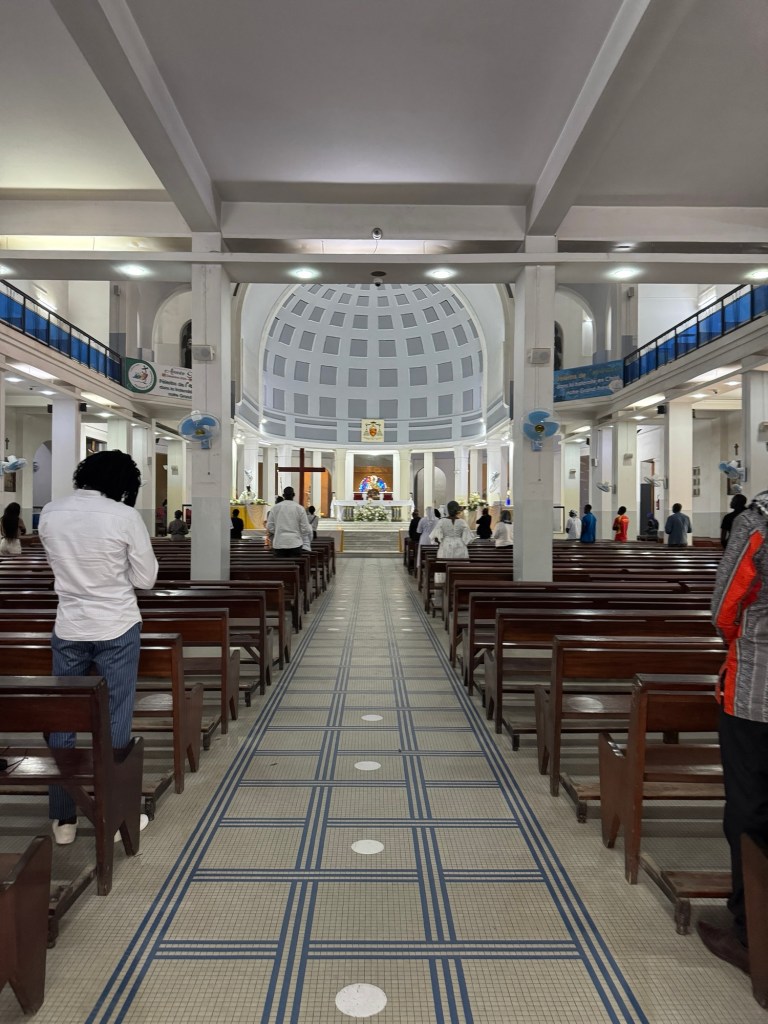
We then stopped at the Cathedral in Dakar. It was so beautiful, and it was great to see it!

Dakar Cathedral

For our final adventure of the night, we went fabric shopping. Some of the other Fulbright groups have been posting pictures of traditional dresses they’ve had made while they were here, and we had thought we’d try our hand at that, too. Fabric shopping is intense. There are shops set up one after another after another, all in the same area. You really can’t tell where one stops and the next one starts. The shops all are super full of fabric, with tiny aisles to walk through and many people trying to get by. It did not take us long to get overwhelmed! Sara found some fabric, and I got a ready-made dress since that seemed much easier. I now understand why no two dresses in Senegal are the same!

A tiny, minuscule, very small selection of the fabric we saw (look in the room). Not a great shot, I know, but I’ll try to do better next fabric hunt we go on!

La Musique Est Le Langage Universel De L’Humanité

Have you ever had that moment where you are talking to someone you’ve never met before and then you find you have a friend in common? Or you’ve gone to the same event? Or your sister works at the same business as this person? You know- the moments that make you start singing “It’s a Small World.”That’s how today went for me, but in a way that all musicians can relate to.

More on that in a minute…. Because first I have to tell you about Sara’s epic lesson using the game “Heads Up.” She taught the Senegalese students how to play the game that people in America have a tendency to play in very long amusement park lines in our country! She picked great words- everything from ‘phone,’ to ‘Snapchat,’ and ‘music’ to ‘Baobab.’ It was so fun to see the students of all abilities and comfort levels with English getting excited to speak clues to the person in the front of the room trying to guess the word. I also enjoyed learning a bit about what they thought of certain things. For example, for the word ‘friend,’ they said ‘bestie,’ ‘relationship,’ and ‘better half.’ For ‘television,’ they gave hints of ‘watch it every day,’ ‘plays movies,’ ‘broadcast,’ and ‘get information from it.’ For music, they just started naming musicians, but they named Adele, Michael Jackson, and Rihanna. This was such a great activity because it was easy for the students to use what they knew (reading the word and figuring out what it meant), while accommodating different levels of speaking ability- some kids would give one word, others gave sentences, while other students acted it out. It was also great for us to see how they viewed each word. If you ever have to do a cultural exchange, teach them ‘Heads Up.’ Sara just used a small whiteboard and marker.

I helped demonstrate Heads Up
The students wanted to have our host teacher guess the word. “Make it difficult for her,” they told Sara.

Ok, back to that story I was foreshadowing at the beginning of this blog. I got the opportunity to see a music class in action. They had moved it to the auditorium to accommodate all of us, and I could hear the sounds of recorders being played as we came up to the building.

Headed to the auditorium…can you hear the recorders yet?

The music teacher does not speak much English, and my French is barely passable, yet we were immediately able to communicate and understand each other perfectly. As musicians and music teachers always brag, music is universal, but I’ve never truly gotten to put that ideology to the test like I did here. The music teacher got right to work handing my colleagues and I each a recorder so that we could play along with the students. He quickly taught my colleagues the C major scale, and then, when it became obvious that the recorder and I were not strangers, he taught me the song the class was playing using the same solfège system he used with his students (and I use with the students I teach!). Within minutes, the students and I were rehearsing a popular Senegalese folk song. They sang it in solfège, then they played it on their recorders, and then they sang the words in Serère. Our guide was telling us that this is a language that is dying out, as unless your family stays in one place and doesn’t move, you will not be raised to speak these types of languages. The music is keeping the language alive!

This music teacher is the President of the Senegal Music Teacher Association. He writes the curriculum for the whole country. He came in to teach the class so that I could observe!
Singing in solfège- don’t they sound beautiful?

Next, I was invited to play a song for the class. I would have brought my trombone along, but I didn’t want to go back to the hotel to delay our arrival, so I played “Hot Cross Buns” on the recorder, explaining this was the first song our students learn. Then, volunteers from the class came up to perform. The girl who went right after me played “Chariots of Fire.” My “Hot Cross Buns” seemed pretty feeble, but it was so fun to see the students so excited to perform. It was also so exciting to have that ready-made bound that all musicians share. Anytime you walk into a room with musicians, you know you’re home. They applauded my “Hot Cross Buns” as though I was Taylor Swift, and told me how great I was. I, in turn, told them how amazed I was by their musicianship. It was the type of experience that touches you deep into your soul.

I love music students!!!!

I learned that music classes are 2 hours long, and the first hour is the theory (which they call science) and the second hour is what they call the practice. Music students in Senegal also are known for hanging out in the music room, unlike students in any other subject matter. Sounds familiar….

After class, we got to meet the vice principal, and he was so supportive of music and all it can do for the brains of the students at this school (which he mentioned specifically). It was so very cool to know that all the way over on a different continent, music education is respected. My heart is full. My soul is smiling. And, the music teacher and I have just laid the groundwork for an incredible partnership that will feature our students collaborating a lot!

Despite that being the highlight of my day, week, month, and who knows beyond that, we next got to go to our first market. I’m so grateful to our guide through this process, as I don’t enjoy haggling in my own language, let alone a language I only speak 5 phrases in (Wolof). I did manage to pick up some musical instruments, so I’m super excited about that. That’s all I’m sharing so far, as I know my husband is reading my blog and I’m just going to keep him guessing on what’s coming home to our house! Love you, Josh! 😘

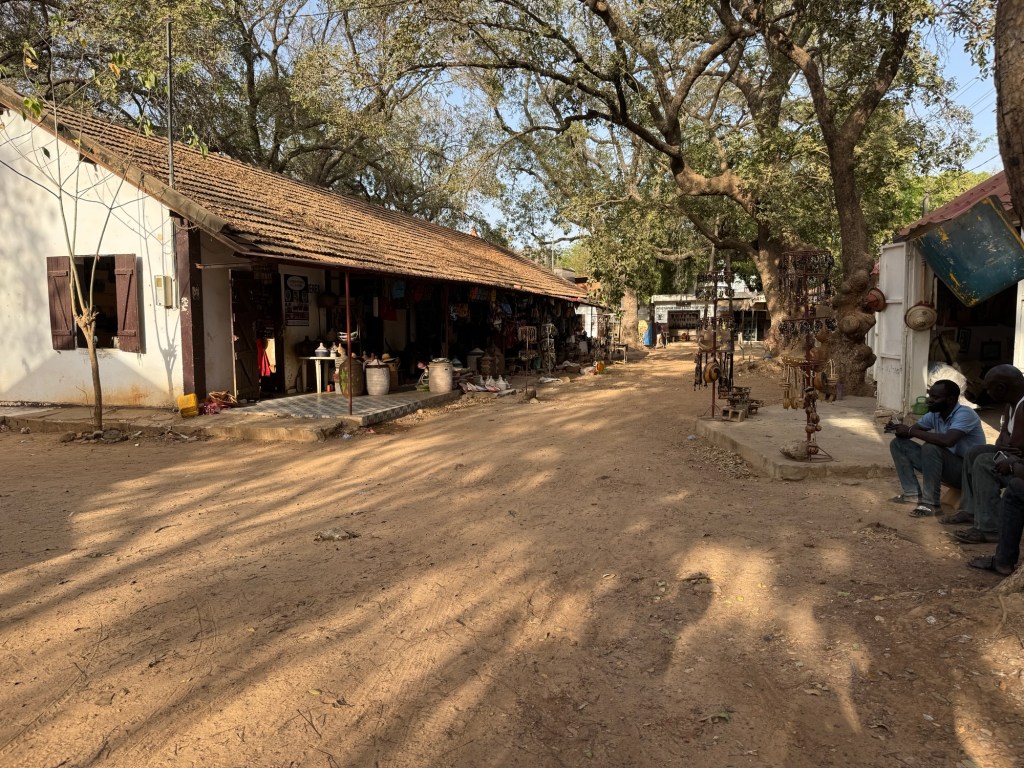
We had the market to ourselves, as this is not usually visited by tourists
I got to learn about glass art- the artist draws on the glass, paints behind it, and puts pieces of fabric behind it as well.
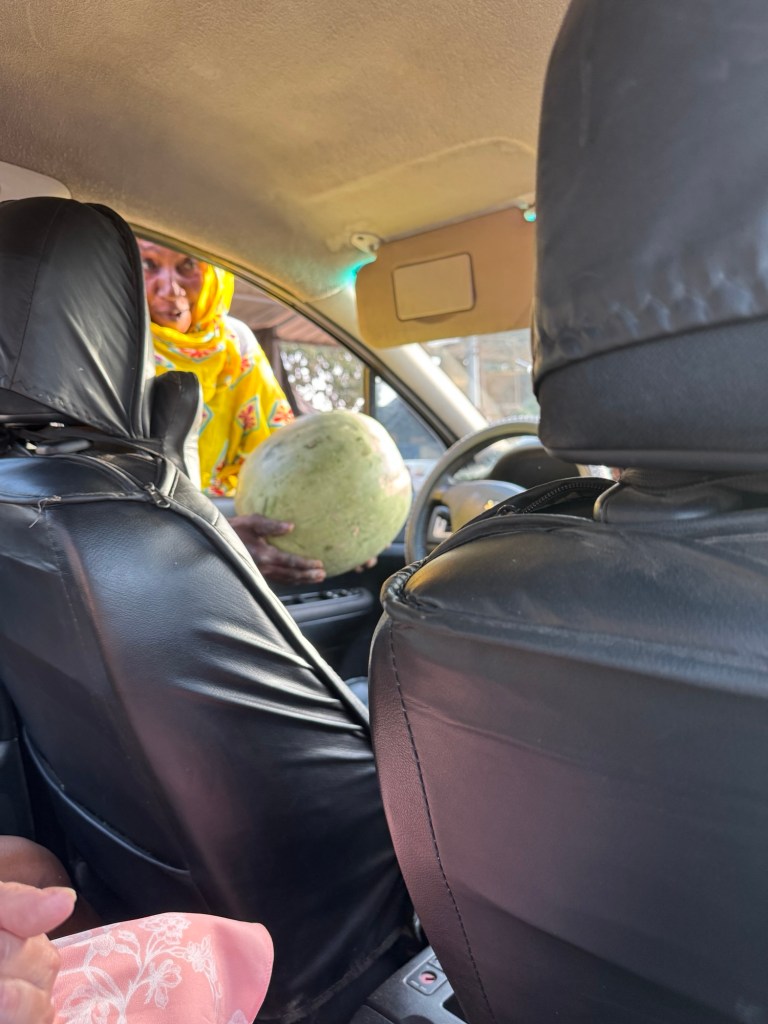
On the way back, my host teacher did the Senegalese version of ‘curbside pickup’…
You buy your produce from the side of the road, but it is not necessary to leave your car!