Bienvenue à Dakar!/Dalal jàmm ci Dakar

After 23 hours logged in airports or on planes, I have landed in Dakar! Even on approach, I could see the differences between Senegal and Wisconsin. Dakar was easily spotted below us, as it sticks out from the mainland. The ground is a beautiful red color, and neighborhoods are not set up in neat rows making shapes you can see from above. It was beautifully unique, which brought the excitement of arriving to an unmeasurable level.
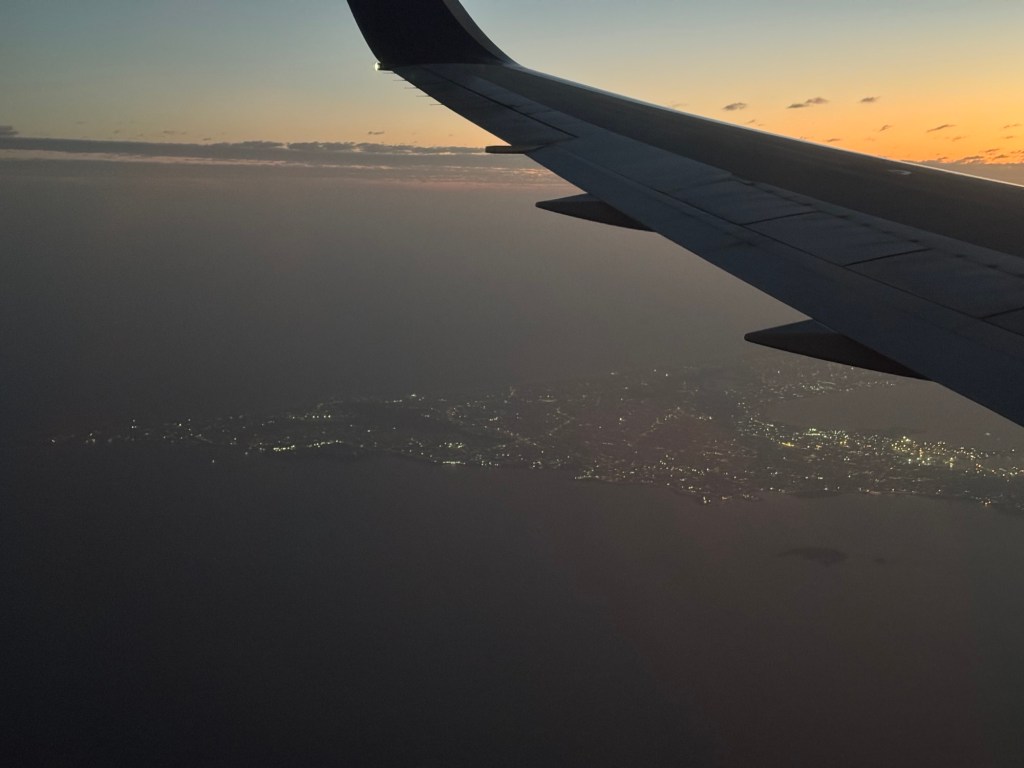
There’s Dakar!
Red color and dirt roads down below at sunrise with the moon visible

Upon landing, it was your standard customs/immigration scenario. Our bags seemed to trickle out slowly, but they all arrived allowing the adventure to begin! We left the airport to get into our vehicle. Our luggage was loaded on top of the van! We were impressed it all fit, but the driver did leave the tollway a little early on the way to our hotel because he was a bit worried about some police ahead not appreciating our load.

Don’t worry; it all got roped on, too. No luggage was lost in the journey!

On our drive to the hotel, we got lessons in Wolof, the cultural language of Senegal, which is not taught in schools at all! Students are taught in French (the national language), though they are starting to make the move to teach English in elementary schools now, as some nearby African countries have changed their national language to English. We also got a tour and some brief history of Senegal along our way, too! I was really struck by the contrasts in this country- really old buildings next to new ones, cars and trucks driving alongside horse and carriages…I can’t wait to see more!

Old and new
Just our van passing this guy and his horse on a major highway!

We arrived at the hotel and watched as our bags were untied and brought down off of the van. It was too early to check in, but they had a brunch for us – a nice buffet of many things. Some we knew what they were, and some we did not. We were a bit tired, but that didn’t stop us from creating some guesses on what we were enjoying! The star for me was a porridge with a sweet milk sauce, and a donut hole-like thing that tasted like oranges!

Plate of deliciousness

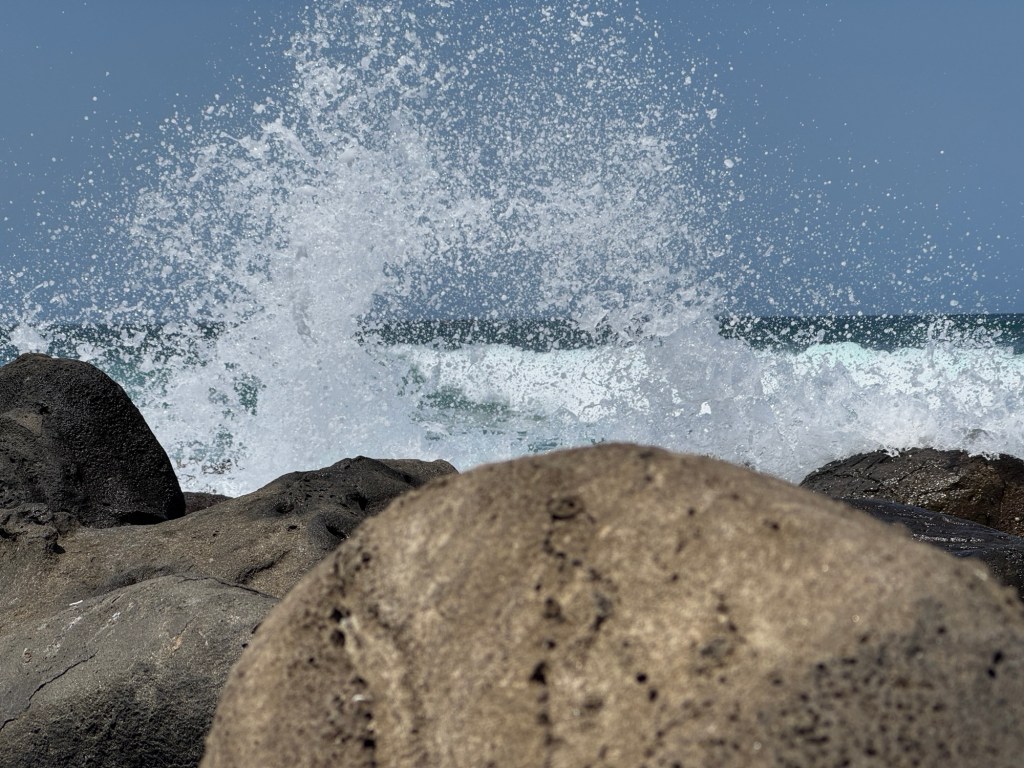
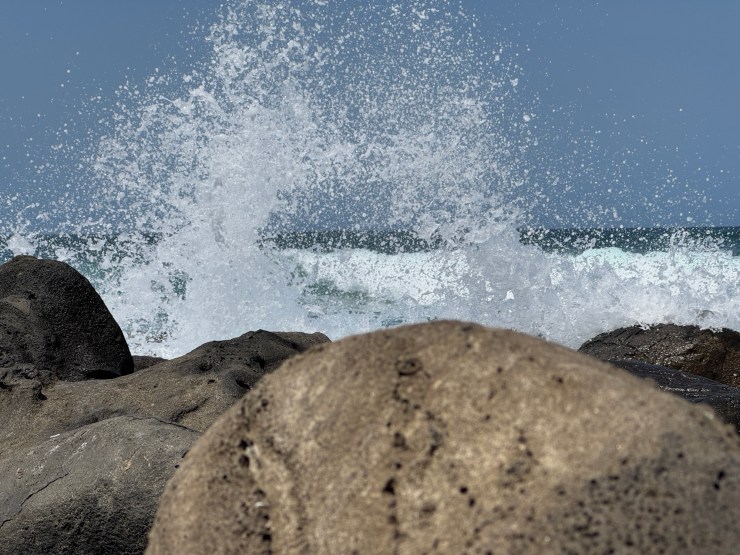
After that, we went outside to visit the ocean. We are staying right off of the Atlantic Ocean, and the view is incredible. I had seen in some of my pre-adventure research that Senegal boasts some of the best surfing in the world. It only took us a half of a second (and it would have been less if we had more sleep) to see why! Huge waves! We watched some guys diving under the water to catch some sea creatures, but couldn’t figure out what they were catching. The men looked so tiny out in those giant waves! The sun was shining, with not a cloud in the sky…temperature was in the 70s (unverified by any apps).

View from the hotel
This view cures exhaustion!
I could watch these waves all day!

We all went to our rooms then for a nap and to freshen up, and then we had our orientation meeting. At this meeting, we talked over the updated itinerary for the next few days and the nitty gritty details to get us by until our more detailed sessions start tomorrow.

We wrapped up the night with a delicious dinner at a restaurant with an incredible view! It actually got chilly at night (borderline cold…just not Wisconsin cold…according to my app this time, it’s 70 degrees 😂). We got to walk to dinner and back, and one of the members of the cohort and I went to the oceanfront to take a picture of the moon. There were a lot of people down there- we were very surprised!

I have taken my anti-malaria pills, and I’m finishing up my blog while watching Senegalese TV (entirely in French). For security reasons, I will not be giving you a teaser of what we’re doing tomorrow, but I promise it will be interesting!!!

Sunset over the ocean while at dinner
Our dinner spot for tonight! What gorgeous views!
Yassa Chicken, rice, and Bouye to drink (made from the fruit of the baobab tree, milk, and sugar). Delicious!
Dessert was the Fruit Cloud, which was local fruit, crispy pieces, and a meringue top. I’ve got some great cohort members, so we all ordered different desserts so we could try each others’!
Why no brass instruments?!?!? Ok, just kidding!
This is the coolest no horn sign I’ve ever seen. So very detailed…
The moon and the ocean…final view of the night

Time to Head South…in Search of Summer?

Well, the day has come to leave for the long journey south. I’m trying not to think about how I will be 9,000 miles from home! It’s a bit scary to be that far away from my family!

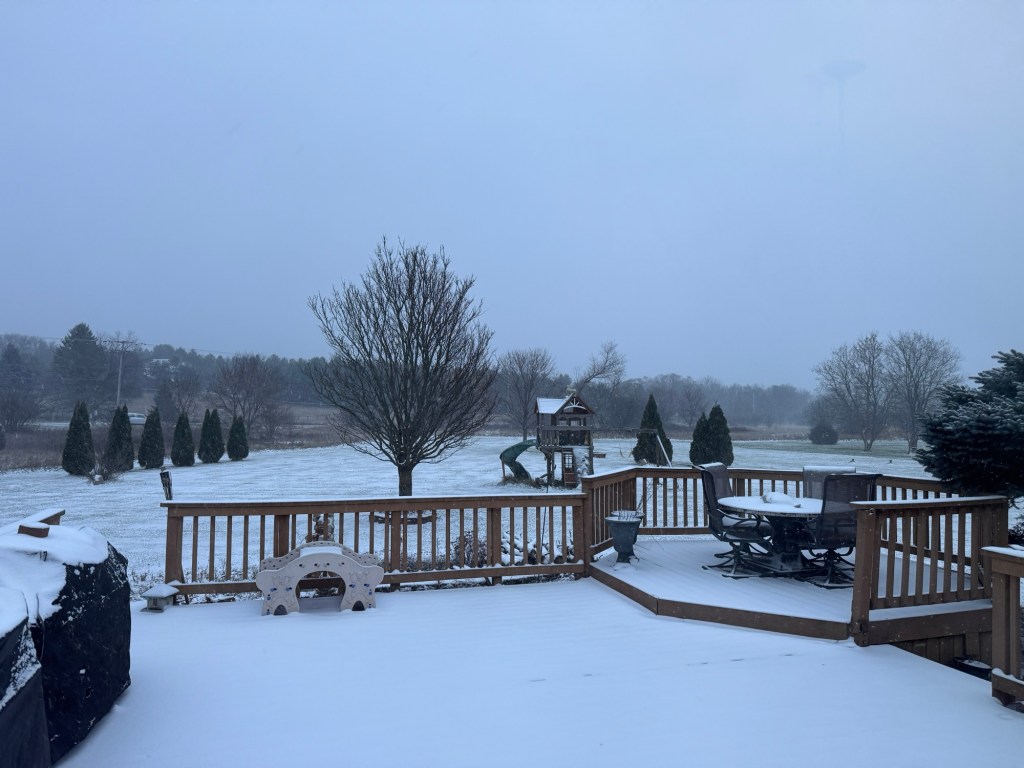
In true Lisa luck, it’s snowing in Wisconsin today. I am hoping that does not disrupt my travel plans, but only time will tell.

It’s beginning to look a lot like…winter…

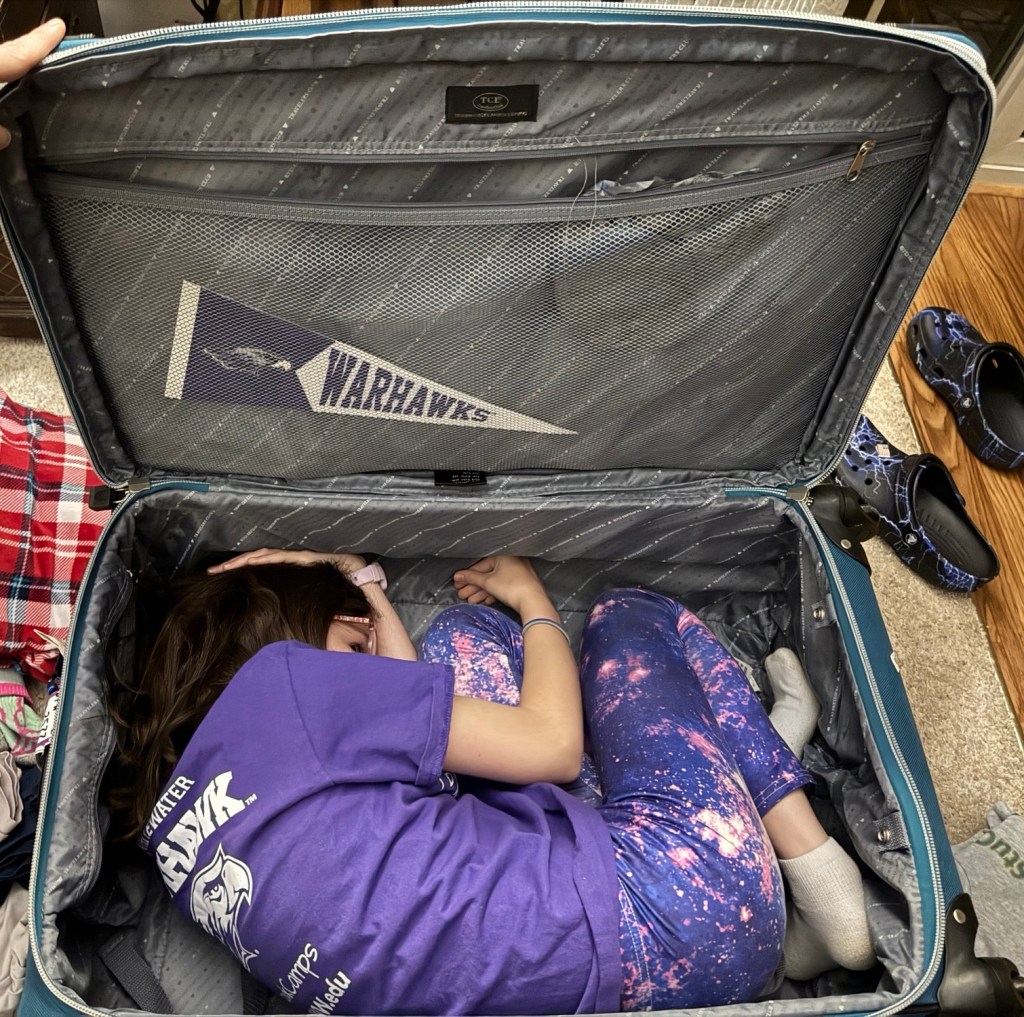
The final preparations have gone well – I think I’ve probably overpacked, but it’s tough to tell since I’ve never been to Antarctica. Someone pretty cute crawled into my suitcase while I was packing!

Can I take her with me???

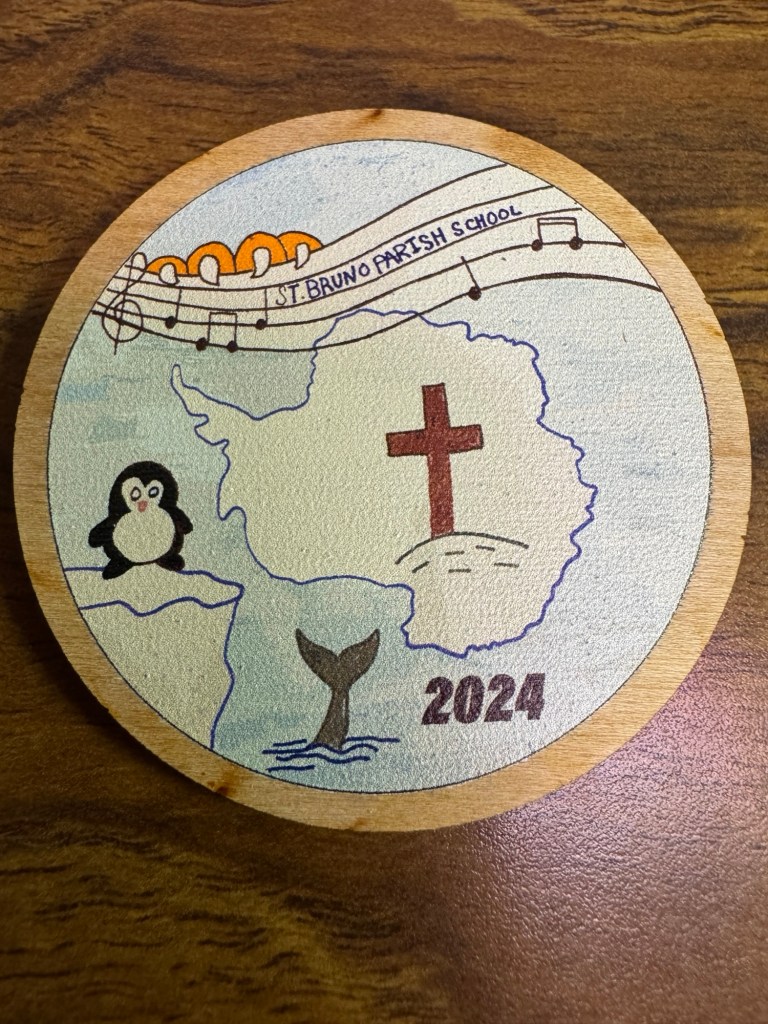
The wooden coins came in and have been distributed to the students and staff at my school. I can’t wait to hand them out to the people I meet on this expedition and learn about the songs that remind them of home.

Gorgeous coin design

I collected all of the questions from my bulletin board, and I was so impressed with the questions the students (and adults!) came up with.

Just a sampling of the questions I will find answers to….

I also had the students make a bucket list of things I needed to learn, see, or do before I left Antarctica. They came up with some good stuff that I will share as this adventure gets underway. I also made a Hawaiian-lei-style necklace of all of the students and staff from our school. I am hoping to find some moments to wear that while out exploring so that the students will see themselves in Antarctica when they look at my pictures after the fact! I included my family on my necklace, too, as I wish they could join me for my journey.

Note the necklace – it is every student and staff dressed as an explorer, all separated with UV beads. You’ll see it again soon.

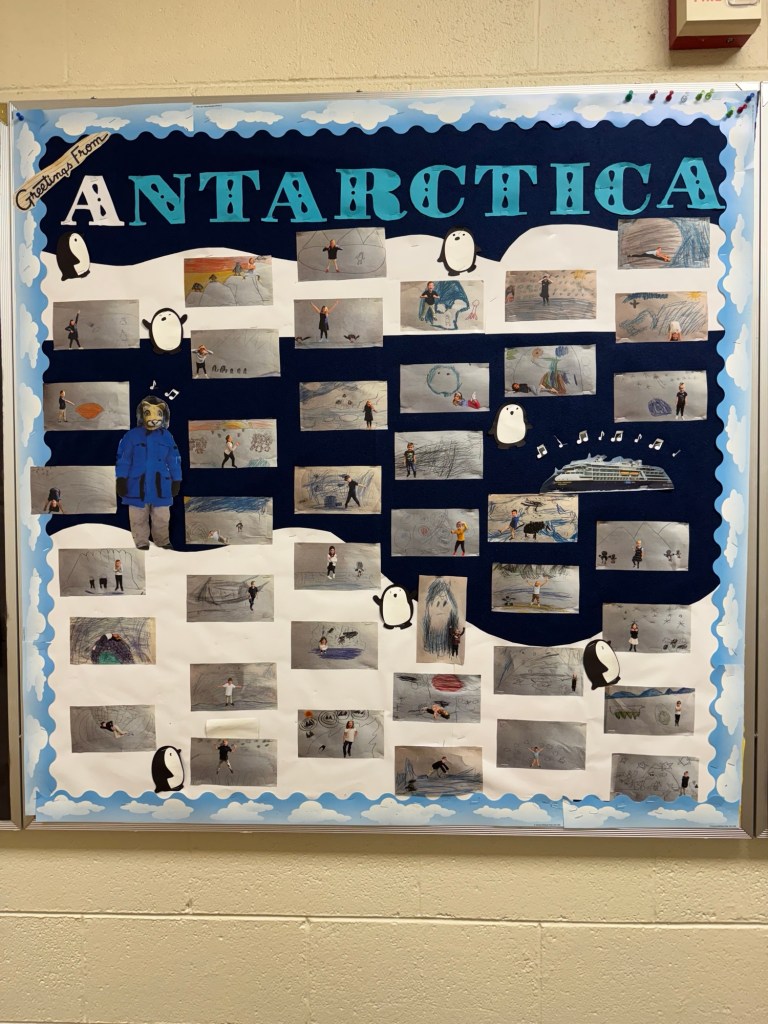
The students were greeted to a new look to our bulletin board – they all drew pictures of what they thought Antarctica looks like, and I took pictures of the students with a green screen behind them. Then I combined the images. The students have loved looking at them this week.

Our new “Greetings from Antarctica” bulletin board for the students to look at while I’m gone.

While I’m gone, the students are going to keep track of the weather at home, while I record the weather where I am. We’re going to see how the beginning of Antarctic summer compares to the beginning of the Wisconsin winter.

So, I am (hopefully) off. I am really excited because my good friend, Limitless Space roomie, and Zero G mentee is going to meet me at my layover in Dallas. Having someone waiting for me there is helping with the anxiety of the upcoming travel days. Nothing like a friendly face to greet you making all of the uncertainties die away!

I will blog as often as I am able. If nothing else, I will be able to post them all when I have wifi signal. I can’t wait for the Antarctic part of this adventure to finally get here – I feel like I have been waiting years for this, as I first applied for this experience in November of 2022, after having learned about it years before Covid. I can’t believe it’s going to happen!!!! Talk to you all soon from the flip side of the planet!

Space Exploration Educators Conference 2022

I was contacted on December 16 by the Director of Aerospace Outreach Programs for the Wisconsin Space Grant Consortium asking me if I would like to attend the Space Exploration Educators Conference (SEEC), all expenses paid. After contacting the principal of my school (who enthusiastically said “GO!!!!”) and talking with my family, I happily accepted this opportunity. Let me tell you, I am SO glad I did! It was an experience unlike any other I’ve had before!

The conference takes place at Space Center Houston, and is a 3-day event. During this time, you are treated to sessions that teach you about all of the current space missions, International Space Station experiments, and how to implement space lessons in your classroom. You also have the opportunity to tour areas of NASA that the public does not have access to. My favorite thing about this conference is that at every session you go to, you are actively DOING something. Each main session is 90 minutes long, and I have never seen an hour and a half go so quickly.

The very first day started with a Keynote session that was delivered by a panel of 4 astronauts. Before they even began, however, the astronauts on the ISS (International Space Station) had recorded a special greeting just for us, welcoming us to the conference! Talk about a first for me! I’m normally not a huge Keynote session fan, but we had one each day of this conference, and they were not to be missed! Every single one was inspiring, informative, and flew by!

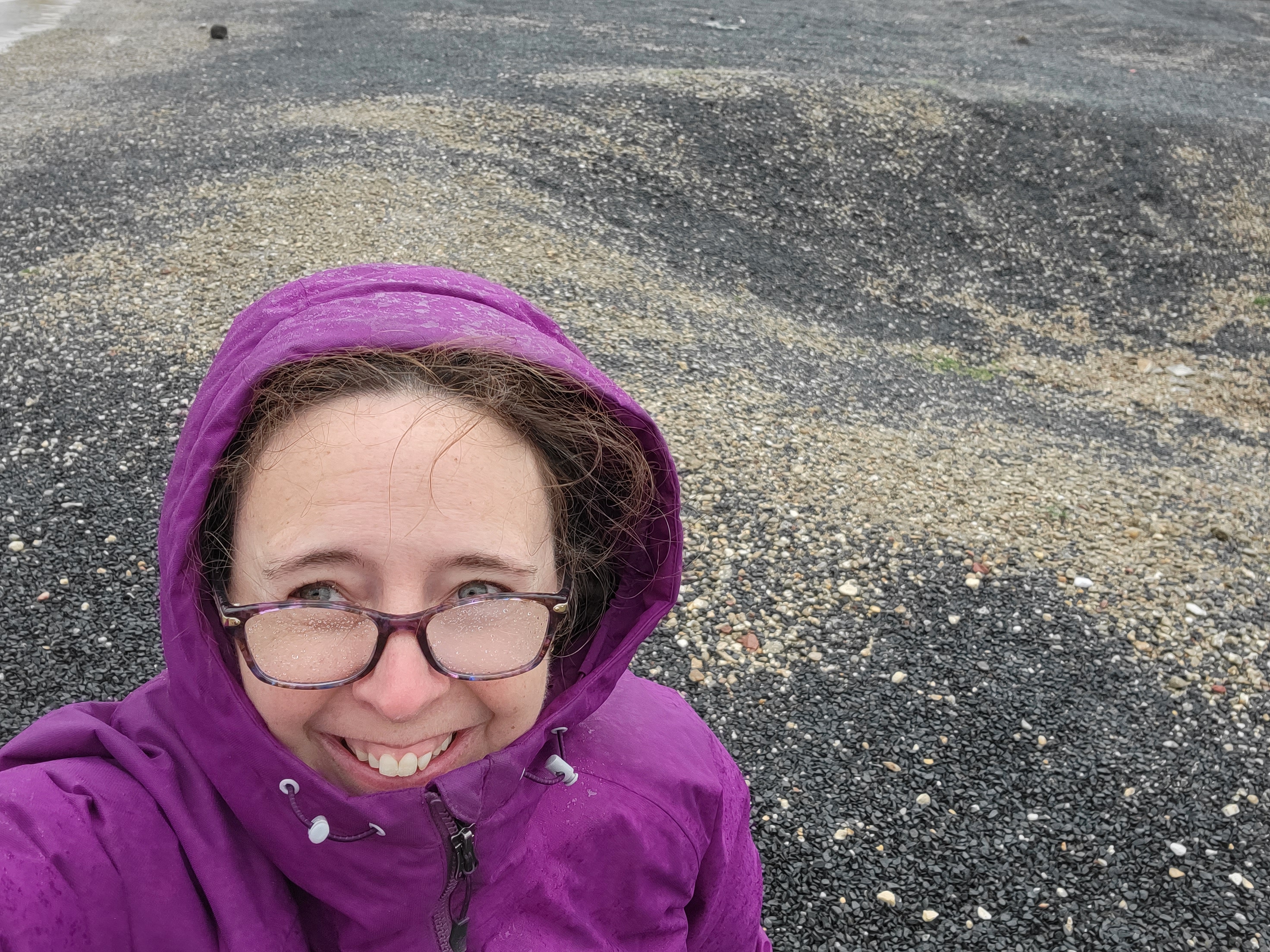
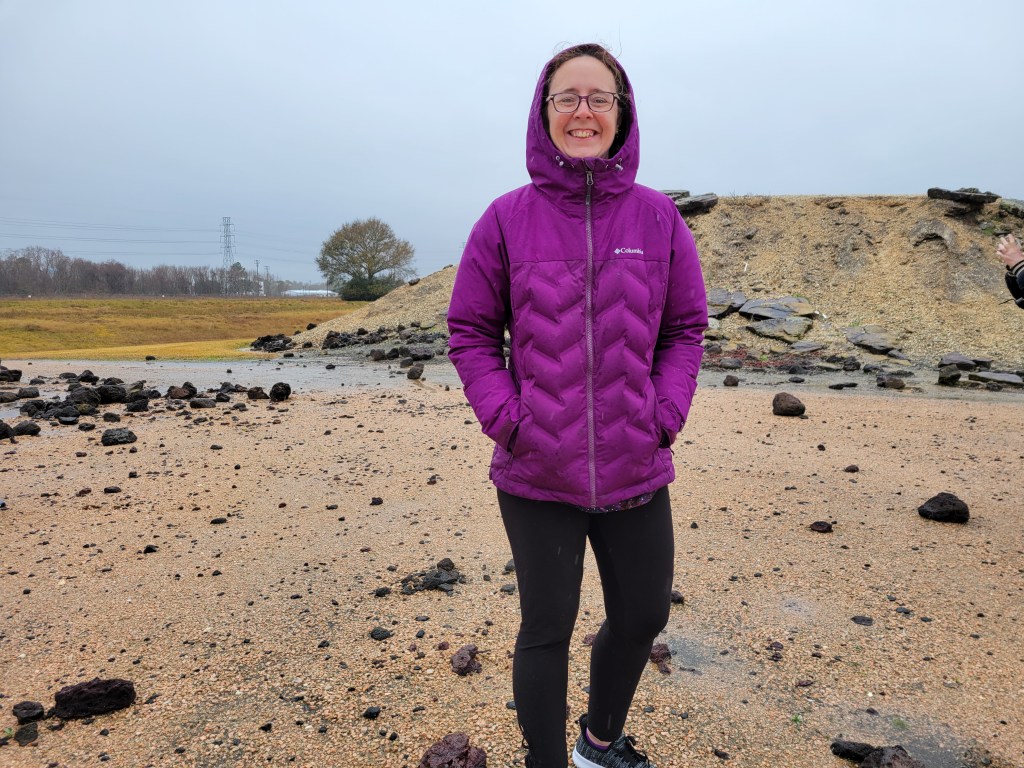
On the first day, I signed up to take a tour of the “Rock Yard,” which is where NASA has created a simulation of the surfaces of the Moon and Mars. Even though it was raining, we were a bus full of enthusiastic teachers, ready to brave the elements to go ‘stand on the Moon,’ and ‘explore Mars.’

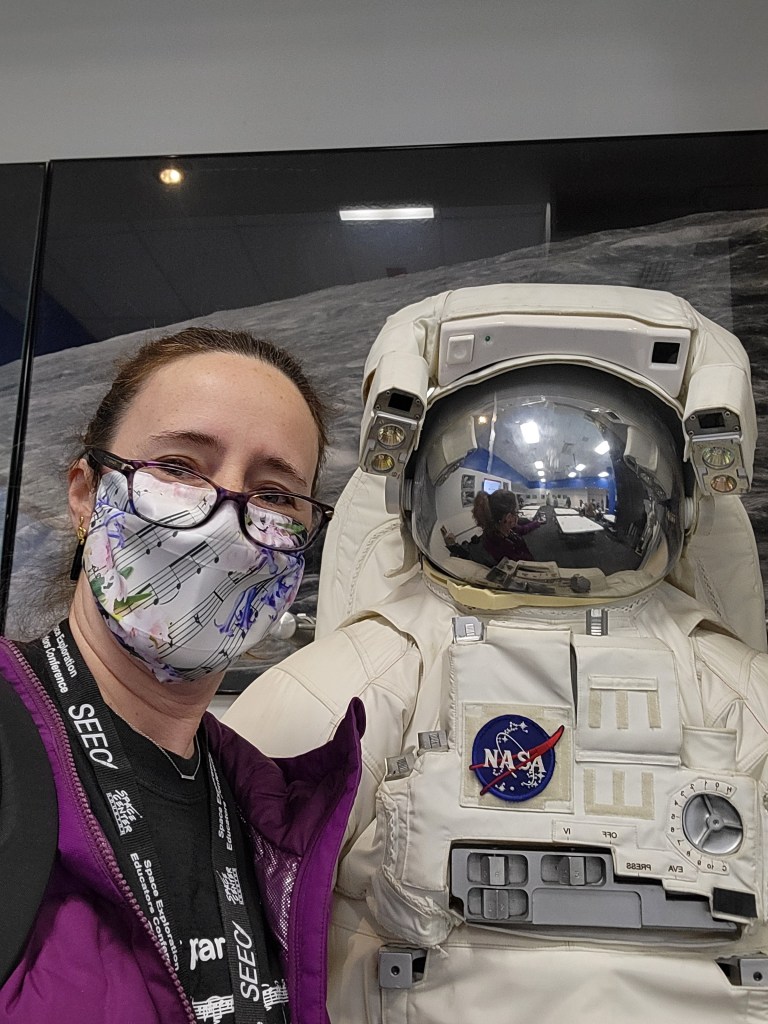
Yes, I am on the Moon – thanks for asking.
Is it raining? I can’t tell; I’m on Mars.

So after a bang-up first session pick, my next session was lunch, where I ate underneath a giant, lit moon. The food was delicious, and the conversations were amazing. After lunch, I had a session about Funding and Programming a Space Lab. This session was awesome, because I learned how to grow plants in Moon and Mars soil-simulants. Not that I can grow plants on Earth, but it was fun to experiment with anyways!

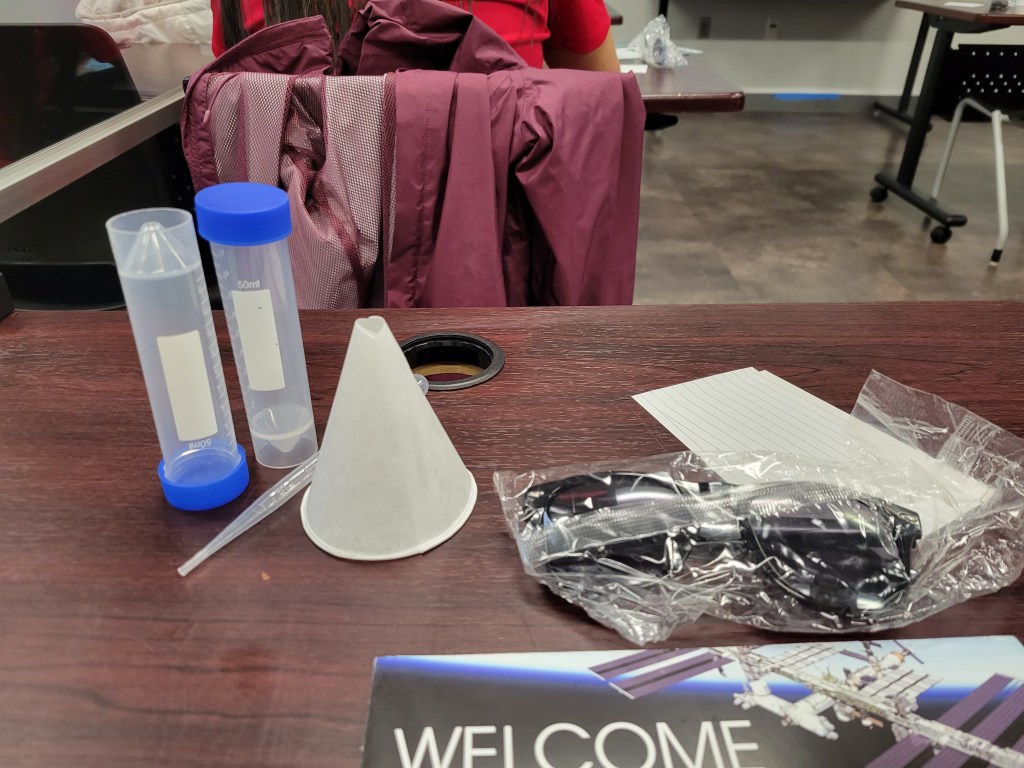
This is what your seat looks like when you walk into a session – lots ‘o swag, and materials for your activities.

After this session, I took a tour of Mission Control. I had taken a tour the day before, but my friends that I was hanging out with at the conference said the tours for the conference attendees are a little greater in depth and experience. They weren’t lying – we got to go in many areas the public isn’t allowed in, and our ability to take pictures and videos was not limited at all. It was really neat.

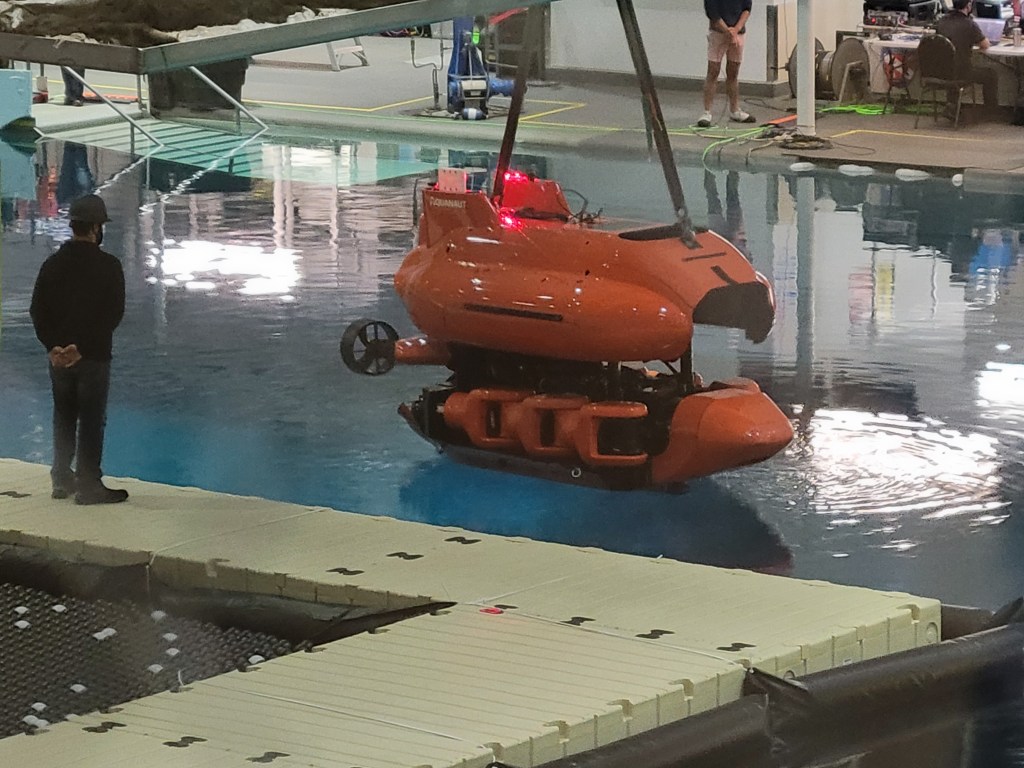
My next session was also a tour. This time I got to see the Neutral Buoyancy Laboratory, which is where the astronauts train for weightlessness and get used to wearing their spacesuits. They have a very large, and very deep pool with a mockup of the International Space Station submerged within. When we arrived, they were done training for the day, but they were still removing the submarine they use. We also got to buy shirts if we wanted at the only location in the world that you can buy NBL gear from! Of course I bought a T-shirt!

This is HUGE!
Watching the submarine get pulled out

After all of that fun, we loaded into buses to take an excursion to downtown Houston for the Infinite Exhibit. This event was a virtual reality experience in which each attendee gets to feel what it would be like to be on the ISS. I was eligible for this because I joined a group called the Space Station Ambassadors, which is a free organization to join and focuses on the experiments going on the ISS. They also have put on virtual workshops on a number of topics, and I even attended one already since I’ve come back from SEEC. The Infinite Experience was amazing. It really felt like I was on the ISS, and I loved looking back down on our planet, manipulating objects on the space station (including a juice box I tried to hold onto for the duration of my time ‘aboard’), and just experiencing what it would be like to be an astronaut. When we got done with the experience and looked back into the room we had just walked around in, we couldn’t believe how small it looked, as it felt like we were in an endless room!

No way does the room feel that small!

After the experience, the Space Station Ambassadors got aboard the bus and were treated to food at a local brewery. The food was good, and we even got more swag. As if the experience, food, and swag weren’t enough, they had raffle prizes as well, and I walked away with a cute book that was read on the ISS, and a matching doll that was a character in the book. I was super tired when I returned to my hotel room, but my head was spinning with all I had learned and experienced! I checked on my space plants and went to bed!

Goodnight, Earth & Mars Alfalfa!

The next day started with another INSPIRATIONAL keynote speech on “Launching the Next Generation of Lunar Explorers” by Mike Kincaid (Associate Administrator of NASA STEM Engagement) and Howard Hu (Deputy Program Manager of NASA’s Orion Program). After that, I caught the beginning of a session on Pocketlab Rovers, but then those of us in the Embedded Teacher program rallied to cheer on our friend Kellie Arenz during her virtual presentation on our program. Not surprisingly, it was time for a meal after that session!

After lunch, I got to try my hand at being a ROCKET SCIENTIST. I went to a session called “Launch Your Classroom into the Stars!” You’ll never guess what my spot looked like when I got into the room….

Let’s do this!!!!

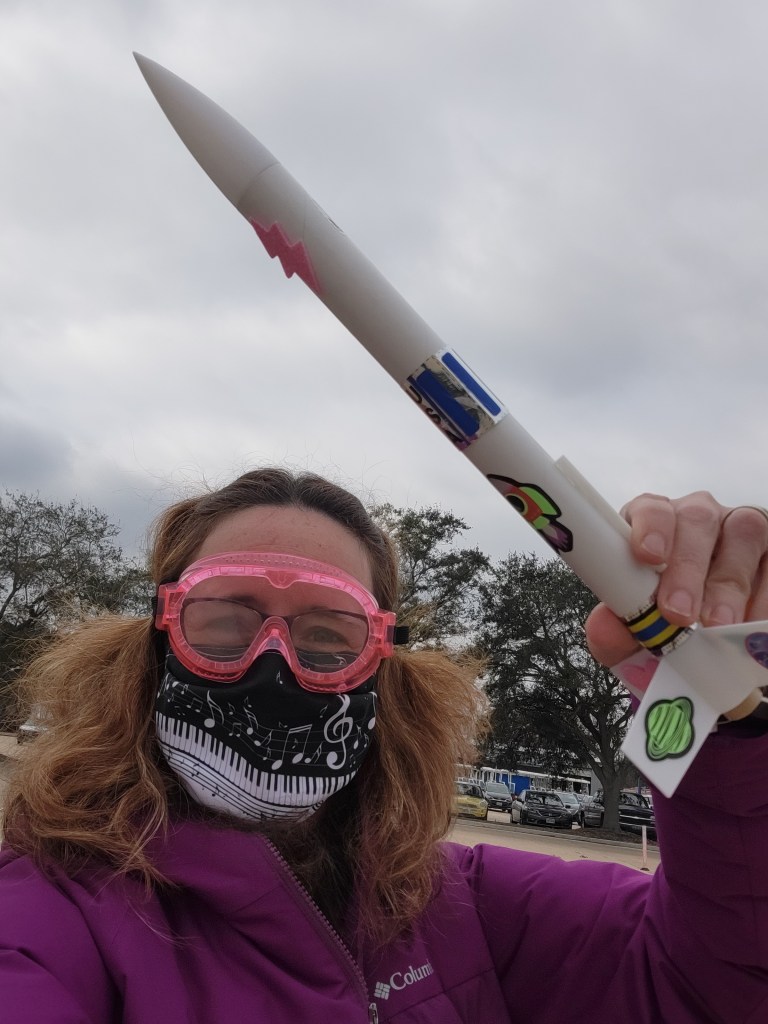
We got to work building rockets, and then went to the parking lot to launch them. I was very determined, but unfortunately my Sparkly Unicorn Missile landed in a tree. If you ever find yourself on the backside of Space Center Houston, let me know if my rocket is still there….

Why do I look like an evil scientist when I put on safety goggles?

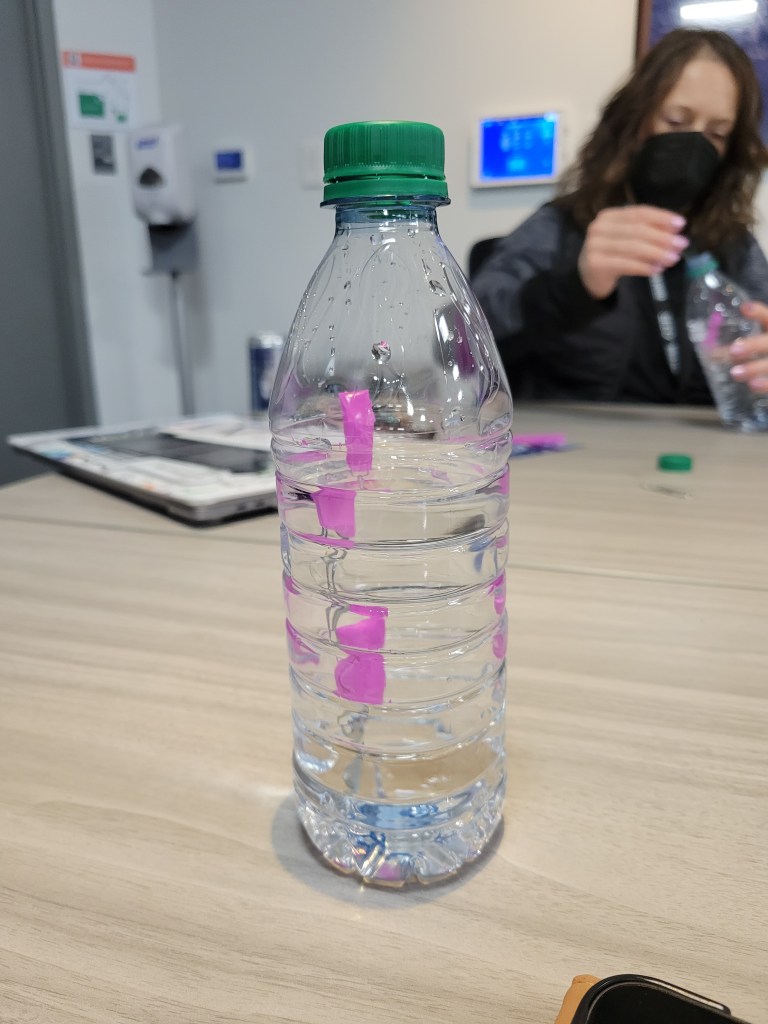
My next session didn’t end as tragically, thankfully (although my straw ‘diver’ disagrees). It was called “An Astronaut’s Perspective on Training in a Neutrally Buoyant Environment,” and it was fascinating. It featured a dive trainer who works with the astronauts to train them in the pool that I visited yesterday. We got to see the diver take an empty water bottle all the way down to the bottom of the pool and see it get flattened by the pressure. She also talked about some of the exercises they do and the many challenges to training in this environment.

You guessed it – even in this session there was an activity to do! Ignore the second straw in my bottle – I accidentally drowned my first diver….guess I won’t be hired as a trainer anytime soon.

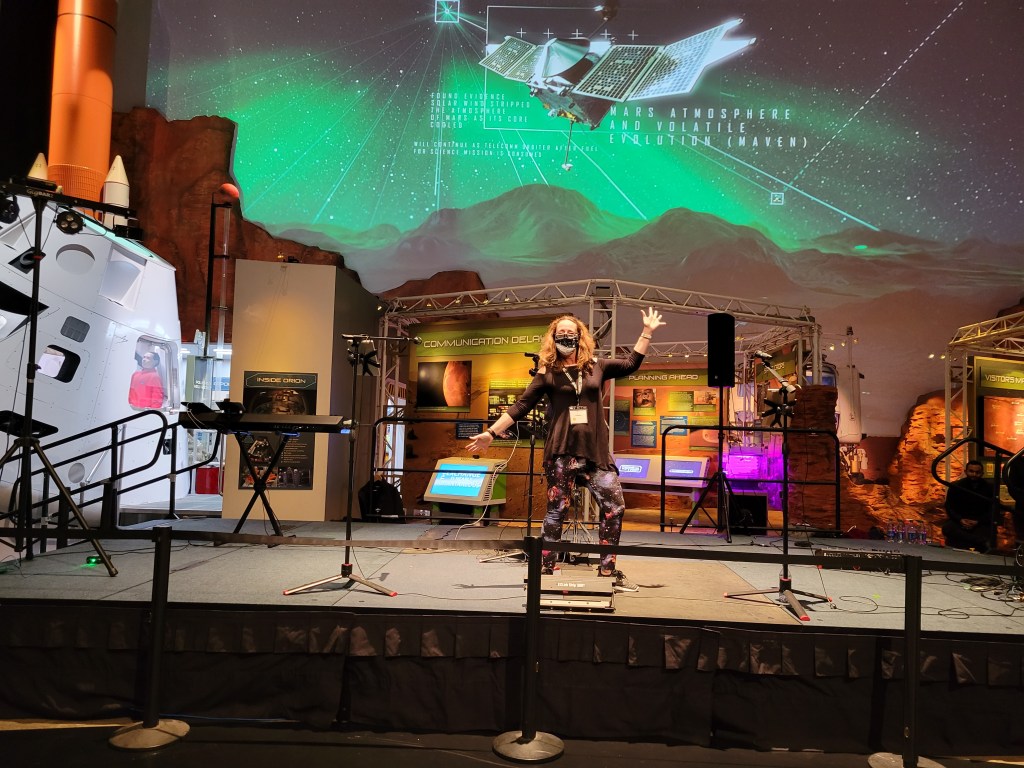
After this session ended, it was time to go back to the hotel to get ready for the banquet. Since it was my first time, I did not participate in the theme that some tend to go all out for. This year the theme was to dress in fashions of the future. It was fun to see other conference attendees in light-up clothing and other fun variations on that idea. The banquet was fun, and took place in Space Center Houston. It was really cool to wander around the exhibits with a beverage in my hand, sitting next to moon rocks and real astronauts, hearing stories from NASA employees, and networking with teachers from around the world, all while listening to a live band.

Why yes, I did end up on stage (next to Mars)…once a musician, always a musician!
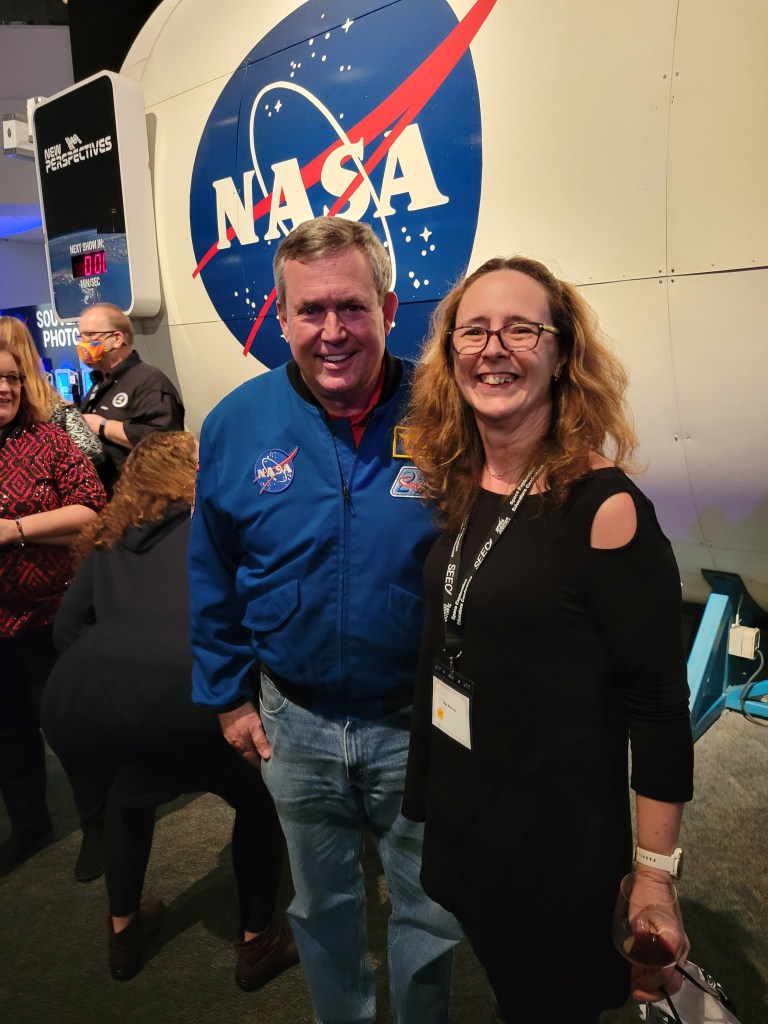
Hanging with Astronaut Mike Foreman, who was a trombonist when he was in school!

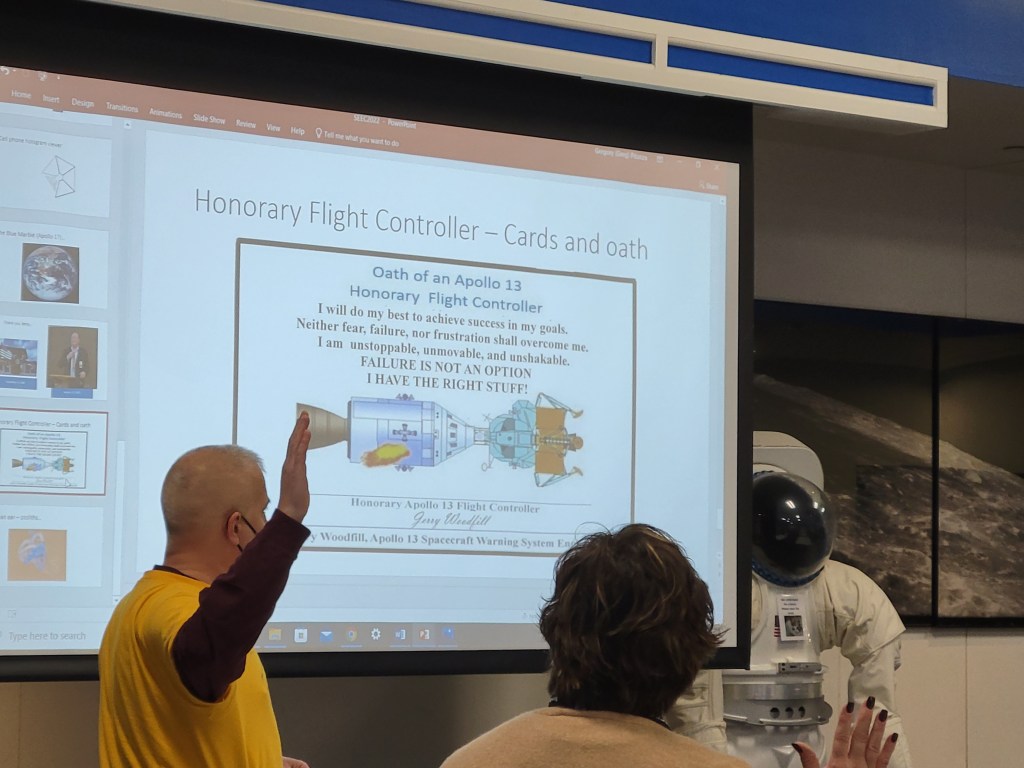
After the later night from the banquet, the next morning does not feature a keynote session. Instead, the Embedded Teacher crew met up for breakfast to discuss some details for our upcoming flight. Then it was off to our final day of sessions. My first session up was a session that was supposed to be done by a NASA flight controller (Jerry Woodfill, who passed away a few weeks before the conference) giving us a tour of the exhibits while telling stories of his experiences, but it got changed. We got to become Honorary Flight Controllers, taking the oath and everything! I also learned a cool technique for Go-No Go for my students to let me know if they need more time/more help/don’t understand. And, I got a blue marble with the continents printed on it and a bracelet that says “Failure Is Not An Option – I Have the Right Stuff.” There were a lot of amazing lessons packed into this session!

Taking the oath (while taking a picture of the oath)

My next session was called “Bring the Art of Space Into Your Classroom,” and was put on by two amazing women from the National Space Foundation. I knew them from my Embedded Teacher Program. In this session, we learned how to help students create zines (which are like mini books/magazines with artwork) to display their knowledge about a subject matter. In our session, we were divided into groups and created an entire zine in our session time. It was really cool and something I an imagine my students really getting into.

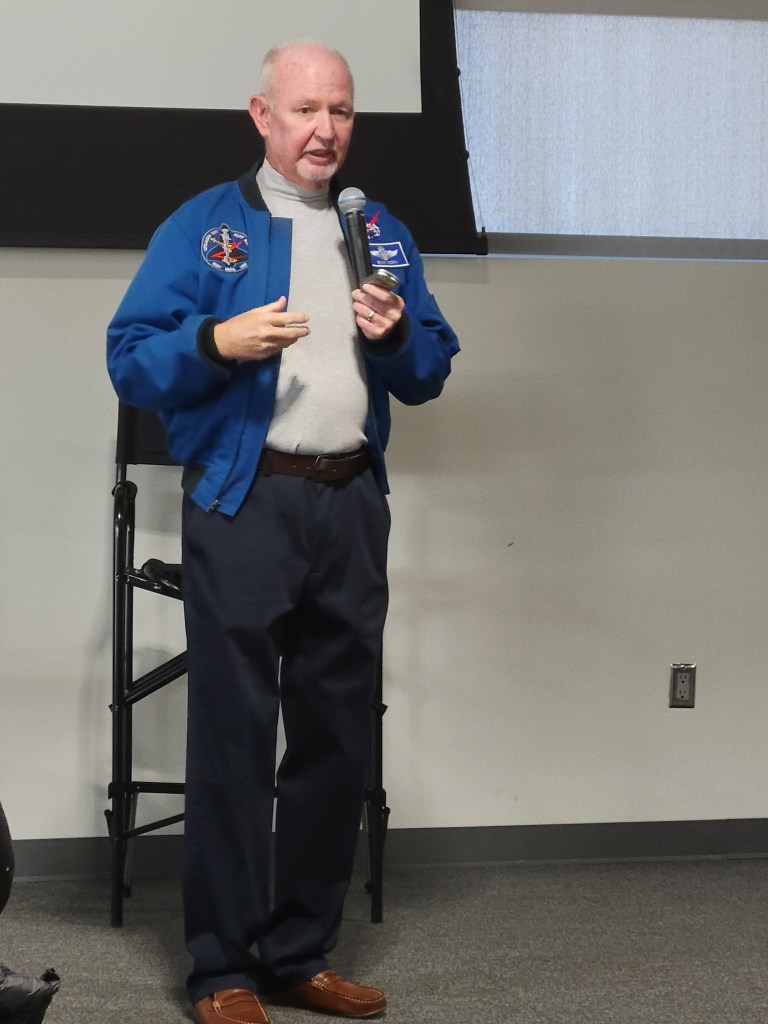
I was super excited about lunch today, as I had opted to eat with an astronaut. I got to have lunch with Col. Brian Duffy, and it was sooooo cool to hear all about his missions and the crew that he flew with. His stories were amazing, and I could have listened to him talk all day!

Just so you know, he was not a musician, but music was something that was very important to him while completing tasks in his mission, including helping him deal with a full day weather delay before return to Earth.

My last session before the close of the conference was “Exploring Sound with NASA Aeronautics and the X-59.” This session was really neat, as we got to create our own sound experiment and then work to implement it, collecting data, testing hypotheses, etc while in Space Center Houston. We learned how to use the free Arduino app to record many different kinds of scientific data. My group wanted to analyze the decibel readings of the different spots in the museum to see if any of the noisier locations could reach levels of damaging hearing. You will be happy to note, that a science museum such as Space Center Houston did not reach dangerous decibel levels, except right next to a toilet when flushing. Good to know, right?

The final event at the conference was a keynote session given by Audrey Powers, the President of New Shepard Mission & Flight Operations for Blue Origin. She talked about her space flight and where her company is going. It was VERY inspiring. At the end of her talk, they raffled off a trip to go see the next launch for Blue Origin. You will not be surprised to hear that I did not win that. However, I didn’t even feel badly not winning after having such an amazing time at this conference. I felt so inspired and so in awe of this experience that I got to have. I am so very grateful to the Wisconsin Space Grant Consortium, as this experience wasn’t one I even had on my radar. A music teacher at a space conference? Really? And I got so much out of it that I can’t wait to take back to my students and my whole school. It was a very powerful experience that I really hope I can have again in the future!

Farewell, but not for long I hope!

Top 5 Things to Keep in Mind for Online Teaching

I know so many of us as teachers were not prepared to move our entire face-to-face curriculum to an online one immediately. I was so shocked by how quickly things escalated that it took me 3 full days to remember that I had even completed the necessary requirements for our state to be a licensed online teacher (in my defense, I did this work 5 years ago through a local college and haven’t been lucky enough to use my skills at all yet!). I went back and reviewed my class notes, texts, and projects and have come up with these 5 things that will help as teachers work to modify their curriculum for online learning.

  1. Keep your original learning objectives in place. When you were teaching your students face-to-face, you had a pretty good idea of what you wanted your students to be able to do for the rest of this week, month, quarter, school year, etc. Don’t let all of the overwhelming quantity of free online resources distract you from what it was you planned to do. Make your goals and objectives FIRST and then search for the appropriate resources to assist your students with this. Not only will this give your newly-formed online curriculum direction, but it will make more sense for your overwhelmed students who are trying to make sense of everything as well.

2. Remember that the majority of your students are new to this as well, despite being “Digital Natives”. Yes, parents are always bragging about how their son or daughter knows more about their phone than the parent does. Yes, your students may have all the info on how to fix your classroom projector because they’ve seen other teachers in the building do something similar. However, the students only know the technology they have been shown or used themselves. They will still need clear instructions on how to submit a video using the platform you have chosen. They will need help navigating the time necessary for each task they are assigned. They will encounter technical difficulties along the way. Keep in mind we are all learning together. A great example of this all is my own classroom. We officially rolled out our online teaching yesterday. I am a band teacher, and I assigned one of my band classes 2 assignments – a music theory assignment involving the student going to musictheory.net and completing a note name quiz. They then had to take a screenshot of the page when they had accumulated 30 correct answers. For the second assignment, students had to make a video of themselves playing their instrument along with an audio clip I created of one of our concert band songs. I thought I was taking it easy on them as far as first assignments go. Boy, was I wrong! The school chrome books had apparently locked the students out of musictheory.net, and their cameras were also turned off by our watch dog company. How frustrating for all of us!

3. Some of our students have limited technology resources. It’s great if your school is 1:1 with technology all the way through. However, for the younger students who may not be, this is going to be more difficult than you may expect. Some families may only have one or two computers or devices that will enable work for school on them. If the parents are also trying to work from home, they will be using those devices to continue making a living. Additionally, siblings may have to share devices as well. In my online teaching classes, we were discouraged from making students check in with us all at a specific time. This can be very stressful for families who don’t have a way for that to happen due to the parents’ work schedules, or siblings’ online coursework. I’m not saying don’t try to check in with your students in person at all; I’m just saying that perhaps offering it as optional may be more manageable.

4. Most students’ favorite part of school is the social and emotional components. This was one of the most eye-opening moments for me in my online teaching coursework. It is important not to lose sight of the comaraderie that physically being in school entails. I use Google Classroom for my online teaching. In my stream, I posted a picture of my cat sitting above my head on the couch while I worked and said “Post a picture of your pet ‘helping’ you do your homework.” I also told my students it was “Crazy Hat Day,” and asked them to wear a crazy hat in their video recordings of the assignment for the day. Anything to give them a little release and enjoyment within their assignments will help! Also, think about their emotional health – I started off a little lighter on my assignments at first, and will build as we all get more comfortable. I made a video for my students reminding them that their online assignments might look intimidating at first. They should remember that they are normally in school for 8 hours a day. Their assignments are normally spread out over that time period. Now, they are logging in and seeing a full days’ worth of work waiting for them. Students who normally have a hard time focusing for an hour in your class are going to have to self-motivate to do a full days’ worth of work on their own timeline. I’m definitely not advising you to take a step back and demand less from your students – I’m just reminding you that they may need to ease into it at first.

5. Remember, you are doing your best in a tough situation! You did not ask for this. Your students did not ask for this. No one anticipated this at the beginning of this school year. You are doing the best that you can, and parents & students will see that. It is very much like when you took your first teaching job. You had grand ideas of how things would work in your classroom. As you got teaching, you realized you had to adapt your ideas/beliefs/methods, as you learned what your students needed and what your school expected. The same is happening now. Unfortunately, when you had your first job, you probably had more than a few days’ notice on what you would be doing. That may not have been the case for you in your jump to online teaching. Keep in mind what your big picture goals are for your students, take a deep breath, and don’t be afraid to experiment. You can adjust as you go. You do not have to be perfect. This is one of those moments where you get points for the effort you are putting in. Hang in there, everyone! With any luck, we will get to see our students in person again at some point! If not, at least we still can see them online.