April Showers Bring May Flights!

I meant to blog more often this month, but there really wasn’t anything that was super exciting for anyone to hear about.

The majority of our weekly school meetings focused on media and press release sending. We also had spring break in there. Once the students came back from spring break, our awesome Phy. Ed. teacher did some excellent astronaut training exercises in class. I stopped in one day to watch, and it was so fun! He found an astronaut training video on YouTube for the older kids, and the younger students got to go on an astronaut mission through a different YouTube video.

We also discussed our concert plans, and the Blue Origin Postcards to Space project. Every student created a postcard that will fly to space and then get mailed back to them! I also added every student’s name to the Artemis database. Each student’s name will be loaded onto a NASA flash drive and orbit the moon. The students get a boarding pass to show as proof that their name will make the journey.

As far as our official Embedded Teacher meetings, we were just taking care of the little details this month. We prepared our impact statements for the program’s press release. We signed our flyer paperwork, and worked on submitting lesson plans to the SpacEdge folder we were each given. These files will be made available through the National Space Society’s webpage. We also made our travel plans!!!

In addition to these meetings, the other 3 incredible teachers in this project and I would meet from time to time, and text back and forth about some fun things we are planning. We made a crew name for ourselves (Steam Team 4), and designed a mission patch. We’re ordering hats, and one of the ladies made us t-shirts. I’ve even ordered an awesome pair of sparkly tennis shoes for my flight.

It seems this last month really flew by. I got a special blessing from Father Dan at our Wednesday morning mass. We had a US Air Force veteran/retired American Airlines pilot come in to talk to our students at my Pre-flight Assembly. The Spanish teacher taught the students Spanish space terms in class. Our theater arts teacher will be having the students act out what they think zero gravity would be like. All in all, I think the plan to involve the whole school as much as possible has been a success – and this is due in large part to the fantastic staff at St. Bruno Parish School. They are all amazing people who have been willing to collaborate with all of my crazy ideas, despite the fact it creates more work for them. I am so lucky and blessed to be at this wonderful school!

I’m currently on the plane to get to Fort Lauderdale, which is where my Zero G flight will leave from. It was a bit of an ordeal to get to this moment, thanks to the last 48 hours or so, but I’m on my way. The fact that this is really going to happen is starting to hit me. I’m a mix of excitement and nerves, but mainly disbelief that it has all fallen into place! Stay tuned for more updates…it should be a wild ride, both literally and figuratively!
Embedded Teacher Wild Ride Begins

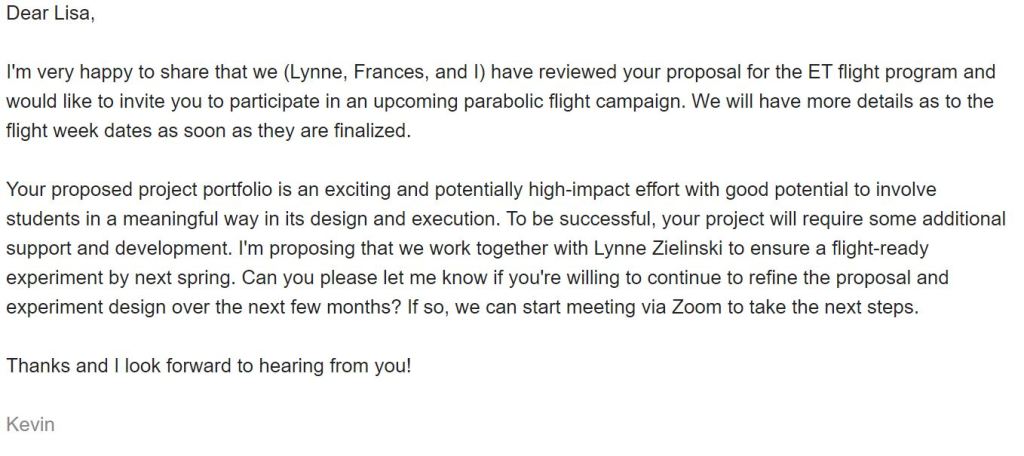
Expecting a response on my proposal was not on my radar for a few months yet (if at all). I was gearing up for the Space Exploration Educators conference in Houston in the beginning of February. I was working through all of the cool space & music lesson plans I had made for my proposals for the Embedded Teacher program. I was getting ready to end the 1st semester of this school year. It was January 12, a month after I had submitted my second proposal, when I got a surprising email in my inbox.

I almost screamed out loud when I read the first line!!! And I’m pretty sure I told everyone I knew before I even finished reading the email!!!

And that was how the next phase of my journey began!

From January 30 on, we have met every Wednesday afternoon at 4:30 pm via Zoom to discuss the aspects of the flight. I am in these calls with 3 other teachers who will be flying – amazing women from Iowa, Georgia, and Texas. After I came back from SEEC, I also would have a weekly meeting at my school with Mary MacDonald (the fantastic principal at St. Bruno) and Tammy Price (whose title is administrative assistant, but she does so much more than that!). The rest of this blog is going to serve as a summary of those experiences to document my journey, and once I’m all caught up, I’ll begin having entries to update this adventure in real-time.

So, as I mentioned, my first official meeting was on January 30. I learned that I might be flying in the spring, or if I needed more time to get my package together, it might be the fall. I was a little bummed about the idea of waiting until fall after getting all of my current students so fired up about space (which is our theme for the year in my class). Then I was introduced to a Trello board that has been set up for all of the teachers who are flying, so that we can see what needs to be done and communicate easily back and forth throughout the process. Overall, the first meeting was a bit intimidating and overwhelming as I saw all that had to be done before I could be set to fly experiments.

The following week was SEEC, so we were all in Houston together. We met up for breakfast to speak in person. I am so glad we did! It was really nice to hear how overwhelmed and nervous the other teachers were as well. I felt better knowing that the science teachers weren’t sure that they were good enough or smart enough to pull this off. If they were all feeling the same as I was, I must be doing ok! Dr. Crosby was great at calming us down – he said that the whole process is a success if it creates a meaningful experience for our students. That was the whole point of this adventure, and as long as we used that as our guide, we wouldn’t be letting anyone down.

February 7 (the day after I came back from SEEC), I started meetings with Mary and Tammy at school. I first need to say how amazingly supportive my principal and colleagues are, even without this Embedded Teacher experience. I am so lucky to teach at a school where I can teach band in an out-of-the-box way to get my students enthusiastic about making music and connecting to subject matters they love outside of music. I think back on the teachers who made the biggest impression on me and motivated me to work hard, and they weren’t always my music teachers. My chemistry, physics, French, and English teachers in high school were the teachers I look back on from those years because they found a way to connect their subject matter to what interested me. They showed me that what I enjoyed learning about also had applications with their concepts and ideas. Throughout this entire adventure, I have been reminded of how much they taught me about music without being music teachers. And now, I am returning the favor by teaching my students about space while being a band teacher.

So, back to my meeting with Tammy and Mary – we started calling our meetings “Project Sparkle Unicorn,” as I was the unicorn in the room by being the music teacher amongst all of these awesome STEM teachers. When I told my friend about this, she said “no, you are the SPARKLY unicorn,” and I’ve just started to embrace that to bolster my courage in this whole process. In my meeting with Mary and Tammy, we discussed my school integration plans (as I want this to be a whole school experience, rather than something only my band students will benefit from), and we developed some timelines for these plans, along with media plans.

On February 9, Dr. Crosby gave us our timelines for the requirements of all paperwork and submissions for our proposals. It still looks very scary and intimidating, but a little bit more doable. I remember thinking that I better stay on top of these dates, and how nice it was to have them so I could stay focused on one step at a time. I also had a funny epiphany in this meeting. The wonderful teacher from Georgia was talking about some cool sound experiments using a tuning fork. I had ruled out a tuning fork in my experiments, as I knew it wouldn’t be heard on a flight with engine noise and the other noises from other experiments. As she was describing this idea, I realized that I was definitely biased by my musical training – see, for me a tuning fork produces sound for us to hear. In the science world, a tuning fork produces VIBRATION. You don’t need to hear a tuning fork to know that it is creating noise. Weird revelation for me, for sure! Anyway, then I got this crazy fun idea of trying to squeeze out a water bubble (in a glove box, because those are the rules for flight) and vibrating it with a tuning fork. I was giddy beyond belief at this idea, as one of the most fun sound experiments to do in classrooms is to hit a tuning fork and then place the vibrating end into a cup of water – instant splash!

February 14th’s meeting at St. Bruno was mainly focused on creating press releases for our local newspapers. On this day, I also visited the 6/7 and 8th grade ELA classes to present my flight info. After this, we discussed how NASA names its missions, and then introduced a mission naming contest for the middle school students to participate in. To enter, the students needed to come up with a mission name and write a paragraph describing what their mission name’s connection to my flight would be. We discussed how NASA mission are often named after Greek and Roman gods, and since we are a Catholic school, we could pull from our beliefs to connect to my mission. We also talked about NASA’s love for acronyms, and how the mission name could be an acronym instead. It was fun answering the students’ many questions about the flight and how it will all work. I think I have a few volunteers if I am unable to make it for some unknown reason! I learned that when I am excited, I really don’t remember to slow down my speaking speed. Luckily the students all listen fast, but I have to get better at that!

I pitched my tuning fork/water bubble idea in our weekly Embedded Teacher zoom meeting on February 17, but Dr. Crosby told me that it won’t work. The airplane’s engines are changing too quickly that the water bubble would be too unstable. Oh, well…it was a fun idea, but I’ve still got plenty going on without adding that experiment.

On February 21, in our school meeting, we discussed the plans for the students designing a mission patch. Every NASA mission has a mission patch that is worn on the astronaut’s flight suit. I thought it would be fun for every student to design a mission patch, and then I will fly their designs with me when I go for my flight. Mary & Tammy have worked the school budget in a magical way to squeeze out some money to take the winning student’s design and have it made as an embroidered patch for every student and teacher in the school. I will also get one to wear on my flight suit. We also continued to discuss our media outreach plans, aiming for television stations this time.

My February 24 meeting with the Embedded Teacher group was particularly fun, as I was playing in a rehearsal for tech week of the production of “Anastasia” at the high school I teach jazz band at. One of the awesome directors loaned me her laptop to use for the zoom meeting, as it was much easier than trying to get any of my devices on the school wi-if. At this meeting, we discussed submitting our final experiment proposals for the Zero-g Corporation (the company responsible for the flight). We needed to have measurements of the dimensions and weight of every item we are bringing along, and attached Material Safety Data Sheets (MSDS) for the items, as well. Mine were done, and waiting for any questions Dr. Crosby would have, as he fills out the formal Payload Integration Packages (PIP).

Dimensions of my pBone, and I had to measure it…and take pictures of it in its case with the dimensions and weight, as well.

On Sunday, February 27, Dr. Crosby added comments to my Google doc that housed my final proposal. It was a little overwhelming, as the amount of details needed are very involved. Dr. Crosby did an awesome job of explaining why Zero-G needed to know the exact amount of cupcake sprinkles I was going to use, and the other things I needed to elaborate on. I thought this was particularly awesome of him, since you should have seen how many comments I had to resolve on my document! It was very overwhelming, but his explanations taught me a lot about what the flight will be like and why all of the tiniest of details are important. Definitely a learning experience, for sure!

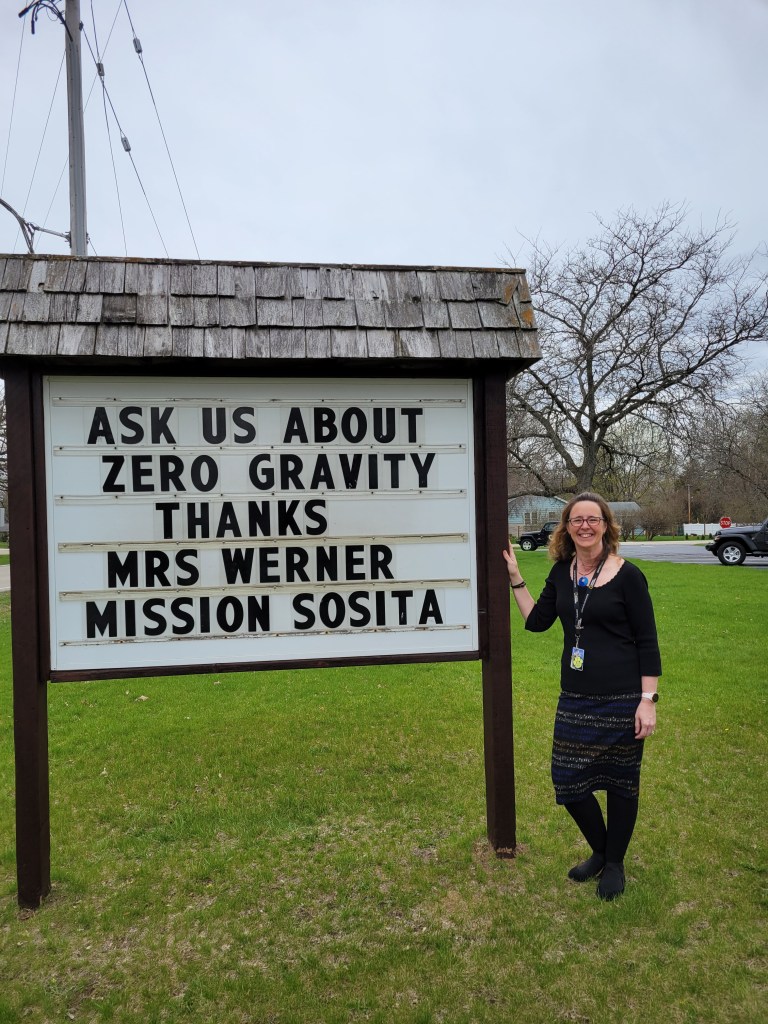
February 28 was a big day! Our mission naming contest ended, and some of my favorite names were: S.O.S.I.T.A. (An acronym for Sounds Of Space In The Air), Flight of Enob Mort, and Mission Band In….Space.

I had the middle school teachers help judge the contest, and the winner was SOSITA! In my meeting with Mary & Tammy, we discussed getting our mission patch contest going (which I’ll talk more about in the next blog…sorry for the teaser). I also went into the 8th grade science classroom, as those students are helping me design how I will attach a sound tube to my bell. Our awesome science teacher helped me use proper science terms (like criteria and constraints! I felt fancy!), and had supplies for the students to create with after I showed them what this harness needed to be able to do. After that, I also got to visit the 1st graders in our building, as they are doing a unit on sound. Our first grade teacher is so much fun – she invited me in to have a little noisy adventure with her students! I showed the students how sound can make cake sprinkles move due to vibration (totally spoiling my future flight experiment demos for them…hahaha), and I showed them how you can see and feel vibrations in instruments (like when you hit a cymbal). I also showed them bigger instruments are lower and smaller instruments are higher by using the Joia tubes I had won a grant to purchase last fall. They were so much fun, and I loved the look on their faces when they saw the sprinkles move! Totally priceless.

And that’s the rundown on January & February…it really was a whirlwind, and there’s still so much more to do!

Embedded Teacher Proposal Process

After attending the Embedded Teacher workshop at Carthage College, we had a quick turnaround if we wanted to apply for a zero-gravity flight in November. We were told there would be one teacher to fly in November, and one flying in March. However, Dr. Crosby was working on getting more spots and more funding. I’m not used to things ending up that way, but Dr. Crosby is really skilled in that area! He actually ended up getting two teacher spots on the November flight.

I applied for the fall flight. I was extremely excited about my proposal, as I wanted to see if pitch was affected by gravity. More specifically, I wanted to see if the material making up the musical instruments would be affected by gravity in any way that would alter the tuning of the instruments.

My justification for this was this: as a musician, I know that my instrument goes sharp tuning-wise when the air temperature is warmer, and my instrument plays flat when it is cold. Humidity also has an affect on my instrument’s tuning. If these factors (which actually are causing my instrument to expand or contract in tiny amounts that cause a big difference in tuning) can alter the intonation of an instrument, why wouldn’t gravity possibly have an effect on the molecules making up my instrument? This could be measured using a tuner, an oscilloscope, or a spectrum analyzer. I was beyond excited about exploring this idea, as I felt this was probably something that might not have been studied yet. I really wanted my research to have an impact on the world of science because I badly wanted to prove music’s worth in an arena such as this.

I even included fancy pictures demonstrating my anticipated data…

On October 28, I found out that I would not be flying on the November flight. I was bummed, but I knew as thorough as I thought my proposal was, I could still tweak it for the December deadline for submission for the spring flight. I figured I probably didn’t fully explain my ideas in science language instead of my usual musician wording, so I vowed to take the feedback I would be given, and try again.

The spring deadline for proposal submission was going to be December 13, but with the flights of my fellow workshop participants scheduled for mid-November, I didn’t expect feedback until after their flights. I did get feedback on December 6. This is what I heard back from Dr. Crosby: “the main comment I would make would be to make sure you review some of the existing literature and provide some evidence or a basis for thinking that microgravity would shift the frequencies of your target instrument(s). It would also be helpful to have a specific target in mind – say, a set of tuning forks, an expected frequency shift for each, and an idea of what device is capable of measuring such small shifts.”

Dr. Crosby then put me in contact with Lynne Zielinski, one of the very intelligent women who presented at our workshop. On December 9, she was kind enough to talk with me over the phone and very gently told me that there was no way my first proposal would be approved for flight. Their belief was that there wouldn’t be any effect on pitch due to gravity because gravity does not factor into any equations related to sound waves. She said even if it did have an effect, it would be such a small amount that we would need really sensitive equipment to catch those small changes. Upon thinking on it further, even if there was a change, I think it would be difficult to prove whether it was a change in gravity causing the change in pitch, or the air pressure, humidity, or temperature changes that would be taking place in the parabolic flight environment. However, that didn’t stop me from being crushed. And now I had less 4 days to come up with a viable proposal. Worse yet, I was going out of town in 2 days AND trying to get ready for the first in-person Christmas concert my students were putting on in 2 years! Talk about stressful!

Luckily, when I talked to Lynne over the phone, she suggested I look into different experiments science teachers do to how students what sound waves look like. Since the components (styrofoam beads, water, etc.) are interacting with gravity while these experiments are done in a classroom, it would be interesting to see what sound waves might look like without gravity’s effects on those components. I spent a lot of time talking to my dad, who is the first person who taught me about sound waves by showing me the oscilloscope he worked with way back when I was first learning to play an instrument. I picked my mom’s brain, as she is the best person I know at thinking outside of the box. I also talked to Kellie, my science teacher friend. Also, when my family was going out of town, we were going with some friends who are very good brainstormers and science minds, too. I watched YouTube videos on how science teachers taught sound wave concepts to their students while quarantined and virtual during the Covid-19 pandemic. I googled simple science experiments pertaining to sound. I freaked out, and had to talk myself into continuing to search for ideas. I listened to my husband when he told me I COULD do this.

Off to Galena…

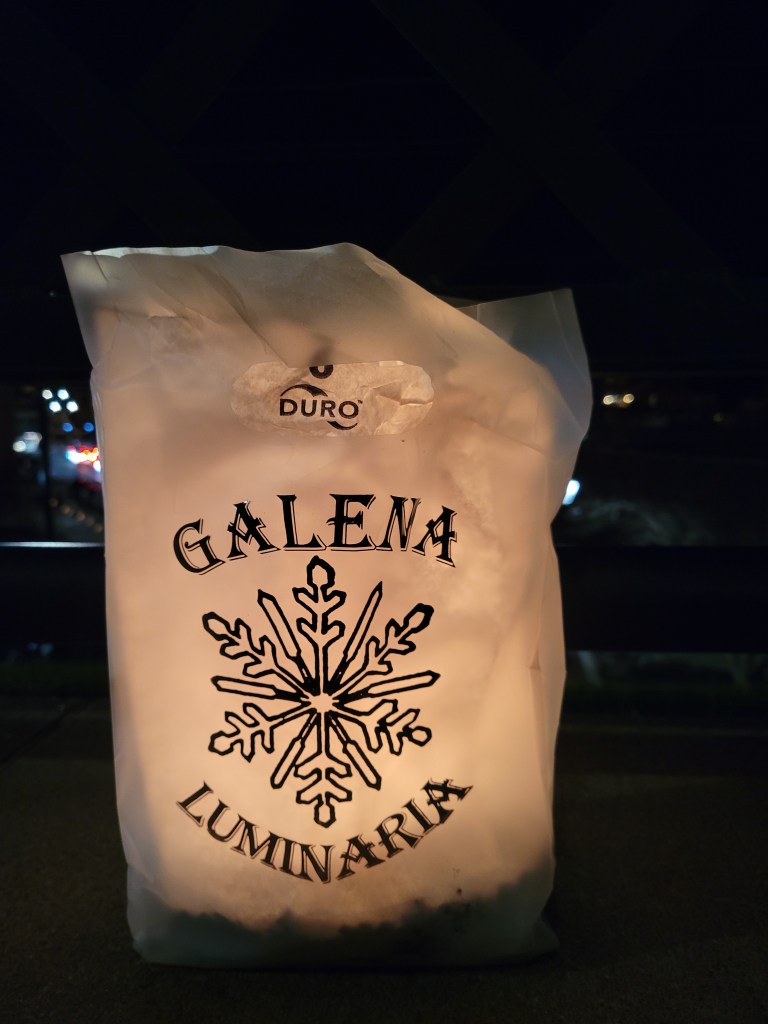
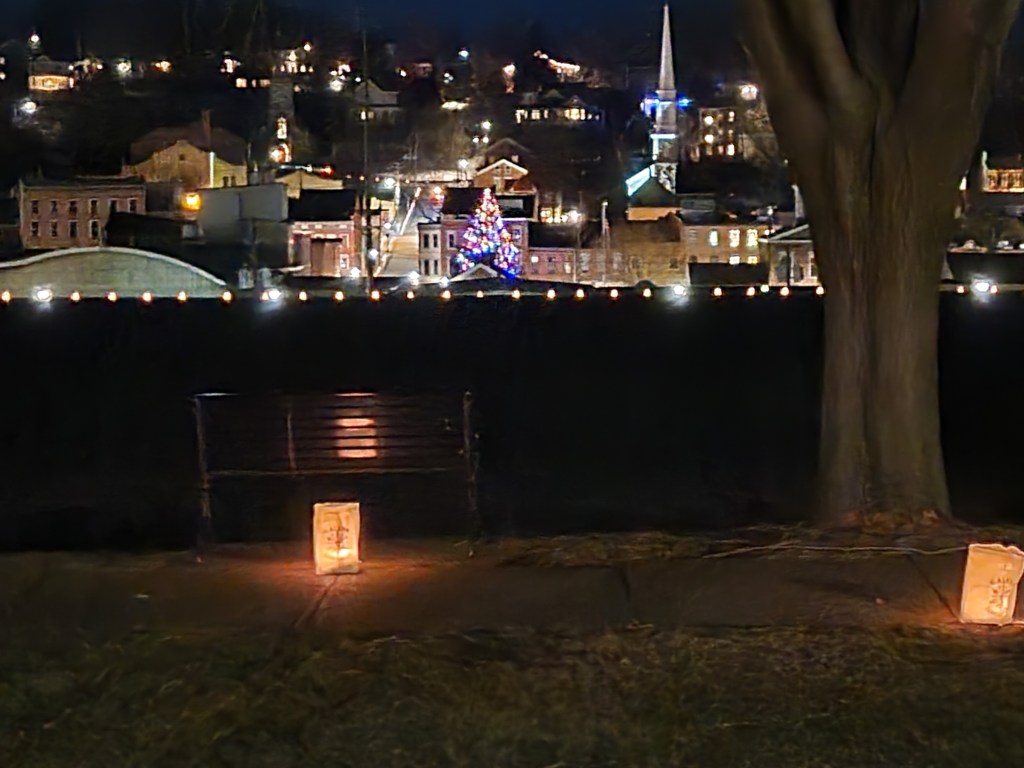
While in the car on December 11, on our way to see the Galena, IL Christmas Night of the Luminaria and Living Windows, I made a list of different experiments I could try the next day. It seems like overnight I became an expert at Physics-speak and started writing my proposals in the car. Since we had learned so much about the behavior of fluids in microgravity, I wanted to find a way to use that. I saw this very interesting Sound Carousel demonstration, and thought maybe I could make it work with fluid in the bottles sealed off by a rubber balloon. The concept of the Sound Carousel is that you can spin 2 soda bottles around by playing the exact frequency of the resonance of the bottles.

Looks fun, right? Or is it….

Well, I attempted to make that happen at home the next day (the day before the proposal was due), and I couldn’t make the original experiment work without a LOT of hassle. I then read some more on the physics behind this, and learned that the Sound carousel is actually called a Helmholtz Oscillator, and is based around the principles of an OPEN resonating container. Closing off the soda bottles with a balloon and filling them with water seemed like it would pretty much negate all of the principles involved in the Helmholtz’s research.

My other idea at using water to demonstrate sound was creating a “Hydro Xylo,” or basically a keyboard composed of bottles filled with various amounts of water to create a scale. This went back to my original proposal, because I wanted to see if the pitch differences between the bottles would stay the same. I also thought it would be neat to see how the different amounts of water acted in the same-sized bottles. I did include this experiment in my submitted proposal.

I thought the Harmonic Minor scale would be fun because of the bigger difference in water between bottles 6 & 7.

I also put in some experiments that would show vibration in a 3-dimensional manner. I had an experiment that would show the 3-dimensional sound wave in a sound tube. This tube would be filled with styrofoam beads, and when the resonance frequency of the tube would be played, a sound wave would be generated in the styrofoam beads, displaying the nodes and antinodes of the wave.

Could be interesting…

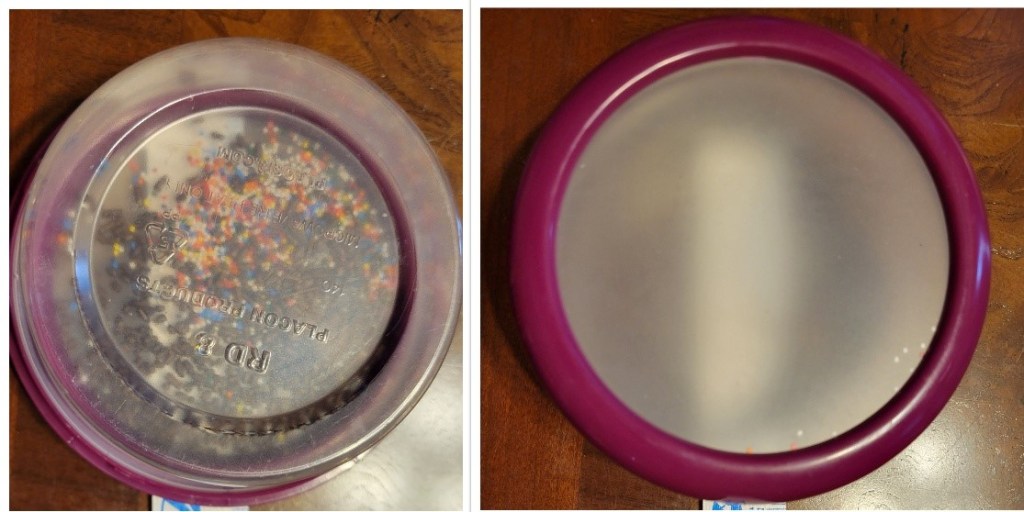
Another experiment I proposed was a basic sound experiment used to show kids of any age that sound is caused by vibration. Usually, a teacher will stretch plastic wrap over a bowl of cup so that it is taut. They will then pour glitter or cupcake sprinkles (or rice, or salt, or….) on the plastic wrap. When any sound is played at the plastic wrap (from a gong, cymbals, any band or orchestra instrument), the sprinkles/glitter/rice/salt dances. I decided I could do a variation on this with a container to keep the small particles in.

Aldi onion saver lid for the win!

I also thought it would be fun to find out what drumming with zero gravity would be like, as the rebound and exact moment of striking the drum are so important, and rely very heavily on gravity. I decided this could be a cool way of using this data to analyze what reaction time would be like for astronauts. Since astronauts have to do certain combinations of manual tasks (pushing buttons, flipping switches) in a certain order and within a certain time frame, it might be nice to know how much of their reaction time depends on gravity. My proposal was to take a drum into microgravity and play it at various tempos with a metronome to see how easy it was to stay in time at various speeds.

So, after spending all day on December 12 experimenting and typing up ideas, I was ready to submit my proposal. It wasn’t as pretty or didn’t feel as completely hashed out as my first idea, but it was done. Now I could focus on the all-school concert on December 15. To me, that was the most important thing to be ready for. I didn’t feel very confident at all in my flight proposals, but at least I could focus on making sure my students and their audience members felt ready for a concert, and for Christmas itself. That concert was a great reminder on what is important to me and to my school community. The concert went wonderfully, and it was so nice to be able to shove the proposal experience to the back of my mind.

To be honest, after the whole concert and Christmas season, I was not thinking much of when I might hear about the fate of my proposal. The spring flights had been moved to May (from March), and happen to line up with the week before our all-school spring concert. I figured if I didn’t get to fly, that would be ok, since it was going to be really hard to be gone the week before our concert anyways. I gave it my best effort, learned a ton, and enjoyed the experience of thinking about advanced physics concepts again. Time to move on to y next adventure…or was I done with this one yet?!?

Galena is always so pretty, but this was such a beautiful event!