Young Musicians Are Changemakers!

The culminating project in this entire Antarctic water and music themed semester is something the students I teach got REALLY excited about. I wasn’t sure how they would react – I feared groans and eye rolls, complaining and apathy. Instead I got students choosing to work outside of music class (despite my telling the students they would have class time to work) and a buzz throughout school that came back to me in discussions with my colleagues and the parents of the students!

I wanted students to combine the knowledge we gained through studying how music can help create change (both through sonification of scientific data and by studying celebrity musicians who have used music as a platform to create change and raise awareness).

To synthesize their learning, students created their own music, websites, and projects centered around causes they care deeply about – each one connected to the theme of water to match our water theme for the year. Whether it’s access to clean water, reducing pollution, or protecting aquatic life, their causes were chosen because they felt a personal connection and a desire to help. I gave the students the opportunity to choose their own community service project to design, encouraging them to think creatively to solve the problems they connected with.

We were guided by the United Nations Sustainable Development Goals and the Catholic Works of Mercy, helping students think both globally and spiritually about what it means to care for our world and for one another.

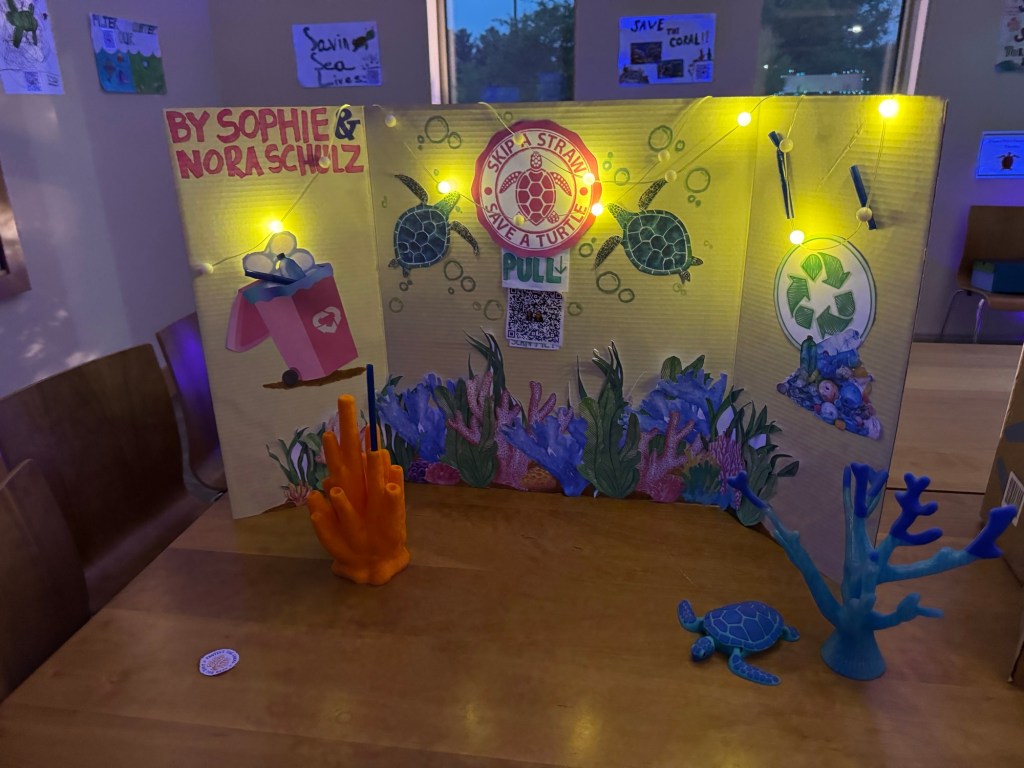
We then created a “Dreams Room,” set up in a room located in our church and setup for viewing during our all-school spring concert. Audience members were able to walk through and see our students’ hopes and dreams for a better world displayed—and ways our audience could help bring those dreams to life. Some students suggested supporting organizations through donations, while others encouraged simple but powerful actions like changing habits at home, or joining a local cleanup. Audience members scanned the QR code on each poster or display to visit the students’ website. From there, they found the students’ research, why the students felt that was an important problem to help solve, what they asked people to do to help, and hear their songs. 
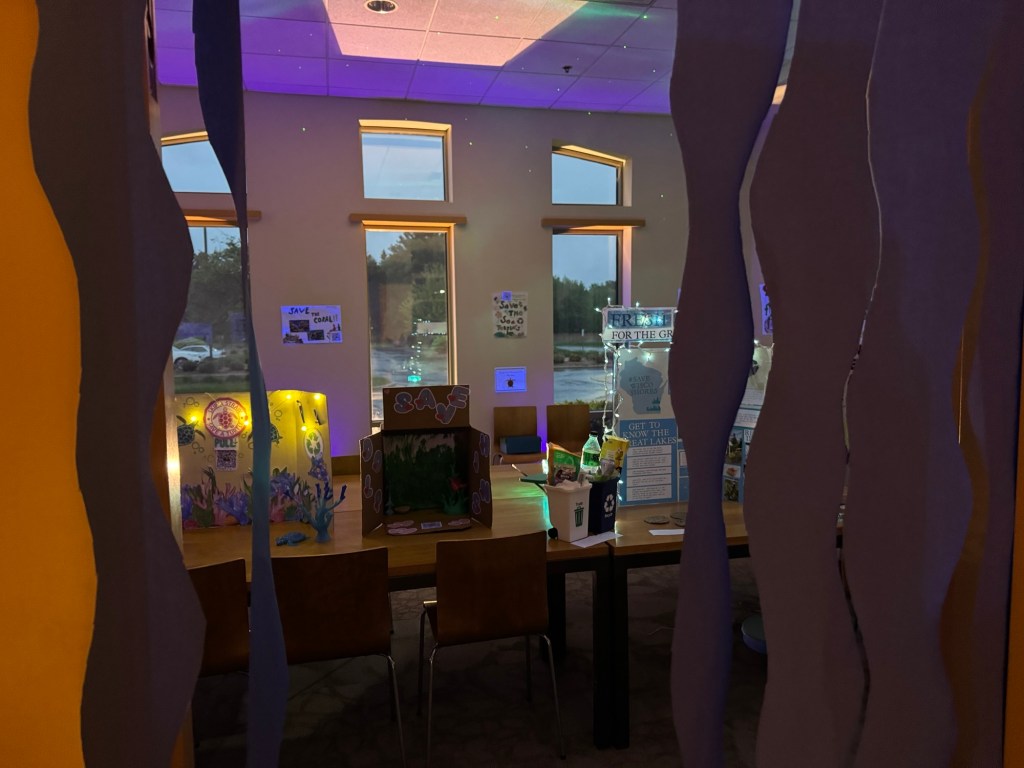
Entering the Dreams Room through the Ocean Wave entrance!
Most students did posters to display their QR codes, so we made sure to make use of our mood lighting to make the room even more fun!

This experience was a big hit – the room was packed after our spring concert. Some students even went above and beyond – creating bracelets or coasters from recycled materials to sell in order to raise additional money for their organization, while also helping solve the trash in our waterways problems. One group made brownie bites and sold those for additional money towards their organization. Another group formed a Bark River Cleanup club and set monthly meetings. They will alternate buying pizza for all who come to the meetings.

Coasters and 3D printed recycling bins bring this local waterway project to life
I learned so much from this project – it was fun to have the students be the teachers
Another beautiful display from our students!

After surveying the students at the conclusion of the project’s display period, students loved this project. Students talked about how exciting it was to find something they cared about to work towards. Many of them mentioned how they were really skeptical about how they could possibly make a difference in the world through a music class project, but were so excited to see how much impact they had. Every single student said they couldn’t wait to take action on an issue they found important again. I really don’t know who is more inspired by this project – the students, the adults who visited the Dreams Room, or me! I can’t wait to modify this and try a variation of it next year!
Sonifying Data – How the Arts Convey Scientific Information!

Now we’re starting to get to the nuts and bolts of the culminating project that the students will be involved with for the remainder of the year. Today we explored how artists and musicians can take scientific data and adapt it to the arts. We looked at visual artists like Jill Pelto, who take an ice melt data graph and turned it into easy-to-understand art. We studied composers like Judy Twedt who wrote a piano solo that shows how Arctic Sea levels have changed between 1976-2006. We also looked at “Hebrides Redacted,” which is a piece of music that depicts the changes of whale population over time – with the musicians leaving out notes from Mendelssohn’s “Hebrides Overture” as the whale population decreases.

We had discussions on which is easier to understand – the art or the data. We noticed how some students preferred the graphs and data, while others felt that was difficult to understand and preferred the art and music.

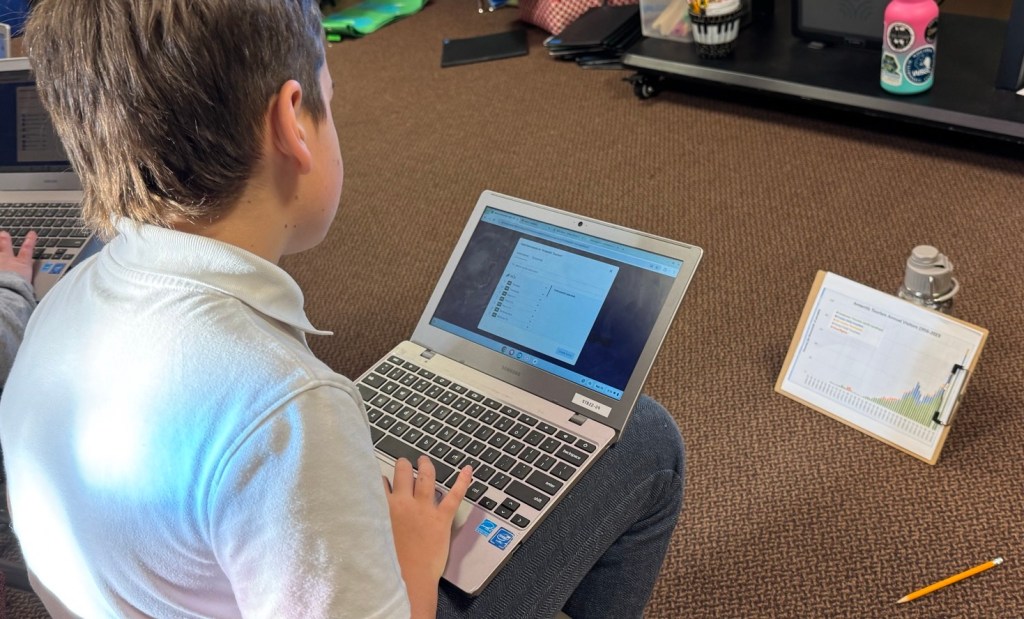
Next, students were tasked with creating their own music from data and graphs. The 7th and 8th graders have data they are analyzing from their science class project, so I had them take that data and compose music to represent what the graphs are trying to show. 5th and 6th graders were allowed to Google search something that they were interested in that would be displayed in graphs and charts. I had a collection of interesting graphs and charts for students in grades 3 and 4 to create their music with. Grades 1 and 2 had to find something they were interested in as a class, and then I guided them into making the music as students came up one at a time to select which notes should come next.

4th grader composing off of his data

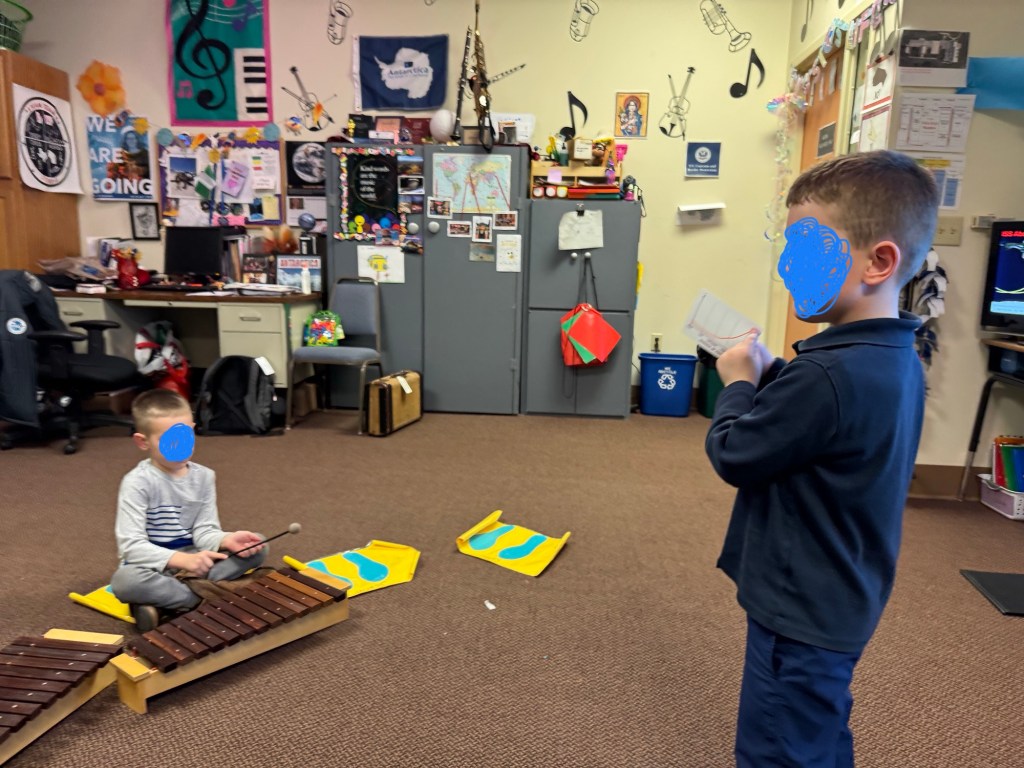
For the youngest kindergarten and preschool students, we used the science teacher’s game called “Charty Party.” I had one student come up in front of the class and be the “Scientist and Conductor,” and the rest of the class were musicians playing Orff instruments and Boomwhackers. The student playing the role of scientist and conductor had to look at the charts from the game, and then have musicians play their instruments in the shape of the graph. This was really fun to be able to show students how to read a graph, and to practice high and low sounds on our music instruments. Each student got a chance to be a Scientist/Conductor, and play each instrument!

Kindergarten students – one Scientist/Conductor, and a class full of musicians

Antarctic Treaty Musical Quilt

Today in music, we learned about the Antarctic Treaty. We explored the countries that have signed it and what the laws of the treaty entail. We then compared that to the Artemis Accords, which are a similar agreement to sharing resources and research in space. We compared which countries have signed both (and, even more interestingly, which countries have not along with the implications of why countries may not sign).

Students then had to pick a country from the Antarctic Treaty. They researched instruments that are traditionally used in the country’s music, and composed one measure to represent their country, based off of rhythms they hear in the country’s national anthem (thus testing their aural skills – requiring them to transcribe a rhythm from the national anthem).

Each country’s anthem was linked for students to explore

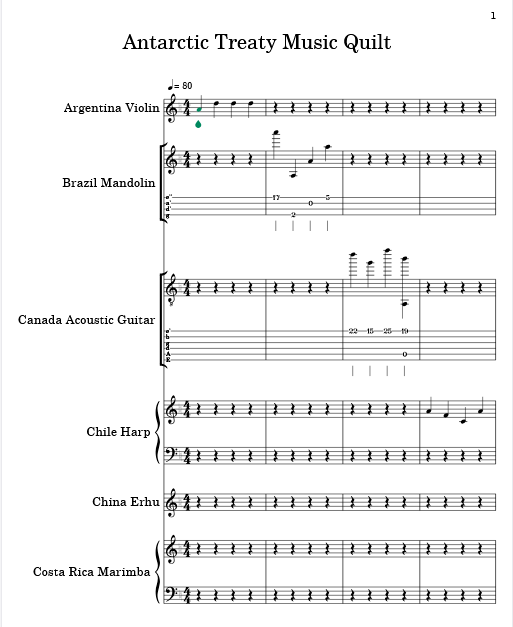
After each student was done, I compiled each student’s measure and added them together into one giant composition, much like different quilt squares come together to create a beautiful quilt. This piece of music represents the countries of the Antarctic Treaty!

Every country had its own instrument and measure in this musical quilt
Here’s the students’ work!

Music Mosaic of Southern Indigenous People

This week in music class, we toured the music of the nearest indigenous peoples to Antarctica. I created a tour for the students to explore the music of the Māori, Palawa, Noongar, Xhosa, Khoekhoe, Selk’nam, and Yaghan people. We reviewed the information related to Pangea, so that students could see that Antarctica used to be attached to other countries and continents.

In addition to listening to traditional music of these cultures, we learned facts about the people and looked at some of their artwork and symbols. The students were fascinated!

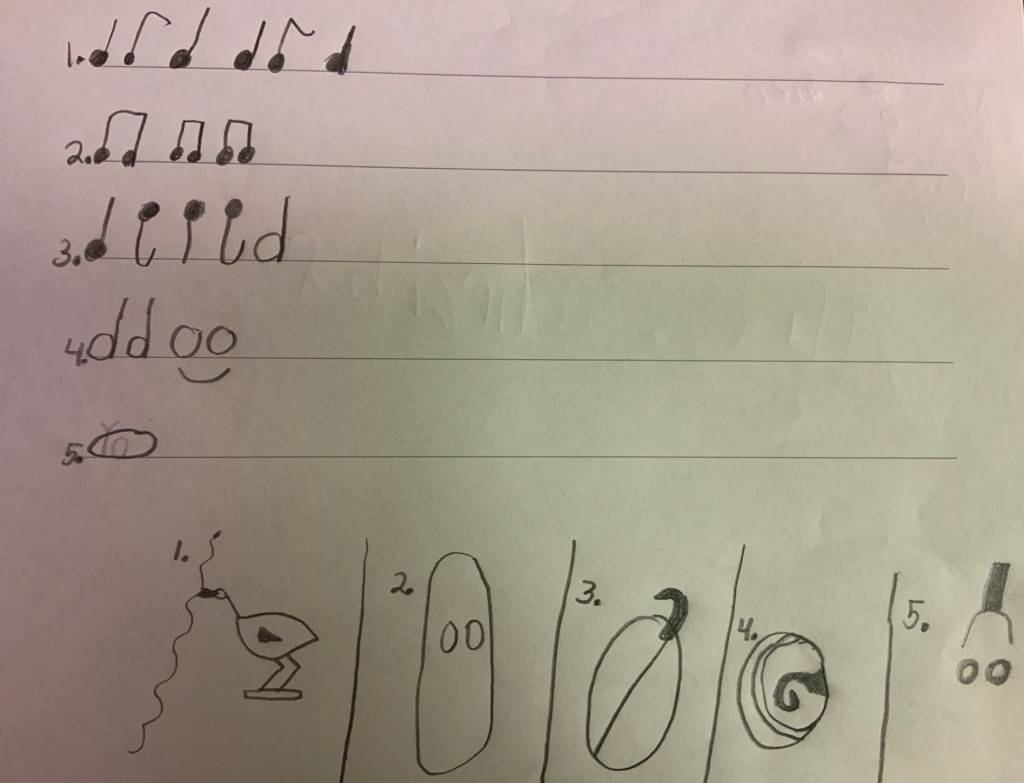
I had the students write one measure of music to reflect the style of music they enjoyed the best on the tour. They then decorated their music with the symbols and artwork of their chosen culture. I originally thought the students would use the 5 lines for composing their measure of music, but so many of the students really enjoyed the music of many cultures and turned their five lines into music from their 5 favorite cultures!

I had originally wanted students to pick the ONE tribe they liked the best, but I was surprised by how many students liked SO many of the recordings! I allowed them to create music and art for each tribe they connected with!

After the compositions were complete, I hung them all up in the hallway creating an artistic mosaic of the cultures we toured.

Antarctic Beatboxing!

Today was an interesting day, as we had the local news channel come in to observe how the students and I were making use of the Antarctic expedition. They had been in before I left, and were now doing a follow-up, which was great to be able to feature the students!

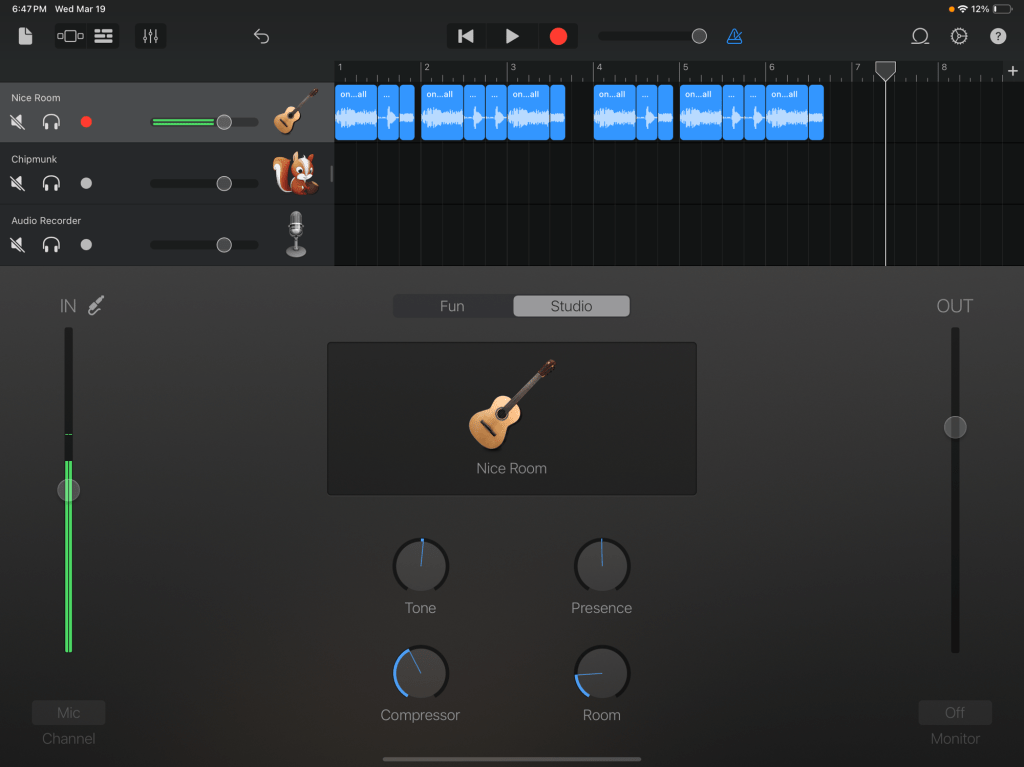
For today’s lesson, the students were going to take full-length recordings I had made on my expedition, trim them to isolate one sound and then create a beatbox-type composition from a collection of isolated sounds. Older students did this using an online-based platform found at audiomass.co, and worked individually. Younger students participated in this by composing the groove as a full class – each student picking out which sound they want to add next. I pre-isolated those sounds for them, and then we slid them in place using my iPad with GarageBand. This allowed us to drag and drop the sounds into our timeline until every student had gotten to pick out a song.

We talked a lot about repetition, and watched Pentatonix for a sample of real beatboxing in action. We also watched a video on YouTube called “Animal Beatbox,” where a collection of animal names are repeated to solidify the groove.

Students had a lot of fun with this, and surprisingly, the youngest students were actually the best at making the grooves, as they enjoyed the repetition of picking the same sound as their friend did earlier!

This is the 3K/4K beatbox. We then looped it while they danced to the groove!

Music in the Shape of Antarctica

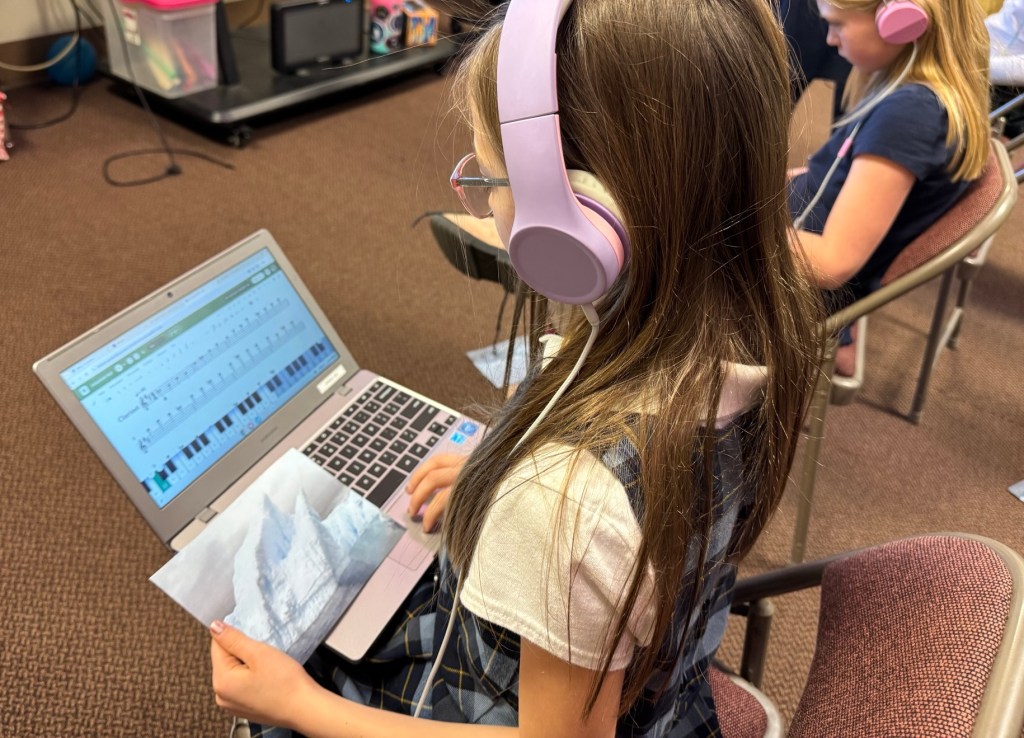
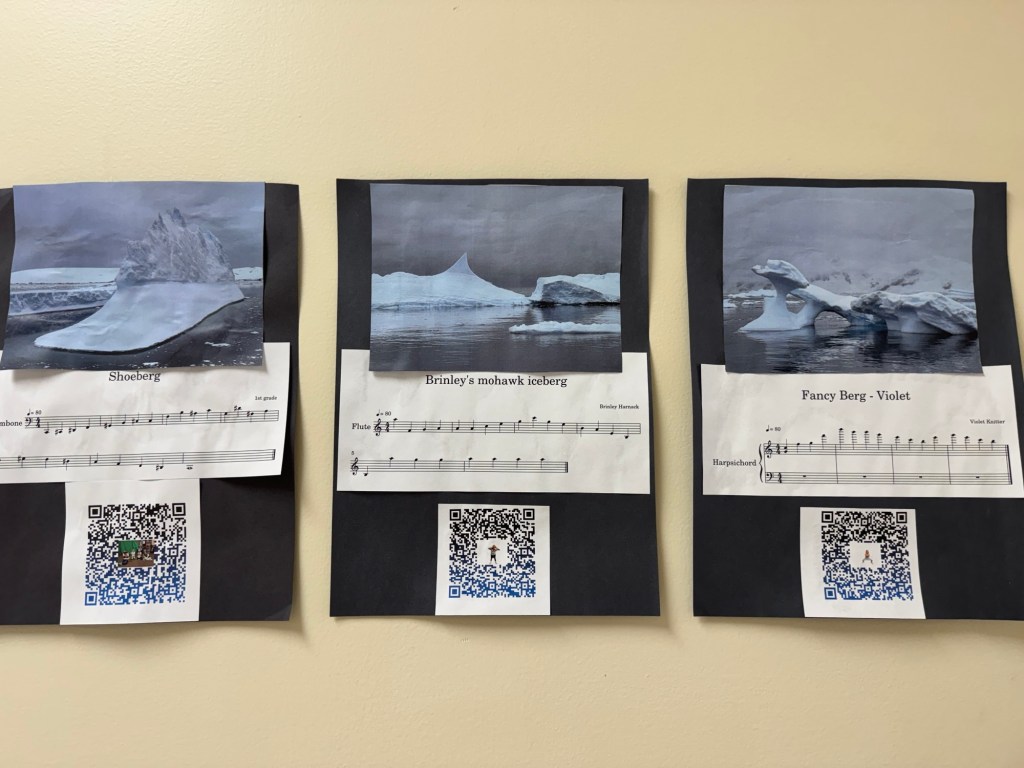
Our younger students are learning about high and low notes and the shape of music. To practice this, I let each student in grades PreK-4th grade pick out an iceberg photo that I took on my expedition. They then had to create music in the shape of the iceberg – the music needed to go up when the shape of the berg went up, and down when the iceberg sloped downward. We then hung up our work in the hallway, with QR codes so that people can listen to them.

Composing music to match the shape of the iceberg
Sample artwork hung in our hallway!

Antarctic Word Cloud

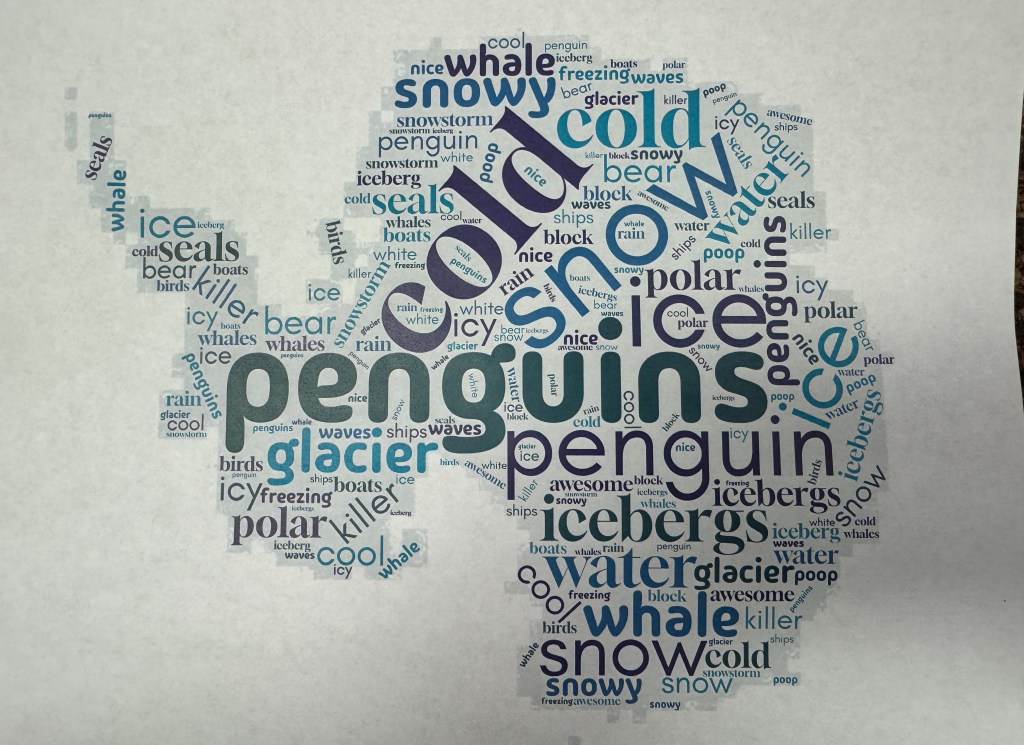
I’ve had students write words down after each lesson to see what lasting effects Antarctica is having on them. I created this word cloud to show how they’re doing. You’ll have to excuse the word ‘bear’ that shows up, as the students were talking about whether they could bear the isolation….they do know there aren’t polar bears in the Antarctic! I’m hoping to see how this word cloud changes as we continue our learning throughout the rest of the year!

Antarctic vs Wisconsin Weather Temperature Compositions

While I was out of town for my Fulbright Global Symposium, the students got to take the data they had collected on the weather in Wisconsin and combine it with the observations I had made while in Antarctica.

This idea came from the craft concept of Temperature blankets, where people will crochet or knit a row onto a blanket representing the high temperature of the day for a full year. By the end of the year, they have a 365-row blanket that depicts the temperatures in their location throughout that entire year. They are very unique, and often quite beautiful!

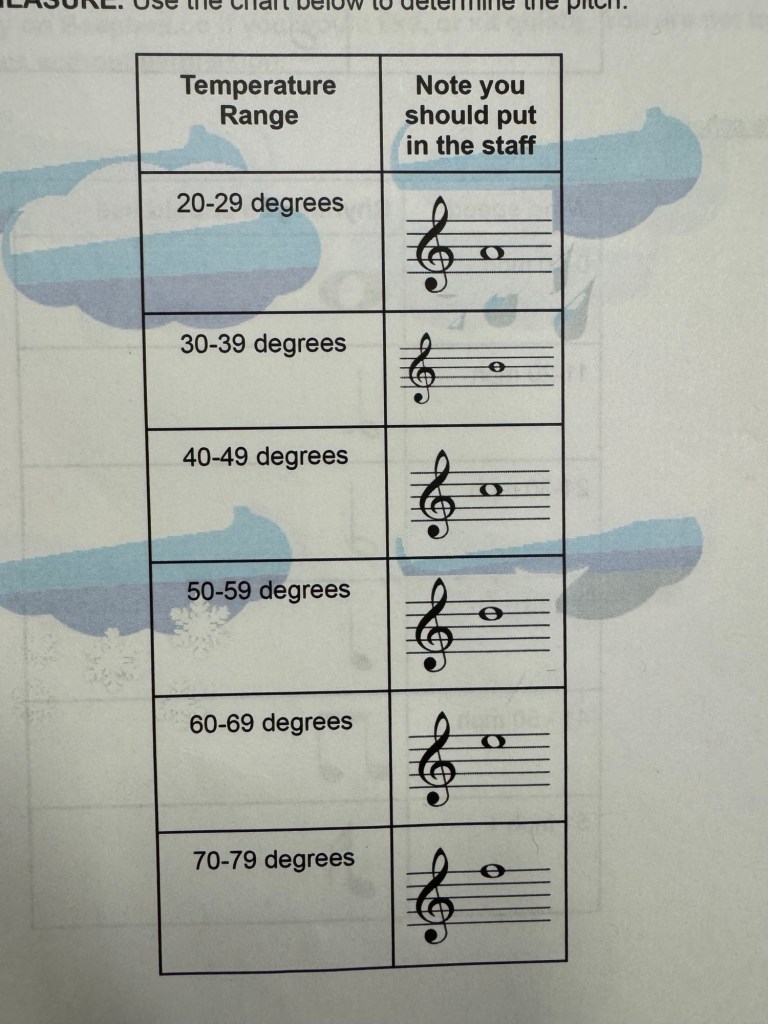
I created a chart for students to be able to compare their temperatures to in order to assign the correct notes and rhythms for the weather they had. They were also required to pick out an instrument that represents our state, school, or the student personally.

Note choices….
Rhythm guide

I then shared my data with them and they had to plot this onto a duet part to accompany their weather melody. They had to pick out an instrument that represented Antarctica.

When I talked to the students about how the lesson went, they were surprised by the number of times that they were cooler in Wisconsin than I was in Antarctica. They also were impressed by the wind speeds I experienced.

The weather musical composition wasn’t always pretty sounding, either, as we were often similar enough in temperature that musical dissonance occurred. We talked about why that dissonance happened, and now they realized that dissonance can be a useful compositional technique, as we explored why a composer would choose to put dissonance into his/her compositions.

Water Instrument Design Challenge

Our next great water/music adventure involved students learning about instruments that music use of water to create their sound. We studied things like Benjamin Franklin’s armónica, crystal glasses filled with water, Chinese water bowls, the Zadar Sea Organ (in Croatia), the water gong, Benin Water Gourds, Norwegian Ice Instruments, and watched the STOMP video where they are standing in water raising and lowering pipes to bend the pitch. We watched a physics demonstration about the resonance of a glass tube, and how the quantity of water really matters when trying to get the best sound. We discussed how there are really four different ways to make sound in instruments – blowing, shaking, striking, and scraping.

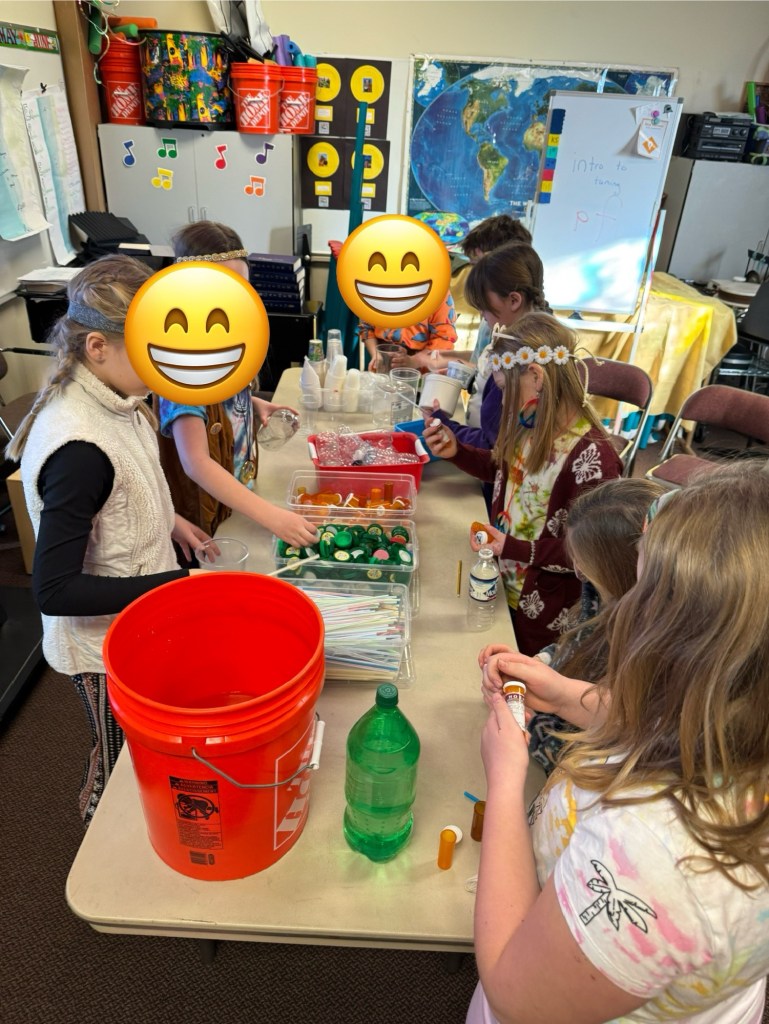
Now came the fun part – students (preK-8th grade) were given the opportunity to take on an instrument design challenge where they had to create a new instrument that used water. I made them another wonderful Antarctic saltwater blend, as I knew some of them would wonder if their instruments sounded different with saltwater vs. freshwater (they have gotten very good with curiosity and experimentation, and I encourage such behavior in class!!!)

Design challenge underway!

It was really fun for students to create, test, modify, recreate….and then they got the opportunity to perform on their instruments for the classmates. They loved performing with the VR headsets again, as I gave them the option to perform on the water or ice of Antarctica again.

Ocean Waves and Sound Waves!

The next adventure the students and I embarked on was an up-close study of sound waves. Anyone who knows me, knows this is my passion! I have loved sound waves and all of the nitty-gritty physics of sound waves ever since my dad took me into his work when I was younger and showed me an oscilloscope. Then, in high school, I did my entire final physics project on the physics of music (this may have been a ploy to get to play with my dad’s oscilloscope again). Fast forward to my masters program where my final project was on tuning of all band instruments and how that relates to the physics of what’s going on with the ‘waves’ you hear when you are out of tune (another excuse to play with the oscilloscope!).

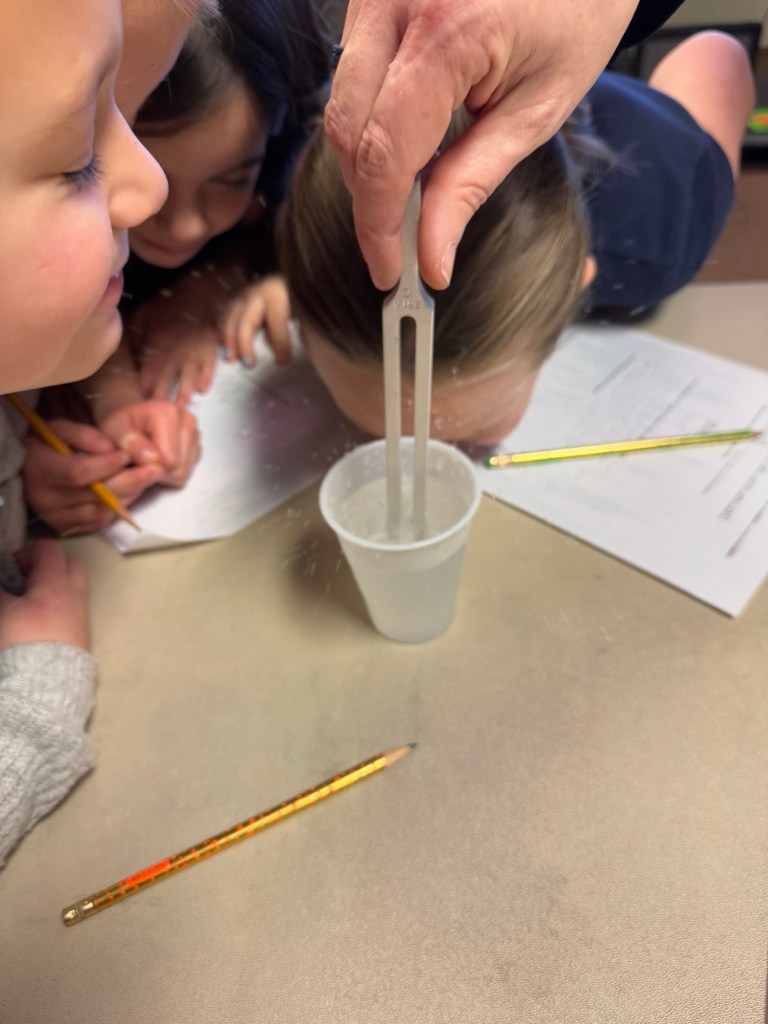
The students got to see sprinkles dance on a cup covered with plastic wrap, feel vibrations on crash cymbals, see vibrations when a violin string is plucked, experiment with putting tuning forks in water, checking out Kundt’s tubes when instruments play into them, discovering the beautiful artwork created by sound on chladni plates, and look at their voices on an oscilloscope.

Feel the sound!
Getting close to the tuning fork water explosion!
Chladni design!

We then compared what we could see about sound waves with what we knew about ocean waves. I showed the students videos of the Drake Passage crossing we did, and students enjoyed imagining themselves on a ship in those waves.