April Showers Bring May Flights!

I meant to blog more often this month, but there really wasn’t anything that was super exciting for anyone to hear about.

The majority of our weekly school meetings focused on media and press release sending. We also had spring break in there. Once the students came back from spring break, our awesome Phy. Ed. teacher did some excellent astronaut training exercises in class. I stopped in one day to watch, and it was so fun! He found an astronaut training video on YouTube for the older kids, and the younger students got to go on an astronaut mission through a different YouTube video.

We also discussed our concert plans, and the Blue Origin Postcards to Space project. Every student created a postcard that will fly to space and then get mailed back to them! I also added every student’s name to the Artemis database. Each student’s name will be loaded onto a NASA flash drive and orbit the moon. The students get a boarding pass to show as proof that their name will make the journey.

As far as our official Embedded Teacher meetings, we were just taking care of the little details this month. We prepared our impact statements for the program’s press release. We signed our flyer paperwork, and worked on submitting lesson plans to the SpacEdge folder we were each given. These files will be made available through the National Space Society’s webpage. We also made our travel plans!!!

In addition to these meetings, the other 3 incredible teachers in this project and I would meet from time to time, and text back and forth about some fun things we are planning. We made a crew name for ourselves (Steam Team 4), and designed a mission patch. We’re ordering hats, and one of the ladies made us t-shirts. I’ve even ordered an awesome pair of sparkly tennis shoes for my flight.

It seems this last month really flew by. I got a special blessing from Father Dan at our Wednesday morning mass. We had a US Air Force veteran/retired American Airlines pilot come in to talk to our students at my Pre-flight Assembly. The Spanish teacher taught the students Spanish space terms in class. Our theater arts teacher will be having the students act out what they think zero gravity would be like. All in all, I think the plan to involve the whole school as much as possible has been a success – and this is due in large part to the fantastic staff at St. Bruno Parish School. They are all amazing people who have been willing to collaborate with all of my crazy ideas, despite the fact it creates more work for them. I am so lucky and blessed to be at this wonderful school!

I’m currently on the plane to get to Fort Lauderdale, which is where my Zero G flight will leave from. It was a bit of an ordeal to get to this moment, thanks to the last 48 hours or so, but I’m on my way. The fact that this is really going to happen is starting to hit me. I’m a mix of excitement and nerves, but mainly disbelief that it has all fallen into place! Stay tuned for more updates…it should be a wild ride, both literally and figuratively!
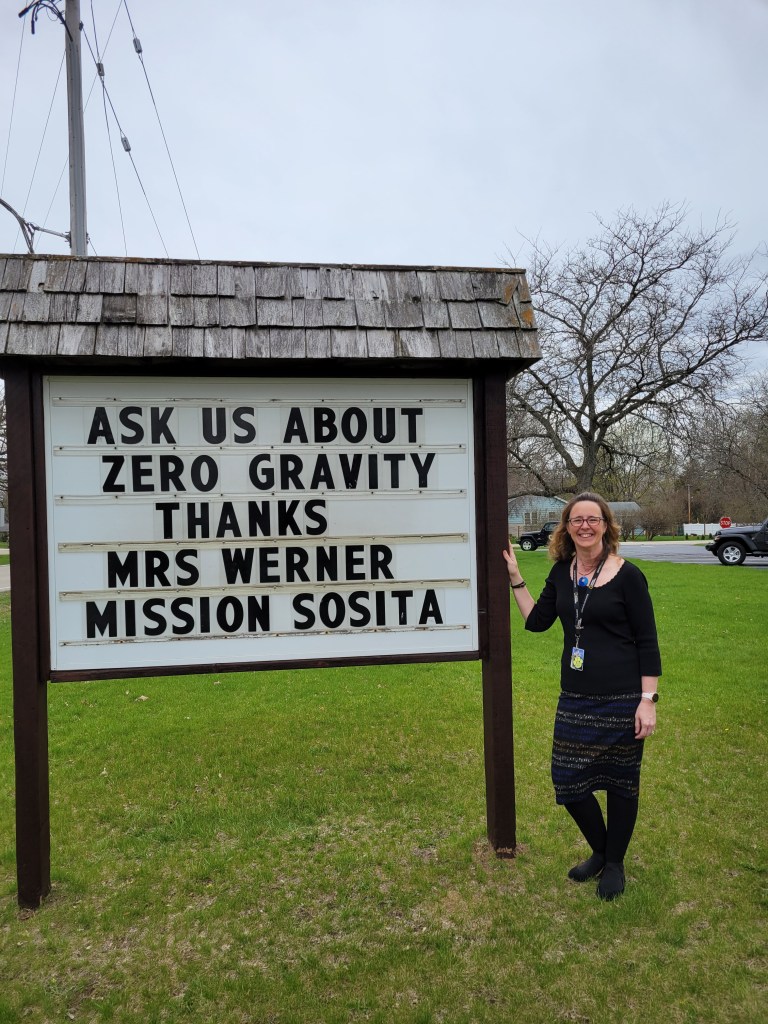
March Embedded Teacher Experience…In Like a Lion…

March featured a real breakthrough for me in my Embedded Teacher project. Throughout this experience, I really wanted to make an impact with my experiments – I wanted to contribute in some way to the world of science. However, I found out that is really, really hard to do, particularly where I do not feel like I speak fluent science! Combine that with the fact that each zero gravity experience will be 22 seconds long, and it can really seem impossible!

While I was working on fine tuning my experiments for the last push before Dr. Crosby sends them off, I was starting to get bothered by something. I felt like in my big efforts to make sure that there was something for every grade level in my school in my proposal, it appeared that I didn’t have anything that truly had meaning for the band students I work with on a regular basis. The whole reason I did this opportunity was for the students I work with regularly as a BAND DIRECTOR. I got to thinking about what I can do for them – how to get back to MUSIC, and not just thinking about sound. I thought about the music standards for education, and I thought about what my students need and love about band. But how could anything musical be dependent on gravity???

Through all of this thinking, I started to remember something way back in the depths of my brain – something about Mozart creating compositions using dice. That then got me thinking about how a die in a container would pop up in 0 gravity, and fall down again when we hit the gravity part of the parabola. Would the die roll, though, or would it just keep landing on the same number? I’m hoping that due to the same engine inconsistencies that prevented me from being able to vibrate a water bubble with a tuning fork would cause the die to roll on this flight. I wrote up this idea, and buried it in the back of my proposal, as I wasn’t sure it would get much enthusiasm from my science friends. However, I figured it was a passive experiment, as I just needed a camera pointed at the die for the whole flight, so maybe they would let me just run it in the background. It was worth a shot…

At our March 2 meeting with Dr. Crosby & crew, I pitched my composition experiment idea, and the National Space Society women and Dr. Crosby LOVED it. They were so enthusiastic and supportive of the idea, and pointed out that this was the reason they included steAm teachers instead of making the experience only for STEM teachers. I was so excited because I felt like I had finally earned my spot. Even more excitedly, my students will get to see how MUSIC truly does connect with everything.

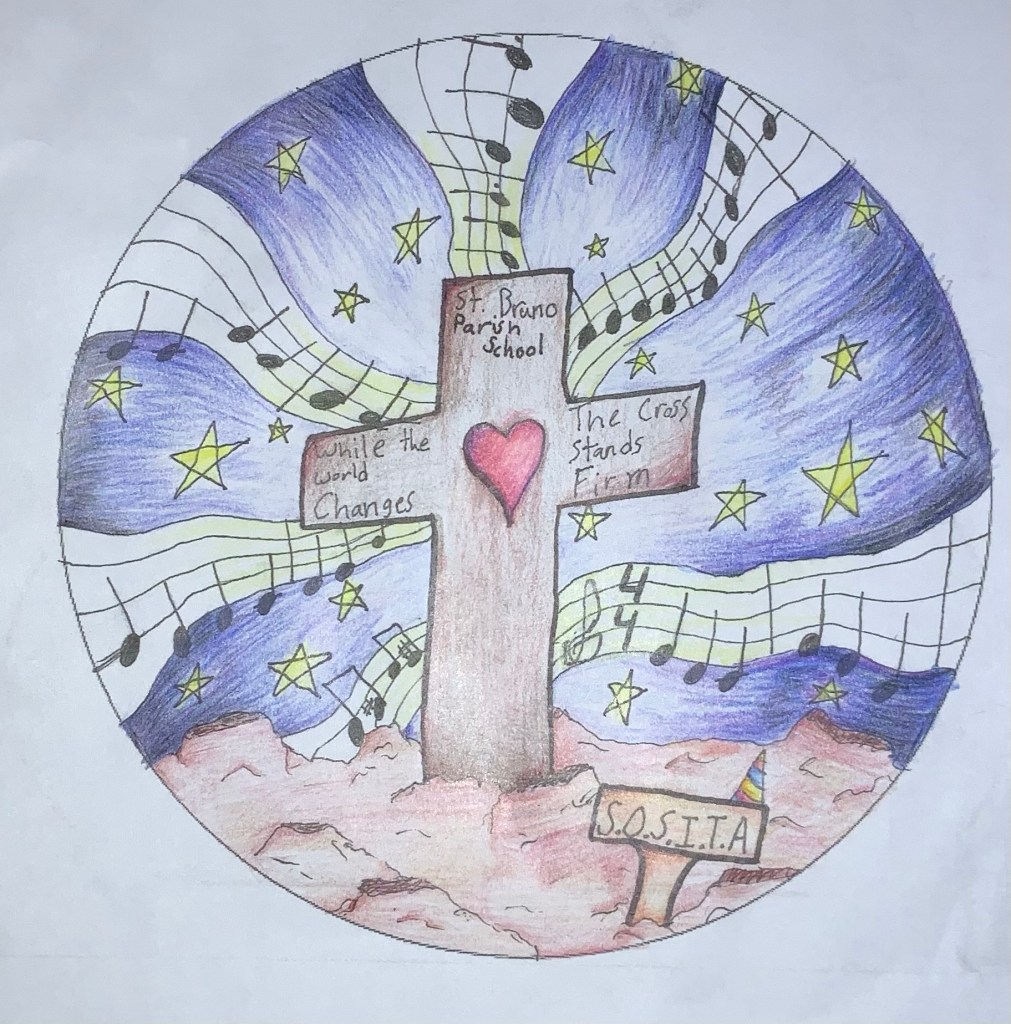
The next day, I created a video intro to the mission patch contest we were hosting at my school. I talked about what mission patches were, showed some examples, and gave the students some requirements if they wanted to be eligible for the contest. Every student in the school would be participating, all the way down to the 3K kiddos. I didn’t expect them to meet all of my requirements, but I did want them to create some artwork I could fly with. My requirements for the competition were: 1) the design had to have an element of music in it – after all, that was what my mission was all about. 2) The design had to incorporate a religious symbol, because I wanted to represent our school. 3) The design had to have a space item in it somewhere, to represent the reason microgravity is even studied. And, finally, 4) the design had to have our mission name (SOSITA) on it somewhere. Students would get bonus points if they could sneak something to represent a unicorn in their design, but it was not required. Students would be working on this in their art classes, so that made it even more exciting! If you want to watch the video, it can be found here: https://youtu.be/ELVDTSuvq7M

On March 7, at my weekly school meeting, one of our creative teachers in the building thought it would be neat if I took over the big bulletin board in our school hallway to showcase my flight information. This bulletin board will be in a prominent location for the visitors who will be coming into our school for our annual fundraiser. This event will be at the end of April, and brings many people into our school. My principal also shared information from her friend who used to work at one of the local news stations about the best ways to get our press release some traction.

At our weekly Embedded Teacher meeting, Dr. Crosby told us to watch for emails from him over the weekend as he finalizes the PIP (Payload Integration Package) for each of our experiments. We’re in the home stretch on all of the upfront work, so that’s good news. I also went into the 3K class at my school. The teacher had suggested a moon puzzle to do with the kids, as they are having their 2-week long space unit. I had so much fun with them, and they were such good listeners. We talked about how the moon is really a great big mirror that shines the sun’s light at us at night. We also put together a phases of the moon puzzle, and I taught them how to say the names of the phases. There is nothing cuter than 3K kids saying “waxing gibbous.”

Towards the end of March, things really started rolling quickly – on March 14, we solidified the voting process for the Mission Patch design challenge, and found out that Nicole Koglin from CBS 58 is interested in covering our story on the news, thanks to a facebook message I sent her. On March 16, Dr. Crosby let us all know that “the heavy lifting is done,” and all of our proposals have been sent off to the Zero-G corporation for approval. Now we wait patiently…On the same day, I went into the 8th grade science classroom and taught the 8th graders my sound experiments for the flight. They are starting their sound unit, so I am going to have them teach the experiments to the younger students in the school. This will hopefully really solidify their understanding of the basics of sound waves. They were so responsive and excited to learn about these experiments. I even heard a few kids talk about how much fun they had as they left the classroom that afternoon!

On March 21, we discussed the spring concert plans and upcoming timelines for our deliverables. The spring concert is going to serve as the culmination point for this project – the students will be able to demonstrate the experiments for their parents, along with performing music that will follow our “Reach for the Stars” theme. We will display artwork and observations from the experiments the students did so the parents and community can see what we’ve done all year. I’m very excited for the students to be able to look back on the whole journey and see the big picture!

On March 23, the 8th graders had their Demo Day – showing the younger kids in the building the experiments. It was so fun to listen to the 8th graders teaching the youngest students about gravity and sound. I loved listening to them as the experts, and the younger kids idolized the older kids. It was really the coolest part of this project so far. So much fun! That night, we had our Embedded Teacher meeting, and we learned about how our lesson plans, artifacts, and story of our journey should be uploaded into a file created for us. Then the National Space Society will have people who will turn these pieces of evidence into lesson plans and webpages for us so that others can use our work and see our experiments. It is pretty cool to think that my project will have a national (or even international) audience! We also got to fill out our flyer forms – listing our weight, medical information, etc. for the spring flight! It’s getting a little more real each day!

During this week, we were also wrapping up our mission patch design project. We had a team of 5 teachers narrow down the school’s submissions to the top 10 designs on Tuesday of that week. On Wednesday, 2 teachers, Mary, and I selected the top 3 from those 10. The top three featured a patched from a 3rd grader, a 7th grader, and an 8th grader! I was so excited for any of those top 3 to win – they were fantastic! Then, I created a Google form for every student to vote for their favorite from the top 3. Voting took place at the end of the week. It was exciting to watch as each vote came in on the Google Form. I’m pretty sure I was watching it all day, trying to figure out which of the 3 patches would win!
The Winning Mission Patch! Isn’t it beautiful?!?

On Monday, March 28, I got to announce the winning patch design! It was so much fun to hear the kids in the hallways talking about who they thought was going to win, and who they voted for. I got to announce the winner over the loud speaker, and I asked the students to do a drumroll on their desks before I announced the winner. I could hear the desk drum roll from the whole school IN THE OFFICE! It was awesome! For our school meeting that day, we talked about the pre-flight assembly we are planning, and what will happen with the winning patch (we are contacting companies to make the patch and give us quotes on pricing). I also shared news that Brian Kramp, from Fox6 news, was going to pitch our news story idea to his producers in hopes of covering our story.

On March 30, we had our last Embedded Teacher meeting of the month. We discussed our ground testing videos that need to be submitted for any questions that will pop up about our proposals. I did mine awhile ago, so I asked if I needed to do them with me and the actual flight instruments, as well. Dr. Crosby suggested thinking like a ‘very nervous TSA safety engineer,’ so I will make lots of extra videos just to be sure!

And just like that, another month of Embedded Teacher adventures is over. From here on out, I will be posting updates in real time, instead of this slightly long rundown of a whole month’s fun. Stay tuned, as I am five and a half weeks away from flight! WOOHOO!!!!!!!

Embedded Teacher Wild Ride Begins

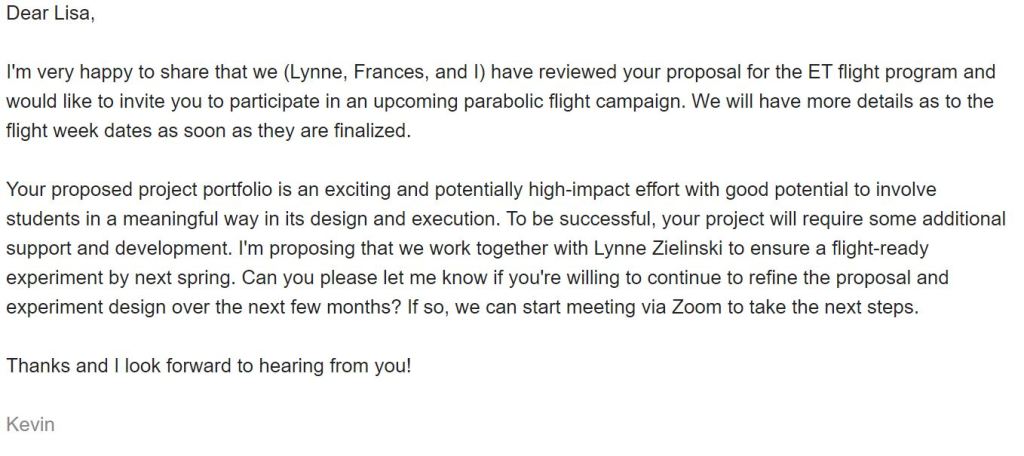
Expecting a response on my proposal was not on my radar for a few months yet (if at all). I was gearing up for the Space Exploration Educators conference in Houston in the beginning of February. I was working through all of the cool space & music lesson plans I had made for my proposals for the Embedded Teacher program. I was getting ready to end the 1st semester of this school year. It was January 12, a month after I had submitted my second proposal, when I got a surprising email in my inbox.

I almost screamed out loud when I read the first line!!! And I’m pretty sure I told everyone I knew before I even finished reading the email!!!

And that was how the next phase of my journey began!

From January 30 on, we have met every Wednesday afternoon at 4:30 pm via Zoom to discuss the aspects of the flight. I am in these calls with 3 other teachers who will be flying – amazing women from Iowa, Georgia, and Texas. After I came back from SEEC, I also would have a weekly meeting at my school with Mary MacDonald (the fantastic principal at St. Bruno) and Tammy Price (whose title is administrative assistant, but she does so much more than that!). The rest of this blog is going to serve as a summary of those experiences to document my journey, and once I’m all caught up, I’ll begin having entries to update this adventure in real-time.

So, as I mentioned, my first official meeting was on January 30. I learned that I might be flying in the spring, or if I needed more time to get my package together, it might be the fall. I was a little bummed about the idea of waiting until fall after getting all of my current students so fired up about space (which is our theme for the year in my class). Then I was introduced to a Trello board that has been set up for all of the teachers who are flying, so that we can see what needs to be done and communicate easily back and forth throughout the process. Overall, the first meeting was a bit intimidating and overwhelming as I saw all that had to be done before I could be set to fly experiments.

The following week was SEEC, so we were all in Houston together. We met up for breakfast to speak in person. I am so glad we did! It was really nice to hear how overwhelmed and nervous the other teachers were as well. I felt better knowing that the science teachers weren’t sure that they were good enough or smart enough to pull this off. If they were all feeling the same as I was, I must be doing ok! Dr. Crosby was great at calming us down – he said that the whole process is a success if it creates a meaningful experience for our students. That was the whole point of this adventure, and as long as we used that as our guide, we wouldn’t be letting anyone down.

February 7 (the day after I came back from SEEC), I started meetings with Mary and Tammy at school. I first need to say how amazingly supportive my principal and colleagues are, even without this Embedded Teacher experience. I am so lucky to teach at a school where I can teach band in an out-of-the-box way to get my students enthusiastic about making music and connecting to subject matters they love outside of music. I think back on the teachers who made the biggest impression on me and motivated me to work hard, and they weren’t always my music teachers. My chemistry, physics, French, and English teachers in high school were the teachers I look back on from those years because they found a way to connect their subject matter to what interested me. They showed me that what I enjoyed learning about also had applications with their concepts and ideas. Throughout this entire adventure, I have been reminded of how much they taught me about music without being music teachers. And now, I am returning the favor by teaching my students about space while being a band teacher.

So, back to my meeting with Tammy and Mary – we started calling our meetings “Project Sparkle Unicorn,” as I was the unicorn in the room by being the music teacher amongst all of these awesome STEM teachers. When I told my friend about this, she said “no, you are the SPARKLY unicorn,” and I’ve just started to embrace that to bolster my courage in this whole process. In my meeting with Mary and Tammy, we discussed my school integration plans (as I want this to be a whole school experience, rather than something only my band students will benefit from), and we developed some timelines for these plans, along with media plans.

On February 9, Dr. Crosby gave us our timelines for the requirements of all paperwork and submissions for our proposals. It still looks very scary and intimidating, but a little bit more doable. I remember thinking that I better stay on top of these dates, and how nice it was to have them so I could stay focused on one step at a time. I also had a funny epiphany in this meeting. The wonderful teacher from Georgia was talking about some cool sound experiments using a tuning fork. I had ruled out a tuning fork in my experiments, as I knew it wouldn’t be heard on a flight with engine noise and the other noises from other experiments. As she was describing this idea, I realized that I was definitely biased by my musical training – see, for me a tuning fork produces sound for us to hear. In the science world, a tuning fork produces VIBRATION. You don’t need to hear a tuning fork to know that it is creating noise. Weird revelation for me, for sure! Anyway, then I got this crazy fun idea of trying to squeeze out a water bubble (in a glove box, because those are the rules for flight) and vibrating it with a tuning fork. I was giddy beyond belief at this idea, as one of the most fun sound experiments to do in classrooms is to hit a tuning fork and then place the vibrating end into a cup of water – instant splash!

February 14th’s meeting at St. Bruno was mainly focused on creating press releases for our local newspapers. On this day, I also visited the 6/7 and 8th grade ELA classes to present my flight info. After this, we discussed how NASA names its missions, and then introduced a mission naming contest for the middle school students to participate in. To enter, the students needed to come up with a mission name and write a paragraph describing what their mission name’s connection to my flight would be. We discussed how NASA mission are often named after Greek and Roman gods, and since we are a Catholic school, we could pull from our beliefs to connect to my mission. We also talked about NASA’s love for acronyms, and how the mission name could be an acronym instead. It was fun answering the students’ many questions about the flight and how it will all work. I think I have a few volunteers if I am unable to make it for some unknown reason! I learned that when I am excited, I really don’t remember to slow down my speaking speed. Luckily the students all listen fast, but I have to get better at that!

I pitched my tuning fork/water bubble idea in our weekly Embedded Teacher zoom meeting on February 17, but Dr. Crosby told me that it won’t work. The airplane’s engines are changing too quickly that the water bubble would be too unstable. Oh, well…it was a fun idea, but I’ve still got plenty going on without adding that experiment.

On February 21, in our school meeting, we discussed the plans for the students designing a mission patch. Every NASA mission has a mission patch that is worn on the astronaut’s flight suit. I thought it would be fun for every student to design a mission patch, and then I will fly their designs with me when I go for my flight. Mary & Tammy have worked the school budget in a magical way to squeeze out some money to take the winning student’s design and have it made as an embroidered patch for every student and teacher in the school. I will also get one to wear on my flight suit. We also continued to discuss our media outreach plans, aiming for television stations this time.

My February 24 meeting with the Embedded Teacher group was particularly fun, as I was playing in a rehearsal for tech week of the production of “Anastasia” at the high school I teach jazz band at. One of the awesome directors loaned me her laptop to use for the zoom meeting, as it was much easier than trying to get any of my devices on the school wi-if. At this meeting, we discussed submitting our final experiment proposals for the Zero-g Corporation (the company responsible for the flight). We needed to have measurements of the dimensions and weight of every item we are bringing along, and attached Material Safety Data Sheets (MSDS) for the items, as well. Mine were done, and waiting for any questions Dr. Crosby would have, as he fills out the formal Payload Integration Packages (PIP).

Dimensions of my pBone, and I had to measure it…and take pictures of it in its case with the dimensions and weight, as well.

On Sunday, February 27, Dr. Crosby added comments to my Google doc that housed my final proposal. It was a little overwhelming, as the amount of details needed are very involved. Dr. Crosby did an awesome job of explaining why Zero-G needed to know the exact amount of cupcake sprinkles I was going to use, and the other things I needed to elaborate on. I thought this was particularly awesome of him, since you should have seen how many comments I had to resolve on my document! It was very overwhelming, but his explanations taught me a lot about what the flight will be like and why all of the tiniest of details are important. Definitely a learning experience, for sure!

February 28 was a big day! Our mission naming contest ended, and some of my favorite names were: S.O.S.I.T.A. (An acronym for Sounds Of Space In The Air), Flight of Enob Mort, and Mission Band In….Space.

I had the middle school teachers help judge the contest, and the winner was SOSITA! In my meeting with Mary & Tammy, we discussed getting our mission patch contest going (which I’ll talk more about in the next blog…sorry for the teaser). I also went into the 8th grade science classroom, as those students are helping me design how I will attach a sound tube to my bell. Our awesome science teacher helped me use proper science terms (like criteria and constraints! I felt fancy!), and had supplies for the students to create with after I showed them what this harness needed to be able to do. After that, I also got to visit the 1st graders in our building, as they are doing a unit on sound. Our first grade teacher is so much fun – she invited me in to have a little noisy adventure with her students! I showed the students how sound can make cake sprinkles move due to vibration (totally spoiling my future flight experiment demos for them…hahaha), and I showed them how you can see and feel vibrations in instruments (like when you hit a cymbal). I also showed them bigger instruments are lower and smaller instruments are higher by using the Joia tubes I had won a grant to purchase last fall. They were so much fun, and I loved the look on their faces when they saw the sprinkles move! Totally priceless.

And that’s the rundown on January & February…it really was a whirlwind, and there’s still so much more to do!

Embedded Teacher Proposal Process

After attending the Embedded Teacher workshop at Carthage College, we had a quick turnaround if we wanted to apply for a zero-gravity flight in November. We were told there would be one teacher to fly in November, and one flying in March. However, Dr. Crosby was working on getting more spots and more funding. I’m not used to things ending up that way, but Dr. Crosby is really skilled in that area! He actually ended up getting two teacher spots on the November flight.

I applied for the fall flight. I was extremely excited about my proposal, as I wanted to see if pitch was affected by gravity. More specifically, I wanted to see if the material making up the musical instruments would be affected by gravity in any way that would alter the tuning of the instruments.

My justification for this was this: as a musician, I know that my instrument goes sharp tuning-wise when the air temperature is warmer, and my instrument plays flat when it is cold. Humidity also has an affect on my instrument’s tuning. If these factors (which actually are causing my instrument to expand or contract in tiny amounts that cause a big difference in tuning) can alter the intonation of an instrument, why wouldn’t gravity possibly have an effect on the molecules making up my instrument? This could be measured using a tuner, an oscilloscope, or a spectrum analyzer. I was beyond excited about exploring this idea, as I felt this was probably something that might not have been studied yet. I really wanted my research to have an impact on the world of science because I badly wanted to prove music’s worth in an arena such as this.

I even included fancy pictures demonstrating my anticipated data…

On October 28, I found out that I would not be flying on the November flight. I was bummed, but I knew as thorough as I thought my proposal was, I could still tweak it for the December deadline for submission for the spring flight. I figured I probably didn’t fully explain my ideas in science language instead of my usual musician wording, so I vowed to take the feedback I would be given, and try again.

The spring deadline for proposal submission was going to be December 13, but with the flights of my fellow workshop participants scheduled for mid-November, I didn’t expect feedback until after their flights. I did get feedback on December 6. This is what I heard back from Dr. Crosby: “the main comment I would make would be to make sure you review some of the existing literature and provide some evidence or a basis for thinking that microgravity would shift the frequencies of your target instrument(s). It would also be helpful to have a specific target in mind – say, a set of tuning forks, an expected frequency shift for each, and an idea of what device is capable of measuring such small shifts.”

Dr. Crosby then put me in contact with Lynne Zielinski, one of the very intelligent women who presented at our workshop. On December 9, she was kind enough to talk with me over the phone and very gently told me that there was no way my first proposal would be approved for flight. Their belief was that there wouldn’t be any effect on pitch due to gravity because gravity does not factor into any equations related to sound waves. She said even if it did have an effect, it would be such a small amount that we would need really sensitive equipment to catch those small changes. Upon thinking on it further, even if there was a change, I think it would be difficult to prove whether it was a change in gravity causing the change in pitch, or the air pressure, humidity, or temperature changes that would be taking place in the parabolic flight environment. However, that didn’t stop me from being crushed. And now I had less 4 days to come up with a viable proposal. Worse yet, I was going out of town in 2 days AND trying to get ready for the first in-person Christmas concert my students were putting on in 2 years! Talk about stressful!

Luckily, when I talked to Lynne over the phone, she suggested I look into different experiments science teachers do to how students what sound waves look like. Since the components (styrofoam beads, water, etc.) are interacting with gravity while these experiments are done in a classroom, it would be interesting to see what sound waves might look like without gravity’s effects on those components. I spent a lot of time talking to my dad, who is the first person who taught me about sound waves by showing me the oscilloscope he worked with way back when I was first learning to play an instrument. I picked my mom’s brain, as she is the best person I know at thinking outside of the box. I also talked to Kellie, my science teacher friend. Also, when my family was going out of town, we were going with some friends who are very good brainstormers and science minds, too. I watched YouTube videos on how science teachers taught sound wave concepts to their students while quarantined and virtual during the Covid-19 pandemic. I googled simple science experiments pertaining to sound. I freaked out, and had to talk myself into continuing to search for ideas. I listened to my husband when he told me I COULD do this.

Off to Galena…

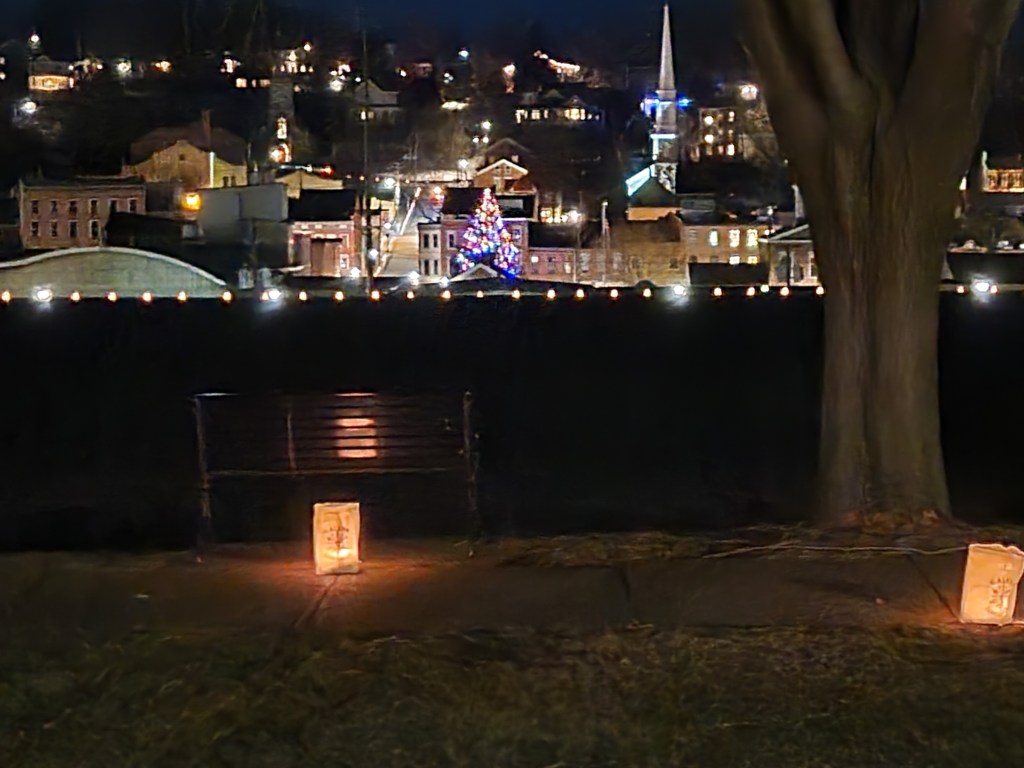
While in the car on December 11, on our way to see the Galena, IL Christmas Night of the Luminaria and Living Windows, I made a list of different experiments I could try the next day. It seems like overnight I became an expert at Physics-speak and started writing my proposals in the car. Since we had learned so much about the behavior of fluids in microgravity, I wanted to find a way to use that. I saw this very interesting Sound Carousel demonstration, and thought maybe I could make it work with fluid in the bottles sealed off by a rubber balloon. The concept of the Sound Carousel is that you can spin 2 soda bottles around by playing the exact frequency of the resonance of the bottles.

Looks fun, right? Or is it….

Well, I attempted to make that happen at home the next day (the day before the proposal was due), and I couldn’t make the original experiment work without a LOT of hassle. I then read some more on the physics behind this, and learned that the Sound carousel is actually called a Helmholtz Oscillator, and is based around the principles of an OPEN resonating container. Closing off the soda bottles with a balloon and filling them with water seemed like it would pretty much negate all of the principles involved in the Helmholtz’s research.

My other idea at using water to demonstrate sound was creating a “Hydro Xylo,” or basically a keyboard composed of bottles filled with various amounts of water to create a scale. This went back to my original proposal, because I wanted to see if the pitch differences between the bottles would stay the same. I also thought it would be neat to see how the different amounts of water acted in the same-sized bottles. I did include this experiment in my submitted proposal.

I thought the Harmonic Minor scale would be fun because of the bigger difference in water between bottles 6 & 7.

I also put in some experiments that would show vibration in a 3-dimensional manner. I had an experiment that would show the 3-dimensional sound wave in a sound tube. This tube would be filled with styrofoam beads, and when the resonance frequency of the tube would be played, a sound wave would be generated in the styrofoam beads, displaying the nodes and antinodes of the wave.

Could be interesting…

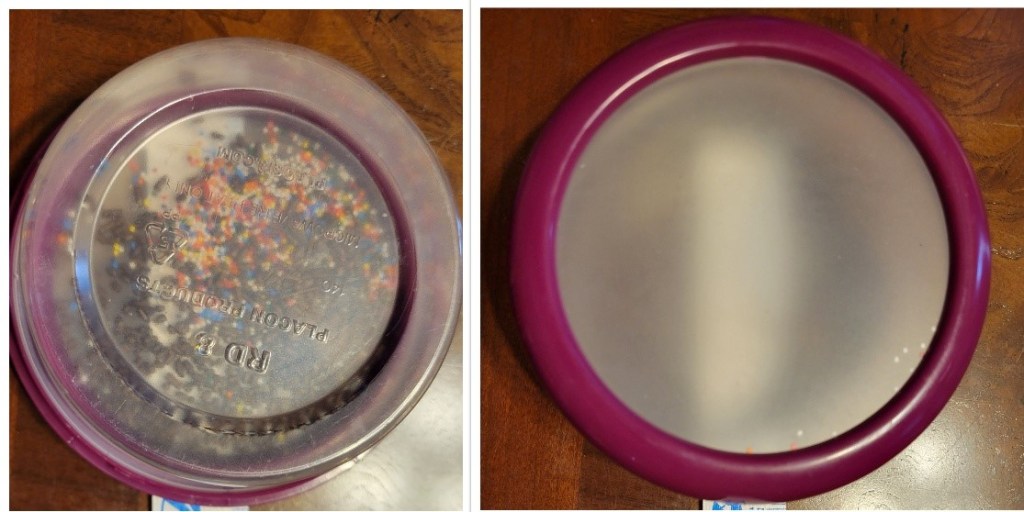
Another experiment I proposed was a basic sound experiment used to show kids of any age that sound is caused by vibration. Usually, a teacher will stretch plastic wrap over a bowl of cup so that it is taut. They will then pour glitter or cupcake sprinkles (or rice, or salt, or….) on the plastic wrap. When any sound is played at the plastic wrap (from a gong, cymbals, any band or orchestra instrument), the sprinkles/glitter/rice/salt dances. I decided I could do a variation on this with a container to keep the small particles in.

Aldi onion saver lid for the win!

I also thought it would be fun to find out what drumming with zero gravity would be like, as the rebound and exact moment of striking the drum are so important, and rely very heavily on gravity. I decided this could be a cool way of using this data to analyze what reaction time would be like for astronauts. Since astronauts have to do certain combinations of manual tasks (pushing buttons, flipping switches) in a certain order and within a certain time frame, it might be nice to know how much of their reaction time depends on gravity. My proposal was to take a drum into microgravity and play it at various tempos with a metronome to see how easy it was to stay in time at various speeds.

So, after spending all day on December 12 experimenting and typing up ideas, I was ready to submit my proposal. It wasn’t as pretty or didn’t feel as completely hashed out as my first idea, but it was done. Now I could focus on the all-school concert on December 15. To me, that was the most important thing to be ready for. I didn’t feel very confident at all in my flight proposals, but at least I could focus on making sure my students and their audience members felt ready for a concert, and for Christmas itself. That concert was a great reminder on what is important to me and to my school community. The concert went wonderfully, and it was so nice to be able to shove the proposal experience to the back of my mind.

To be honest, after the whole concert and Christmas season, I was not thinking much of when I might hear about the fate of my proposal. The spring flights had been moved to May (from March), and happen to line up with the week before our all-school spring concert. I figured if I didn’t get to fly, that would be ok, since it was going to be really hard to be gone the week before our concert anyways. I gave it my best effort, learned a ton, and enjoyed the experience of thinking about advanced physics concepts again. Time to move on to y next adventure…or was I done with this one yet?!?

Galena is always so pretty, but this was such a beautiful event!

Embedded Teacher Workshop

Do you know how when you do something that makes you venture way outside of your comfort zone and the growth you experience is indescribable? Well, this is a tale of one of those experiences! I am a co-leader of a 2nd grade Girl Scout Brownie troop with a great group of women. One of these women is Kellie Arenz, an amazing science teacher. She had a fantastic experience in May of 2021 flying a zero-gravity flight doing experiments to show her students.

Fast forward a few months – Kellie mentions to me that the people that gave her the opportunity to fly are hosting a workshop to help other teachers learn about microgravity and possibly get the same flight opportunity she had. She encourages me to apply for the workshop. I wasn’t so sure there was even a remote possibility I would be selected, but on August 29, I submitted my application, thinking that at least I tried. It is funny to think that I did not even mention my application to my husband….that tells you how likely I thought it was that I’d be accepted!

Imagine my surprise when on September 9 I get an email from Dr. Kevin Crosby, the creator of this program, telling me I have been invited to participate in the Embedded Teacher Program. The event will be held on a Friday/Saturday in October at Carthage College. I am to respond to let him know if I’m still interested and available to attend.

As I’m sure you have guessed by the fact that this is a blog post (do you think I would blog about an opportunity I didn’t take on???), I accepted entrance into the program. So now I had to tell my husband what I had gotten myself into…

As we got closer to the workshop, Dr. Crosby sent out a list of participants. As I looked at it, I noticed I was the only music teacher (not surprising, I guess). What was even more interesting was that there were participants from Iowa, Illinois, Georgia, Texas, California, Kentucky, and Hawaii coming. There were only 10 teachers accepted to the program!

On October 8, we all converged from our different states to the beautiful campus of Carthage College. While there, we had quite a few sessions to teach us about microgravity and how to teach this to our students. We first learned about how our students could very well end up with jobs in space doing a wide variety of things. Space tourism is not that far off, and if there is tourism, then there are jobs in all fields necessary to get (and stay) there. We introduced ourselves. I was immediately drawn to the Biology teacher from Illinois, as she said in her introduction that both she and her students weren’t entirely sure she was smart enough to be in the workshop. I teamed up with her pretty quickly, since she was clearly voicing the thoughts that were in my head!

The next part of our workshop was a series of demonstrations and experiments. This workshop exists in partnership with the National Space Society, so we had presentations by two incredible women from that organization (Lynne Zielinski – the Vice President of Education and Outreach and Frances Dellutri – the Director of Education), as well as Dr. Crosby. We learned about what exactly microgravity is. For example, I did not know that true 0 gravity only exists due to an object falling. In space, there is plenty of gravity to be found, as every space object has its own varying amounts of gravity. We dropped paper astronauts in soda bottles and filmed them in slow-motion in order to see the moment the astronaut floated in zero gravity. We created a drop tower experiment with legos in which our group had to design a machine that would move a pile of pennies when it achieved zero-g. We also got to play with a bottle of water that had a hole in it – what would happen to the water as the bottle fell?

Meet Zach, his harp, and his hopeful vertical ride! (Thankfully my group was successful!)

After this exciting morning, we got a chance to brainstorm possible questions we have about how things might behave in zero gravity. Luckily, I had asked my band students for ideas as well before I went to this workshop, so I had plenty of questions! We talked about what connections these questions would have for content we are already teaching in our classrooms, as this is designed to supplement our curriculum, not overtake it completely.

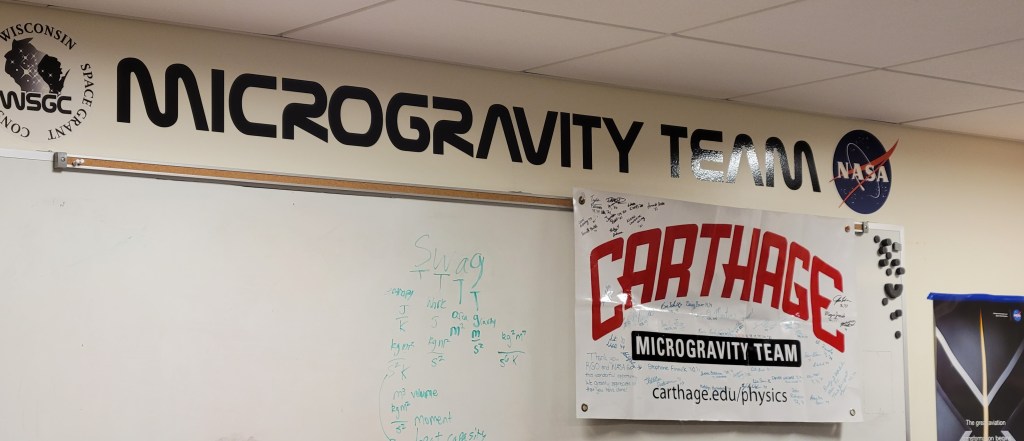
We learned about parabolic flights and what research is being done on the flights currently. We also got a tour of the Microgravity Team’s workspace at Carthage College. We heard from college undergraduates who are working on projects to help with problems and issues with current space missions through NASA. It was so exciting to hear of work being done in Wisconsin that affects space missions. I had never thought of Wisconsin as being a very space-focused state, but clearly, I am mistaken.

These undergrads are some seriously amazing physicists!

We ended the day by learning about different opportunities NASA has for teachers, and by this time my brain was humming with ideas and the experience. I felt like I was using a part of my brain that had been asleep since I left my Physics of Sound and Music class in college decades ago. I was so inspired and excited, as I absolutely love science and was beyond giddy to get to apply a science experience to my band classroom! I had to drive home quickly, as my 7-year old daughter had a soccer game. I did not end up making it in time to see her play, but I did get there in time to get rained on!

The next morning we returned to Carthage for more microgravity fun. We learned about NASA’s Artemis project, which has humans going back to the moon, and setting us up to get to Mars. Then we learned about waves, which was something I know a lot about, since it has EVERYTHING to do with music and sound!

Finally, something that I know!

We also got to learn a lot about how water reacts in zero gravity, which fascinates me. I could watch bubbles of water floating through space all day long in astronaut videos! We did experiments involving surface tension and water, which was very thought-provoking.

Look how full you can fill a cup with water!
And you can float paperclips on top of the water????

We then got to hear from my friend Kellie and another teacher who had flown about their experiences. This part was my favorite, as the teachers showed their whole process – how they involved their students in choosing experiments, how they planned for the parabolas, and then they showed videos from their actual flights. It was very inspiring. I went into this whole workshop feeling like it was highly unlikely that I would get to fly, and feeling pretty ok with that realization. After watching these two teachers’ presentations, I was beginning to feel like I should really find a way to develop a proposal strong enough to fly. But, did I enough to pull it off?

At the end of our day, we had the opportunity to present one idea we felt like we would propose for flight. It felt good to have a fully-formed idea, and I couldn’t wait to develop my proposal. Our proposals would be due in 9 days! Would mine be good enough? Only time (and my next blog post) will tell….

Also, if you are a teacher and interested in applying to become a part of this experience, you can visit this website for more information: https://spacegrant.carthage.edu/educators/embedded-teacher-program/?fbclid=IwAR3cAbXJ0t09SpEAPNjhoQE78nYEQiQdB8w61A-w0PrWC7s1WG6X0cg3xJE The application deadline is June 3 for next fall’s program!

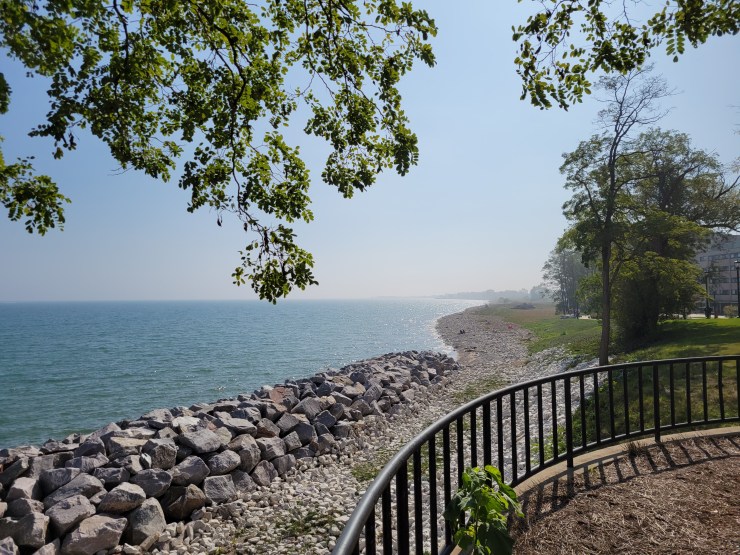
How does anyone get any work done on this campus?!? It’s so beautiful!!

Space Exploration Educators Conference 2022

I was contacted on December 16 by the Director of Aerospace Outreach Programs for the Wisconsin Space Grant Consortium asking me if I would like to attend the Space Exploration Educators Conference (SEEC), all expenses paid. After contacting the principal of my school (who enthusiastically said “GO!!!!”) and talking with my family, I happily accepted this opportunity. Let me tell you, I am SO glad I did! It was an experience unlike any other I’ve had before!

The conference takes place at Space Center Houston, and is a 3-day event. During this time, you are treated to sessions that teach you about all of the current space missions, International Space Station experiments, and how to implement space lessons in your classroom. You also have the opportunity to tour areas of NASA that the public does not have access to. My favorite thing about this conference is that at every session you go to, you are actively DOING something. Each main session is 90 minutes long, and I have never seen an hour and a half go so quickly.

The very first day started with a Keynote session that was delivered by a panel of 4 astronauts. Before they even began, however, the astronauts on the ISS (International Space Station) had recorded a special greeting just for us, welcoming us to the conference! Talk about a first for me! I’m normally not a huge Keynote session fan, but we had one each day of this conference, and they were not to be missed! Every single one was inspiring, informative, and flew by!

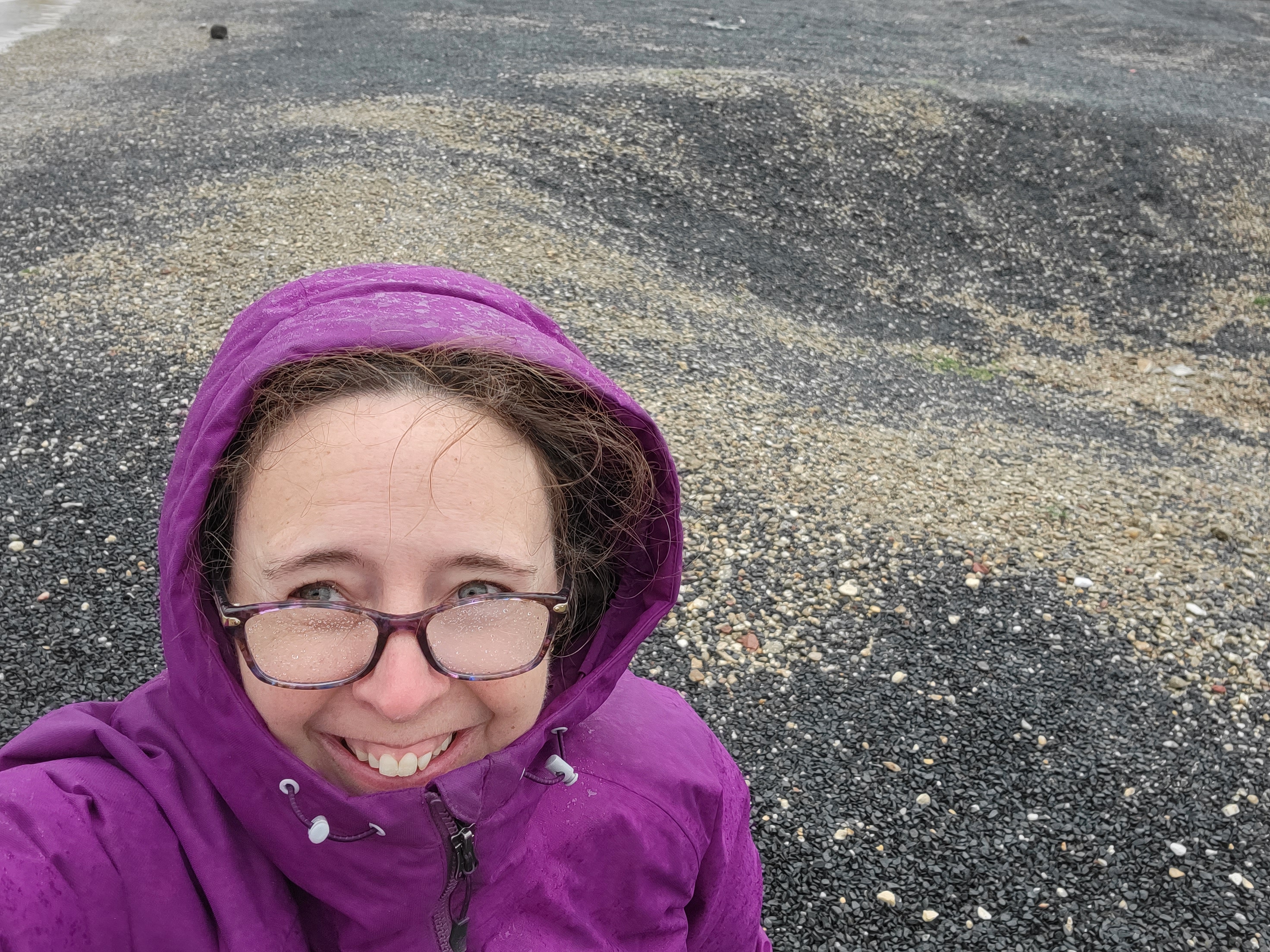
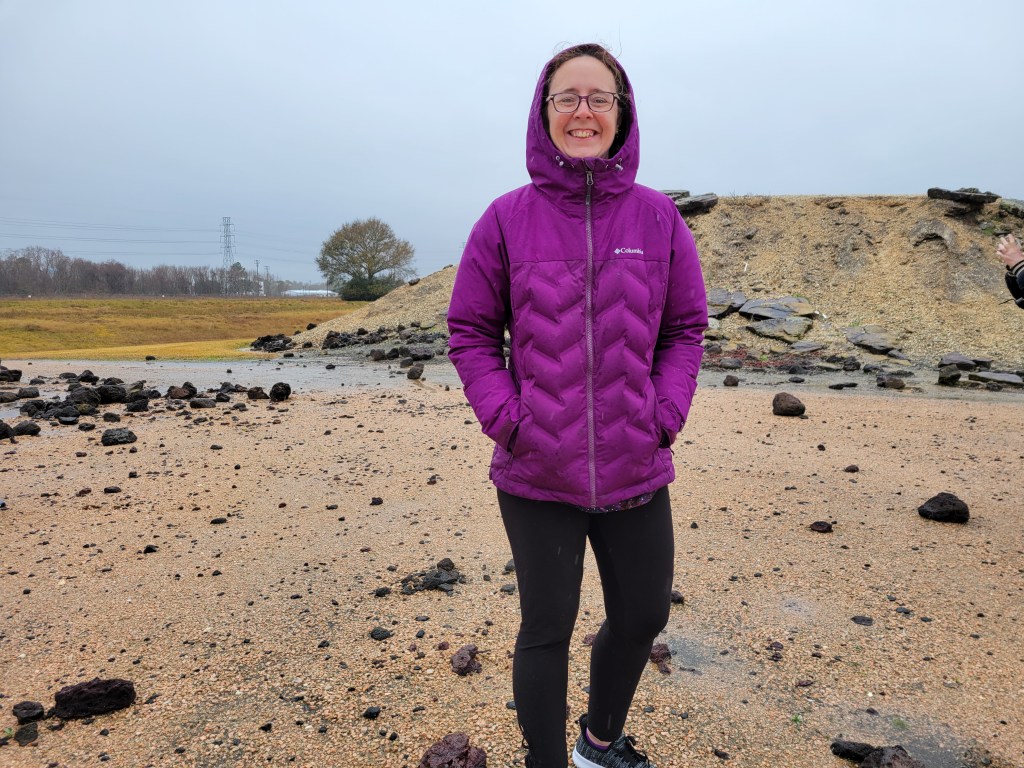
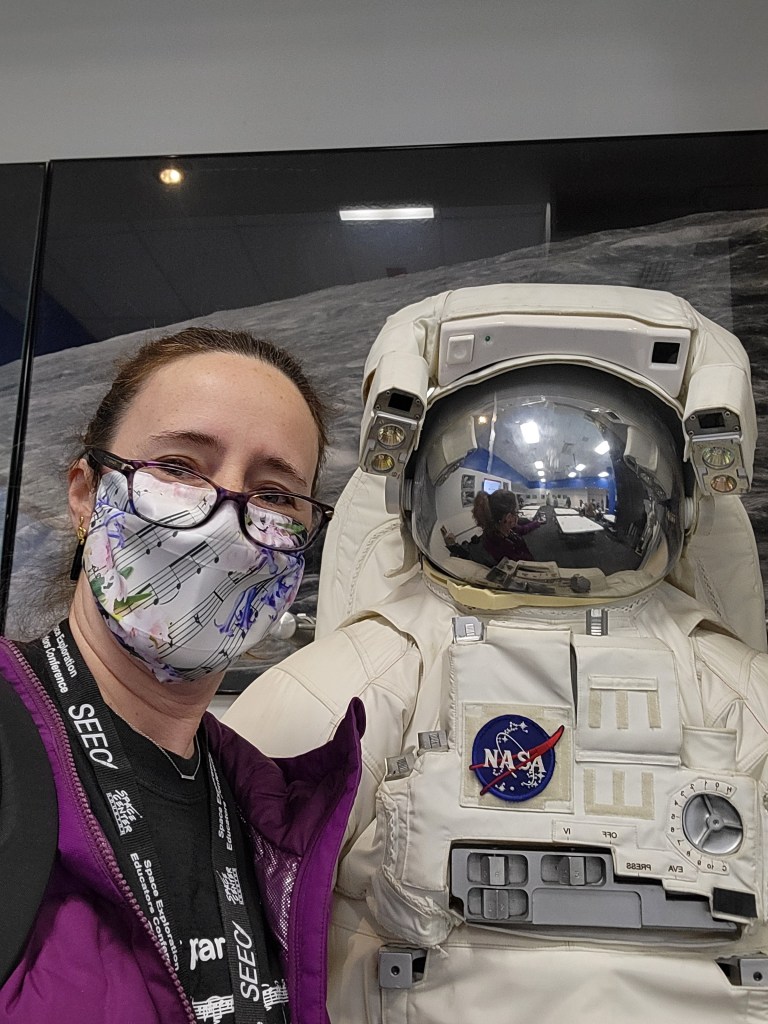
On the first day, I signed up to take a tour of the “Rock Yard,” which is where NASA has created a simulation of the surfaces of the Moon and Mars. Even though it was raining, we were a bus full of enthusiastic teachers, ready to brave the elements to go ‘stand on the Moon,’ and ‘explore Mars.’

Yes, I am on the Moon – thanks for asking.
Is it raining? I can’t tell; I’m on Mars.

So after a bang-up first session pick, my next session was lunch, where I ate underneath a giant, lit moon. The food was delicious, and the conversations were amazing. After lunch, I had a session about Funding and Programming a Space Lab. This session was awesome, because I learned how to grow plants in Moon and Mars soil-simulants. Not that I can grow plants on Earth, but it was fun to experiment with anyways!

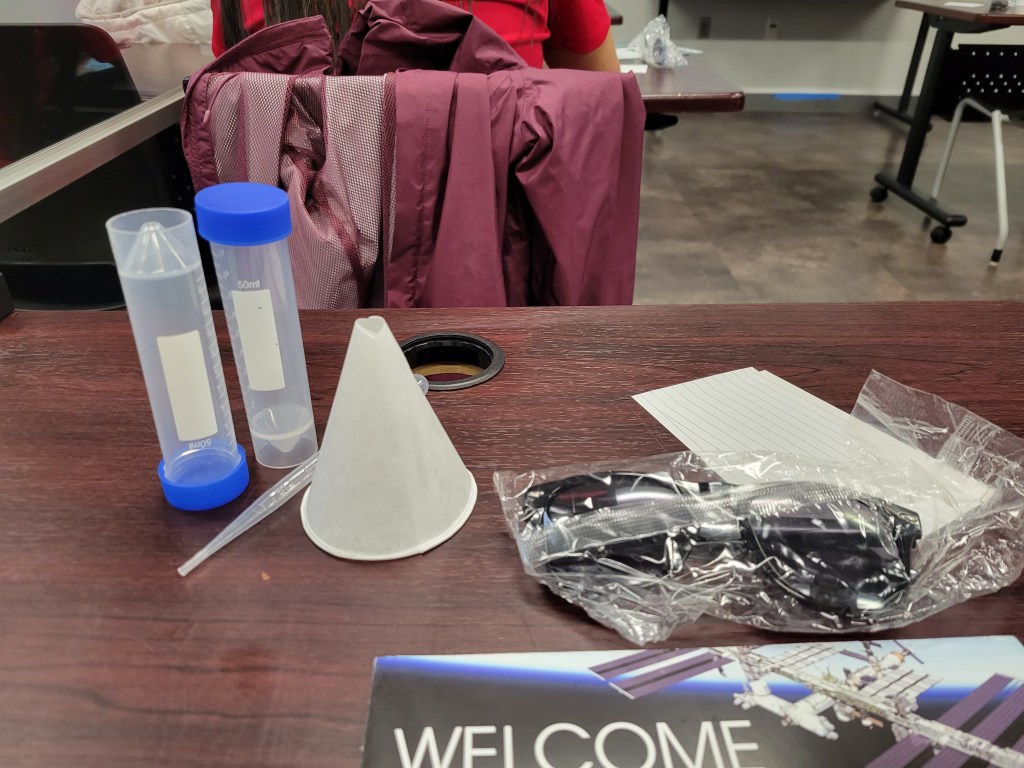
This is what your seat looks like when you walk into a session – lots ‘o swag, and materials for your activities.

After this session, I took a tour of Mission Control. I had taken a tour the day before, but my friends that I was hanging out with at the conference said the tours for the conference attendees are a little greater in depth and experience. They weren’t lying – we got to go in many areas the public isn’t allowed in, and our ability to take pictures and videos was not limited at all. It was really neat.

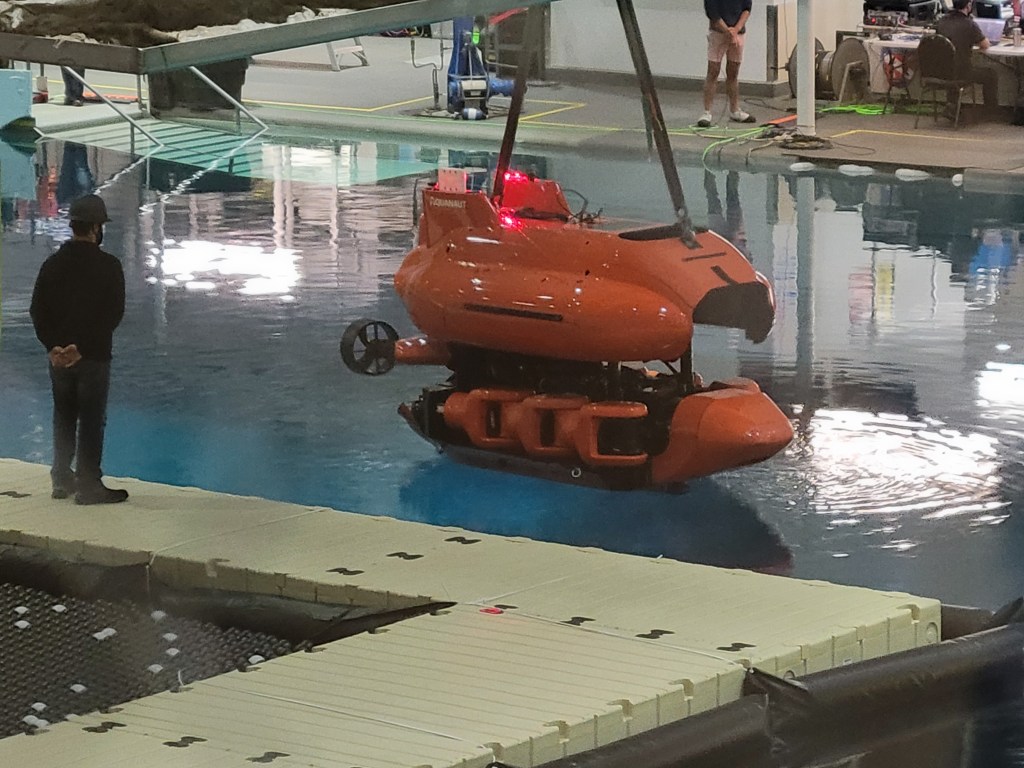
My next session was also a tour. This time I got to see the Neutral Buoyancy Laboratory, which is where the astronauts train for weightlessness and get used to wearing their spacesuits. They have a very large, and very deep pool with a mockup of the International Space Station submerged within. When we arrived, they were done training for the day, but they were still removing the submarine they use. We also got to buy shirts if we wanted at the only location in the world that you can buy NBL gear from! Of course I bought a T-shirt!

This is HUGE!
Watching the submarine get pulled out

After all of that fun, we loaded into buses to take an excursion to downtown Houston for the Infinite Exhibit. This event was a virtual reality experience in which each attendee gets to feel what it would be like to be on the ISS. I was eligible for this because I joined a group called the Space Station Ambassadors, which is a free organization to join and focuses on the experiments going on the ISS. They also have put on virtual workshops on a number of topics, and I even attended one already since I’ve come back from SEEC. The Infinite Experience was amazing. It really felt like I was on the ISS, and I loved looking back down on our planet, manipulating objects on the space station (including a juice box I tried to hold onto for the duration of my time ‘aboard’), and just experiencing what it would be like to be an astronaut. When we got done with the experience and looked back into the room we had just walked around in, we couldn’t believe how small it looked, as it felt like we were in an endless room!

No way does the room feel that small!

After the experience, the Space Station Ambassadors got aboard the bus and were treated to food at a local brewery. The food was good, and we even got more swag. As if the experience, food, and swag weren’t enough, they had raffle prizes as well, and I walked away with a cute book that was read on the ISS, and a matching doll that was a character in the book. I was super tired when I returned to my hotel room, but my head was spinning with all I had learned and experienced! I checked on my space plants and went to bed!

Goodnight, Earth & Mars Alfalfa!

The next day started with another INSPIRATIONAL keynote speech on “Launching the Next Generation of Lunar Explorers” by Mike Kincaid (Associate Administrator of NASA STEM Engagement) and Howard Hu (Deputy Program Manager of NASA’s Orion Program). After that, I caught the beginning of a session on Pocketlab Rovers, but then those of us in the Embedded Teacher program rallied to cheer on our friend Kellie Arenz during her virtual presentation on our program. Not surprisingly, it was time for a meal after that session!

After lunch, I got to try my hand at being a ROCKET SCIENTIST. I went to a session called “Launch Your Classroom into the Stars!” You’ll never guess what my spot looked like when I got into the room….

Let’s do this!!!!

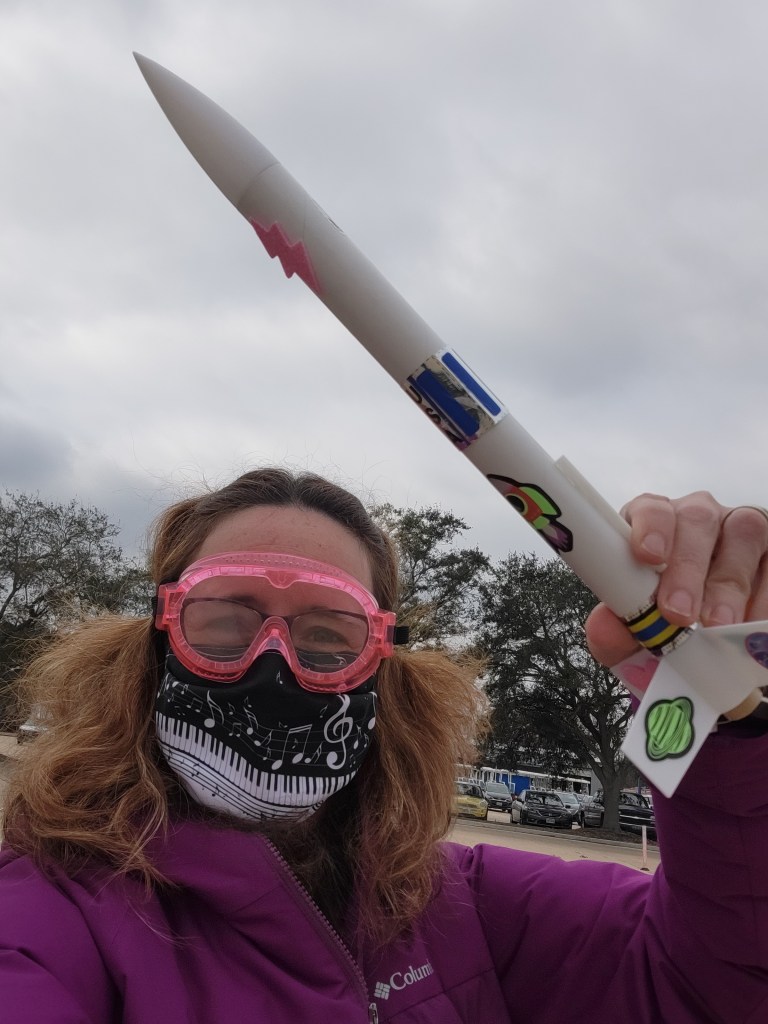
We got to work building rockets, and then went to the parking lot to launch them. I was very determined, but unfortunately my Sparkly Unicorn Missile landed in a tree. If you ever find yourself on the backside of Space Center Houston, let me know if my rocket is still there….

Why do I look like an evil scientist when I put on safety goggles?

My next session didn’t end as tragically, thankfully (although my straw ‘diver’ disagrees). It was called “An Astronaut’s Perspective on Training in a Neutrally Buoyant Environment,” and it was fascinating. It featured a dive trainer who works with the astronauts to train them in the pool that I visited yesterday. We got to see the diver take an empty water bottle all the way down to the bottom of the pool and see it get flattened by the pressure. She also talked about some of the exercises they do and the many challenges to training in this environment.

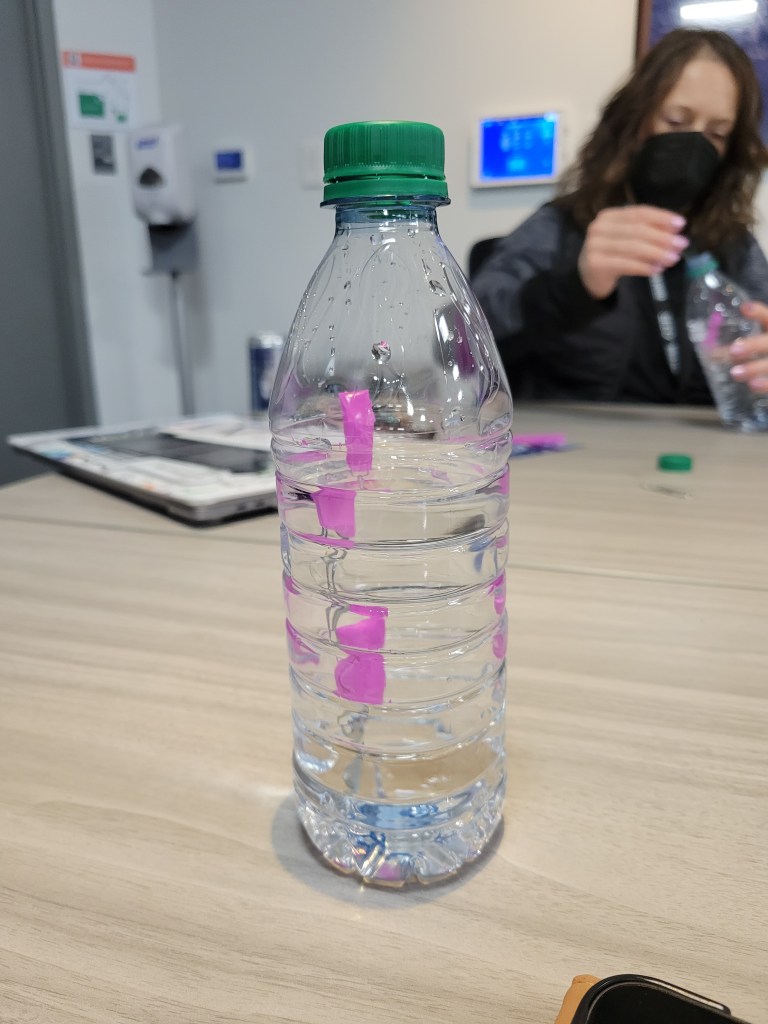
You guessed it – even in this session there was an activity to do! Ignore the second straw in my bottle – I accidentally drowned my first diver….guess I won’t be hired as a trainer anytime soon.

After this session ended, it was time to go back to the hotel to get ready for the banquet. Since it was my first time, I did not participate in the theme that some tend to go all out for. This year the theme was to dress in fashions of the future. It was fun to see other conference attendees in light-up clothing and other fun variations on that idea. The banquet was fun, and took place in Space Center Houston. It was really cool to wander around the exhibits with a beverage in my hand, sitting next to moon rocks and real astronauts, hearing stories from NASA employees, and networking with teachers from around the world, all while listening to a live band.

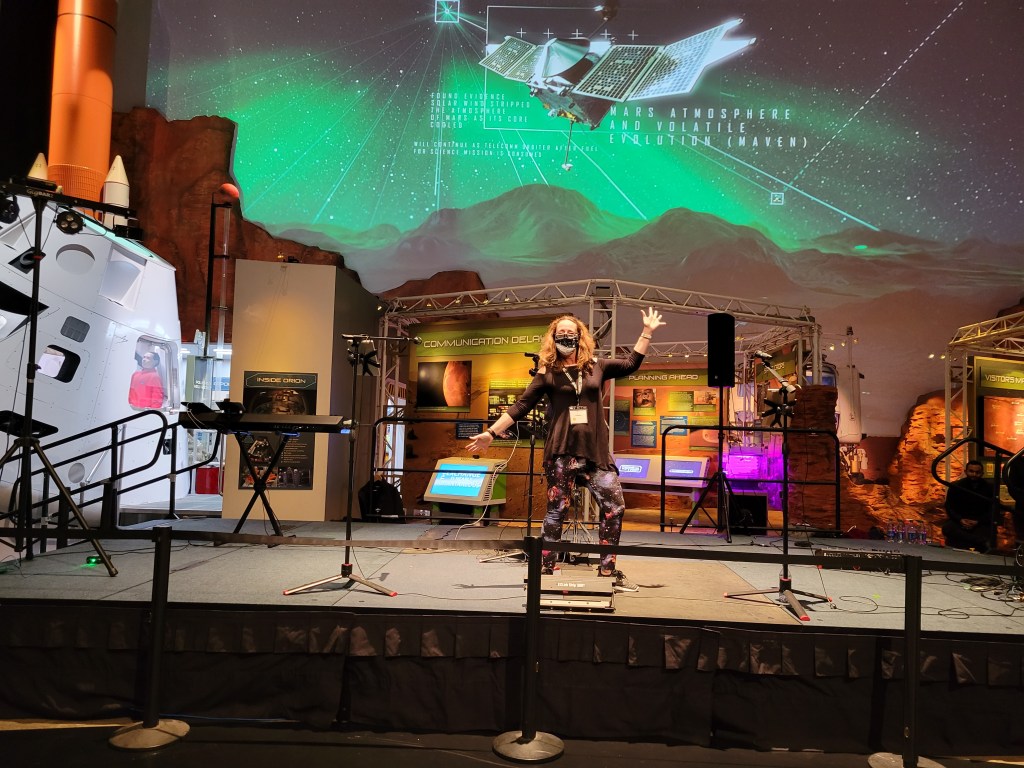
Why yes, I did end up on stage (next to Mars)…once a musician, always a musician!
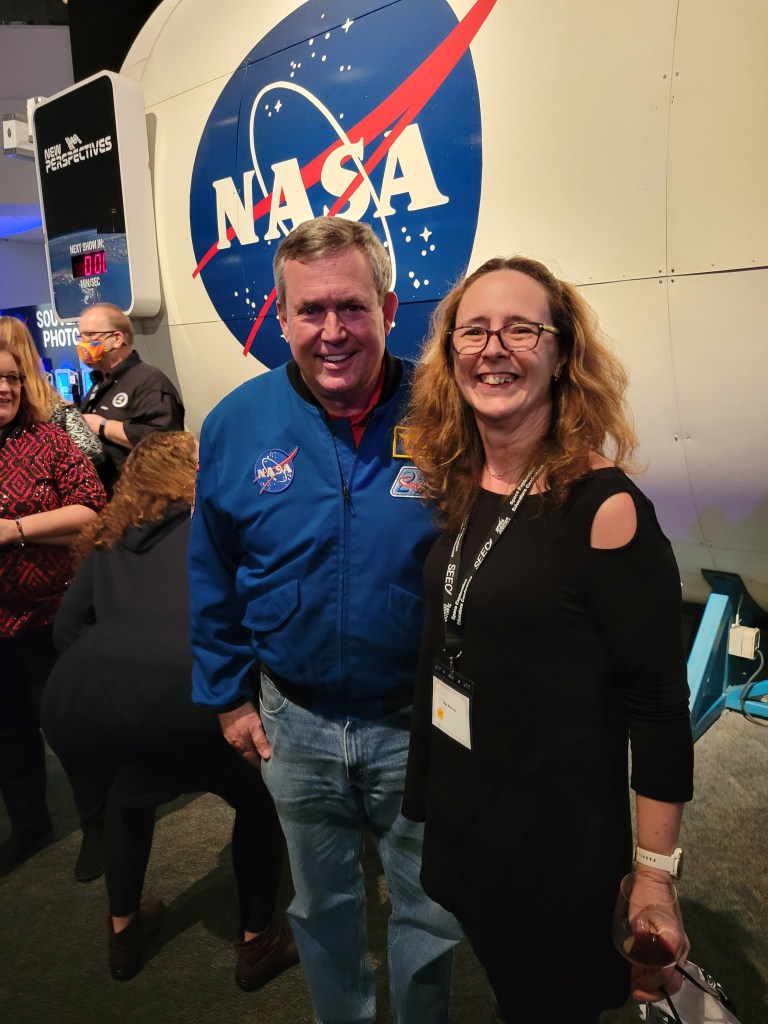
Hanging with Astronaut Mike Foreman, who was a trombonist when he was in school!

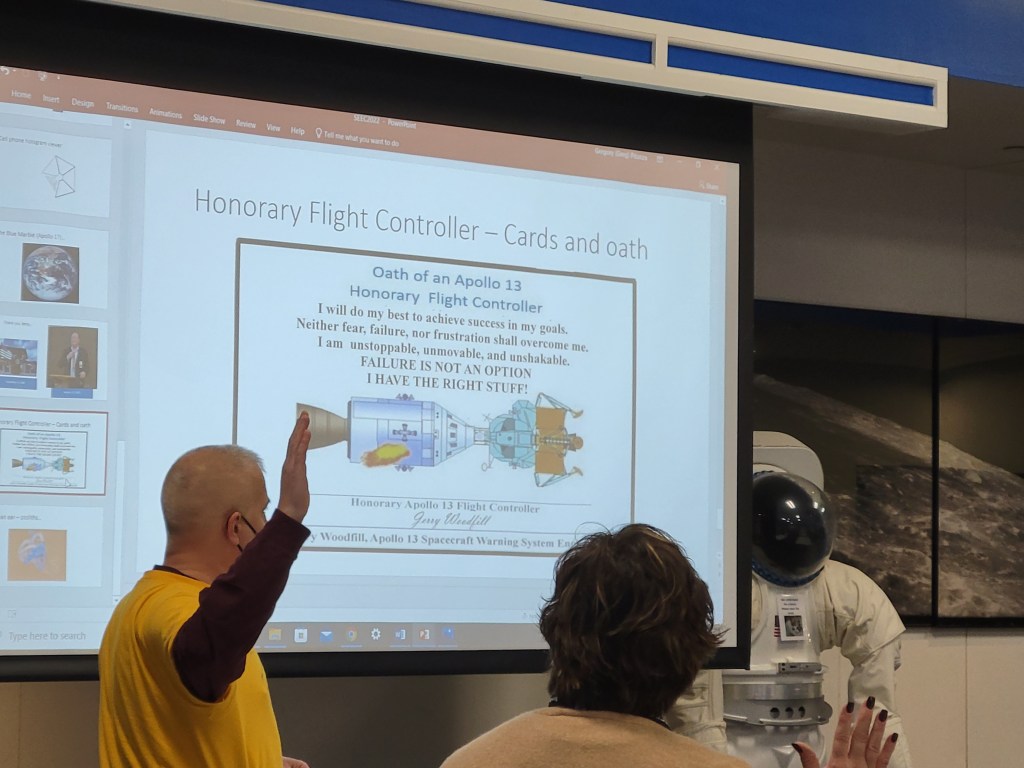
After the later night from the banquet, the next morning does not feature a keynote session. Instead, the Embedded Teacher crew met up for breakfast to discuss some details for our upcoming flight. Then it was off to our final day of sessions. My first session up was a session that was supposed to be done by a NASA flight controller (Jerry Woodfill, who passed away a few weeks before the conference) giving us a tour of the exhibits while telling stories of his experiences, but it got changed. We got to become Honorary Flight Controllers, taking the oath and everything! I also learned a cool technique for Go-No Go for my students to let me know if they need more time/more help/don’t understand. And, I got a blue marble with the continents printed on it and a bracelet that says “Failure Is Not An Option – I Have the Right Stuff.” There were a lot of amazing lessons packed into this session!

Taking the oath (while taking a picture of the oath)

My next session was called “Bring the Art of Space Into Your Classroom,” and was put on by two amazing women from the National Space Foundation. I knew them from my Embedded Teacher Program. In this session, we learned how to help students create zines (which are like mini books/magazines with artwork) to display their knowledge about a subject matter. In our session, we were divided into groups and created an entire zine in our session time. It was really cool and something I an imagine my students really getting into.

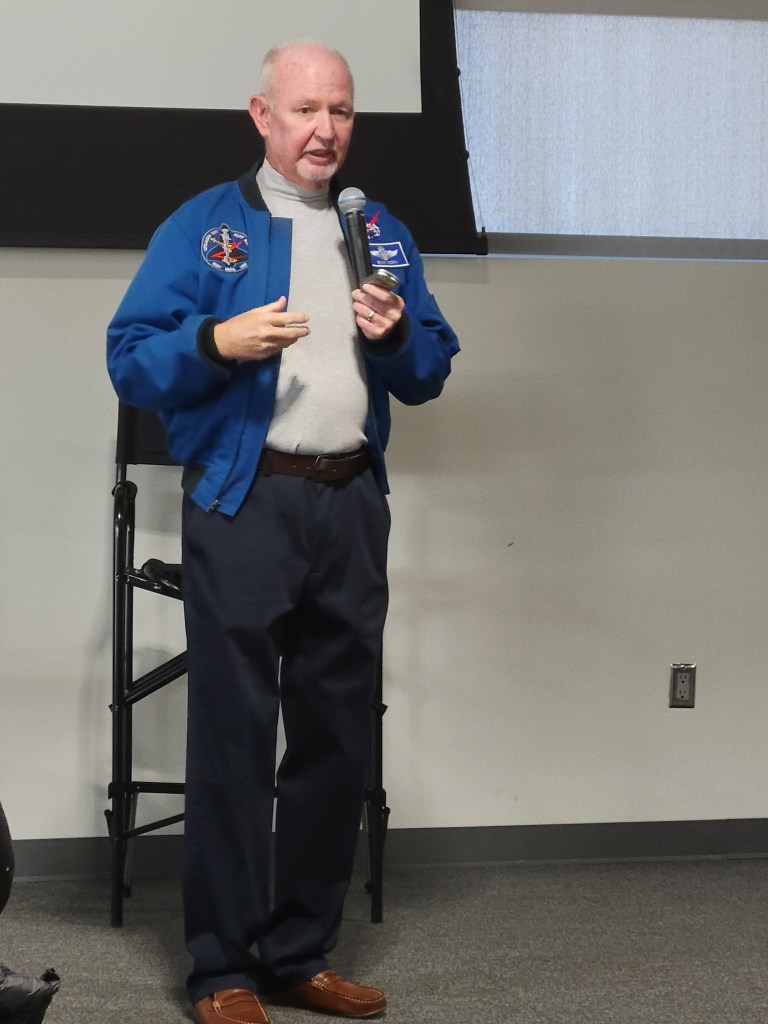
I was super excited about lunch today, as I had opted to eat with an astronaut. I got to have lunch with Col. Brian Duffy, and it was sooooo cool to hear all about his missions and the crew that he flew with. His stories were amazing, and I could have listened to him talk all day!

Just so you know, he was not a musician, but music was something that was very important to him while completing tasks in his mission, including helping him deal with a full day weather delay before return to Earth.

My last session before the close of the conference was “Exploring Sound with NASA Aeronautics and the X-59.” This session was really neat, as we got to create our own sound experiment and then work to implement it, collecting data, testing hypotheses, etc while in Space Center Houston. We learned how to use the free Arduino app to record many different kinds of scientific data. My group wanted to analyze the decibel readings of the different spots in the museum to see if any of the noisier locations could reach levels of damaging hearing. You will be happy to note, that a science museum such as Space Center Houston did not reach dangerous decibel levels, except right next to a toilet when flushing. Good to know, right?

The final event at the conference was a keynote session given by Audrey Powers, the President of New Shepard Mission & Flight Operations for Blue Origin. She talked about her space flight and where her company is going. It was VERY inspiring. At the end of her talk, they raffled off a trip to go see the next launch for Blue Origin. You will not be surprised to hear that I did not win that. However, I didn’t even feel badly not winning after having such an amazing time at this conference. I felt so inspired and so in awe of this experience that I got to have. I am so very grateful to the Wisconsin Space Grant Consortium, as this experience wasn’t one I even had on my radar. A music teacher at a space conference? Really? And I got so much out of it that I can’t wait to take back to my students and my whole school. It was a very powerful experience that I really hope I can have again in the future!

Farewell, but not for long I hope!

Sample Lessons from My Online Middle School Band Class

I am going to share the lessons I have been giving my students in hopes that you can either steal them or they inspire you to create something exciting. This is my school’s 3rd week of online learning, as we haven’t had our spring break yet, so for those of you just beginning – maybe you can learn from my issues.

I split my assignments into 2 parts – one assignment serves as their ‘lesson’ time and the other is fulfilling my ‘ensemble rehearsal’ expectations. I usually only see my students once a week for a 20 minute lesson and once a week for a 60 minute band rehearsal.

The first week I was all inspired and took an mp3 of one of the pieces we had been working pretty hard on and popped it up on Google Classroom. I asked my students to create a video recording of themselves playing along with the recording. I thought this would be a great way for them to correct any rhythmic issues they tend to have. This worked out well for some of them, but others were not quite at the level this assignment called for. This is, of course, after we got the Chromebook cameras up and running.

I also asked the students to go https://www.musictheory.net/exercises/note and play until they had 30 correct. They then were asked to take a screenshot of their final score so that I could see how many questions it took for them to get 30 correct. This also worked well, after we got that website unblocked for them on their Chromebooks (I was really batting 1000 on assignments that week).

For my second week of work, I assigned them a movement of one of our easier pieces and had them video record them playing it on their own. The students seemed to develop less frustration with this, however, their rhythms were nowhere near correct. I will have to try something different for next week.

I also asked the students to visit https://www.youtube.com/watch?v=ktKcnDfWs2c and comment back to me which music impacted the scene the most, in their opinion. The video is a silent movie scene set to 5 different musical backgrounds. The students can see how drastically music changes the mood of the movies. (We are working on a movie music unit right now, with our Spring Concert theme being “A Night at the Movies”). This was my most completed assignment to date. The students really enjoyed this.

Fast forward to this week – I am now getting clearer with my directions. In every Google assignment box, I break down my instructions into numbered tasks. I am curious to see how this works. I am hoping I will get less students marking each assignment as ‘done’ without actually doing anything.

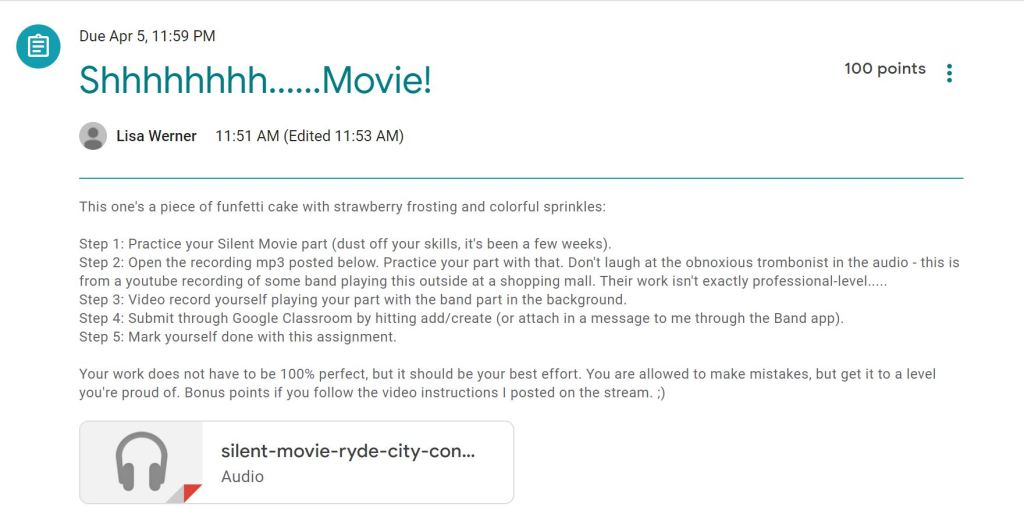
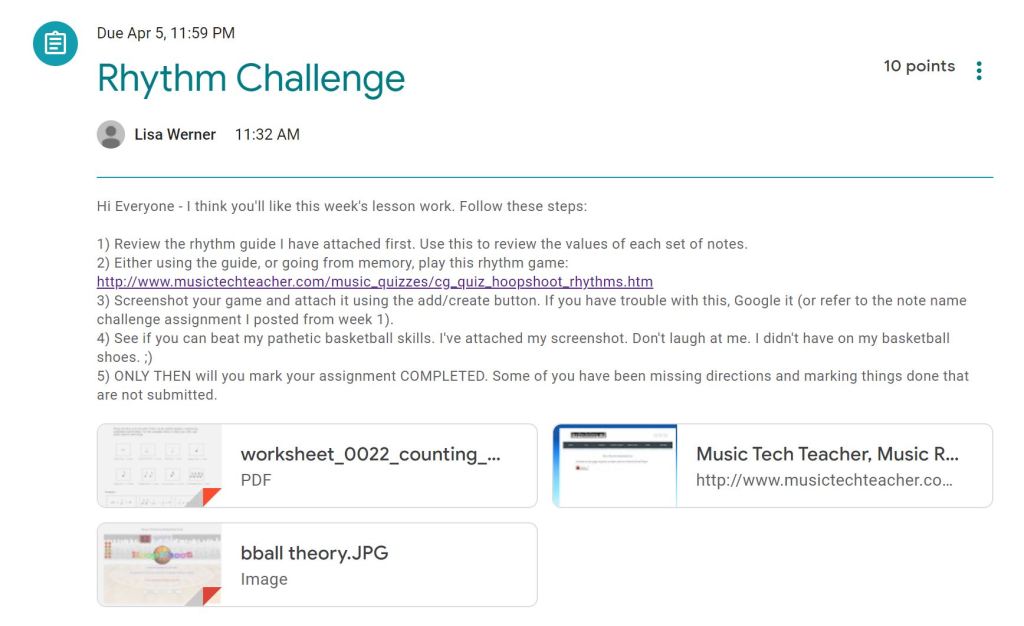
The assignment this week is to record their piece “Silent Movie” for me with the background music. They were also supposed to go to http://www.musictechteacher.com/music_quizzes/cg_quiz_hoopshoot_rhythms.htm and play the Rhythm Basketball game, but my students’ Chromebooks don’t have Adobe Flash updated on them. I had actually emailed one of my flute students to make sure she could get to the site, so I thought I was all set on this one. I was feeling proud of myself for testing it out BEFORE I sent the assignment out. Until the Flash warning came out. The watch dog company that monitors their Chromebooks are not able to help out with this issue, and laughed at me because of how old and unsupported Flash is. Looks like my students get a free pass on this assignment until I find something else. I wish there were more FUN rhythm work things so that my students could get a bit of a brain break while still learning what I need them to work on!

Alex Shapiro’s Resource offerings!

I am so excited to share that composer Alex Shapiro has offered up help for online band directors. Here’s what she had to say on the Middle School Band Director facebook page:

Hello to my band director friends!

Everyone’s been scrambling to find ways to engage with their ensemble members online, and many of us have been actively sharing resources, ideas, and… more than a few gripes about how technology wasn’t quite ready yet for what we really need: realtime online ensemble playing! It’ll be here soon. But not yet.

One of the workarounds a lot of us have discussed is getting students to practice and record their own part of a piece, against a click running in their earbud to keep them in time. Each student can then upload their recording, and the many parts could then be assembled into a less-than-perfect, but possibly still-worth-doing complete pass through a piece.

Among the challenges here is keeping everyone in tune, so a backing track can be a useful guide. This is where your friendly, wacky, electroacoustic band music composer e-friend Alex might be able to help: if any of you would like to use one of my pieces for this purpose, it would be my pleasure to send you, at no charge, the link to the score, parts and audio accompaniment track. Just message me, or leave a note here, or email me through my website, and I’ll get you the perusal link to all my pieces, from grade 2-5. Select whatever you want, email me with your choice, and I’ll email you back with the private link with which you can distribute the materials to your students (giving you a great opportunity to also teach them the basics about copyright! Ha!). Here’s to helping each other get through the rest of this semester, whether in person, in pixels, or in soundbites!

If you are not on facebook, you could undoubtedly email her at:

Top 5 Things to Keep in Mind for Online Teaching

I know so many of us as teachers were not prepared to move our entire face-to-face curriculum to an online one immediately. I was so shocked by how quickly things escalated that it took me 3 full days to remember that I had even completed the necessary requirements for our state to be a licensed online teacher (in my defense, I did this work 5 years ago through a local college and haven’t been lucky enough to use my skills at all yet!). I went back and reviewed my class notes, texts, and projects and have come up with these 5 things that will help as teachers work to modify their curriculum for online learning.

  1. Keep your original learning objectives in place. When you were teaching your students face-to-face, you had a pretty good idea of what you wanted your students to be able to do for the rest of this week, month, quarter, school year, etc. Don’t let all of the overwhelming quantity of free online resources distract you from what it was you planned to do. Make your goals and objectives FIRST and then search for the appropriate resources to assist your students with this. Not only will this give your newly-formed online curriculum direction, but it will make more sense for your overwhelmed students who are trying to make sense of everything as well.

2. Remember that the majority of your students are new to this as well, despite being “Digital Natives”. Yes, parents are always bragging about how their son or daughter knows more about their phone than the parent does. Yes, your students may have all the info on how to fix your classroom projector because they’ve seen other teachers in the building do something similar. However, the students only know the technology they have been shown or used themselves. They will still need clear instructions on how to submit a video using the platform you have chosen. They will need help navigating the time necessary for each task they are assigned. They will encounter technical difficulties along the way. Keep in mind we are all learning together. A great example of this all is my own classroom. We officially rolled out our online teaching yesterday. I am a band teacher, and I assigned one of my band classes 2 assignments – a music theory assignment involving the student going to musictheory.net and completing a note name quiz. They then had to take a screenshot of the page when they had accumulated 30 correct answers. For the second assignment, students had to make a video of themselves playing their instrument along with an audio clip I created of one of our concert band songs. I thought I was taking it easy on them as far as first assignments go. Boy, was I wrong! The school chrome books had apparently locked the students out of musictheory.net, and their cameras were also turned off by our watch dog company. How frustrating for all of us!

3. Some of our students have limited technology resources. It’s great if your school is 1:1 with technology all the way through. However, for the younger students who may not be, this is going to be more difficult than you may expect. Some families may only have one or two computers or devices that will enable work for school on them. If the parents are also trying to work from home, they will be using those devices to continue making a living. Additionally, siblings may have to share devices as well. In my online teaching classes, we were discouraged from making students check in with us all at a specific time. This can be very stressful for families who don’t have a way for that to happen due to the parents’ work schedules, or siblings’ online coursework. I’m not saying don’t try to check in with your students in person at all; I’m just saying that perhaps offering it as optional may be more manageable.

4. Most students’ favorite part of school is the social and emotional components. This was one of the most eye-opening moments for me in my online teaching coursework. It is important not to lose sight of the comaraderie that physically being in school entails. I use Google Classroom for my online teaching. In my stream, I posted a picture of my cat sitting above my head on the couch while I worked and said “Post a picture of your pet ‘helping’ you do your homework.” I also told my students it was “Crazy Hat Day,” and asked them to wear a crazy hat in their video recordings of the assignment for the day. Anything to give them a little release and enjoyment within their assignments will help! Also, think about their emotional health – I started off a little lighter on my assignments at first, and will build as we all get more comfortable. I made a video for my students reminding them that their online assignments might look intimidating at first. They should remember that they are normally in school for 8 hours a day. Their assignments are normally spread out over that time period. Now, they are logging in and seeing a full days’ worth of work waiting for them. Students who normally have a hard time focusing for an hour in your class are going to have to self-motivate to do a full days’ worth of work on their own timeline. I’m definitely not advising you to take a step back and demand less from your students – I’m just reminding you that they may need to ease into it at first.

5. Remember, you are doing your best in a tough situation! You did not ask for this. Your students did not ask for this. No one anticipated this at the beginning of this school year. You are doing the best that you can, and parents & students will see that. It is very much like when you took your first teaching job. You had grand ideas of how things would work in your classroom. As you got teaching, you realized you had to adapt your ideas/beliefs/methods, as you learned what your students needed and what your school expected. The same is happening now. Unfortunately, when you had your first job, you probably had more than a few days’ notice on what you would be doing. That may not have been the case for you in your jump to online teaching. Keep in mind what your big picture goals are for your students, take a deep breath, and don’t be afraid to experiment. You can adjust as you go. You do not have to be perfect. This is one of those moments where you get points for the effort you are putting in. Hang in there, everyone! With any luck, we will get to see our students in person again at some point! If not, at least we still can see them online.

The Music Ed Page!

This page is where I am going to post all of the crazy teaching ideas I torment my poor students with. Feel free to steal any ideas that work for you. First up, the lesson plans I’ll be posting to help my students get through the coronavirus-inspired break from school. Stay tuned, as I am in school tomorrow to check out what requirements my school has for me.