Antarctic vs Wisconsin Weather Temperature Compositions

While I was out of town for my Fulbright Global Symposium, the students got to take the data they had collected on the weather in Wisconsin and combine it with the observations I had made while in Antarctica.

This idea came from the craft concept of Temperature blankets, where people will crochet or knit a row onto a blanket representing the high temperature of the day for a full year. By the end of the year, they have a 365-row blanket that depicts the temperatures in their location throughout that entire year. They are very unique, and often quite beautiful!

I created a chart for students to be able to compare their temperatures to in order to assign the correct notes and rhythms for the weather they had. They were also required to pick out an instrument that represents our state, school, or the student personally.
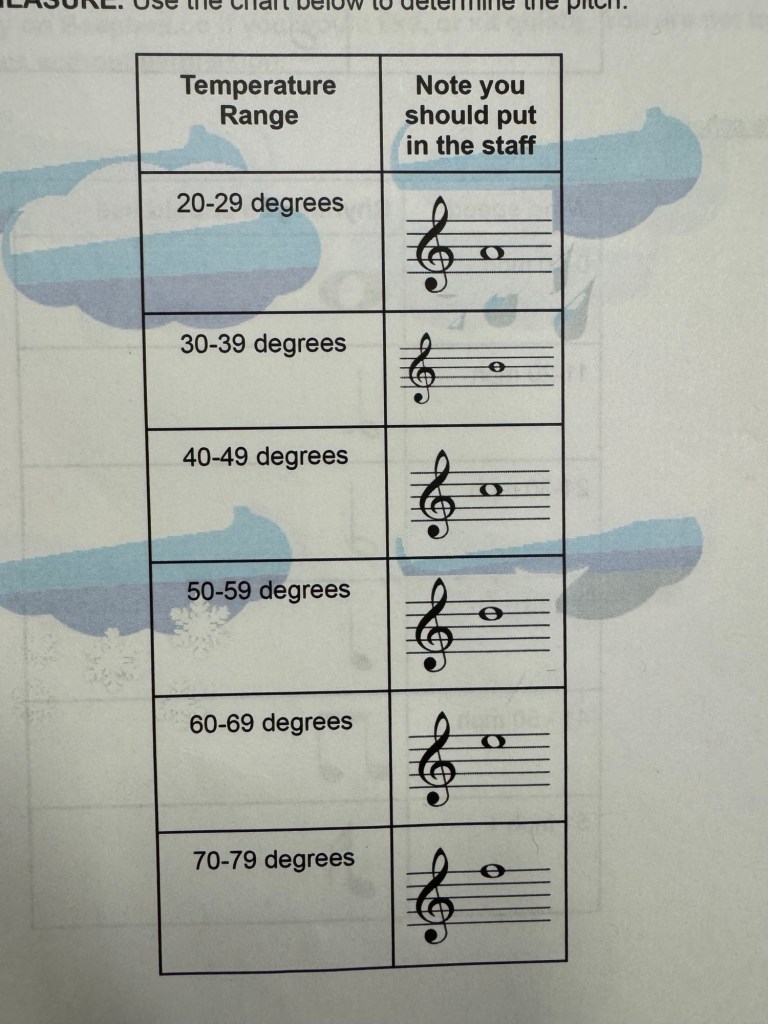
Note choices….
Rhythm guide

I then shared my data with them and they had to plot this onto a duet part to accompany their weather melody. They had to pick out an instrument that represented Antarctica.

When I talked to the students about how the lesson went, they were surprised by the number of times that they were cooler in Wisconsin than I was in Antarctica. They also were impressed by the wind speeds I experienced.

The weather musical composition wasn’t always pretty sounding, either, as we were often similar enough in temperature that musical dissonance occurred. We talked about why that dissonance happened, and now they realized that dissonance can be a useful compositional technique, as we explored why a composer would choose to put dissonance into his/her compositions.
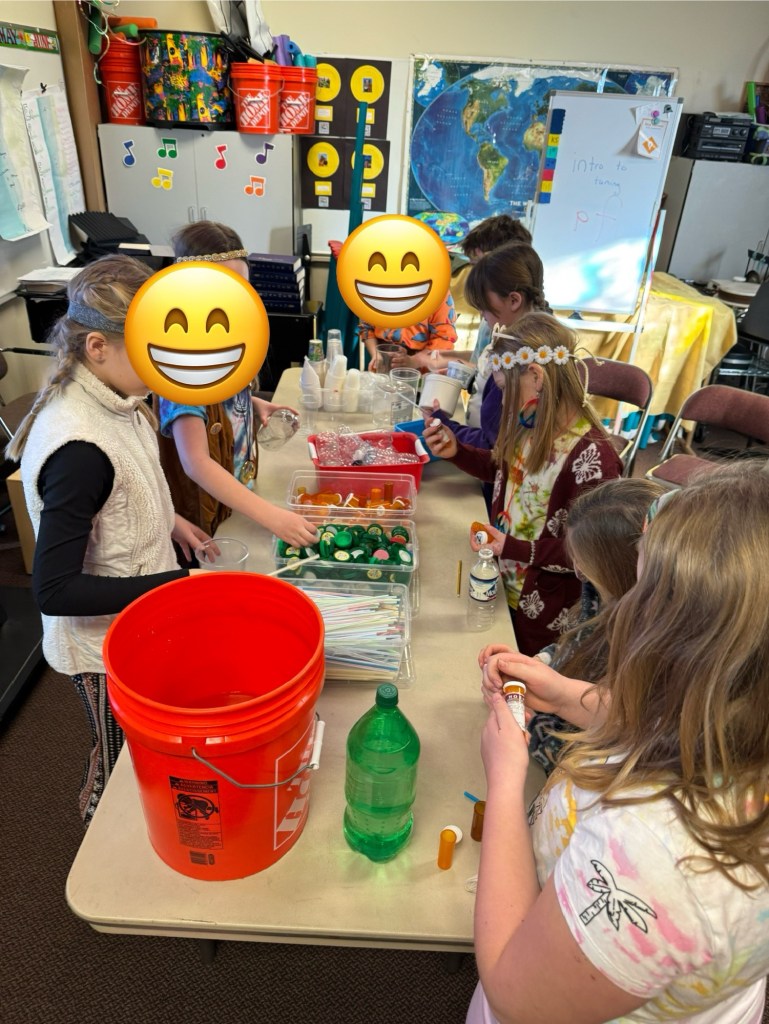
Water Instrument Design Challenge

Our next great water/music adventure involved students learning about instruments that music use of water to create their sound. We studied things like Benjamin Franklin’s armónica, crystal glasses filled with water, Chinese water bowls, the Zadar Sea Organ (in Croatia), the water gong, Benin Water Gourds, Norwegian Ice Instruments, and watched the STOMP video where they are standing in water raising and lowering pipes to bend the pitch. We watched a physics demonstration about the resonance of a glass tube, and how the quantity of water really matters when trying to get the best sound. We discussed how there are really four different ways to make sound in instruments – blowing, shaking, striking, and scraping.

Now came the fun part – students (preK-8th grade) were given the opportunity to take on an instrument design challenge where they had to create a new instrument that used water. I made them another wonderful Antarctic saltwater blend, as I knew some of them would wonder if their instruments sounded different with saltwater vs. freshwater (they have gotten very good with curiosity and experimentation, and I encourage such behavior in class!!!)

Design challenge underway!

It was really fun for students to create, test, modify, recreate….and then they got the opportunity to perform on their instruments for the classmates. They loved performing with the VR headsets again, as I gave them the option to perform on the water or ice of Antarctica again.

Ocean Waves and Sound Waves!

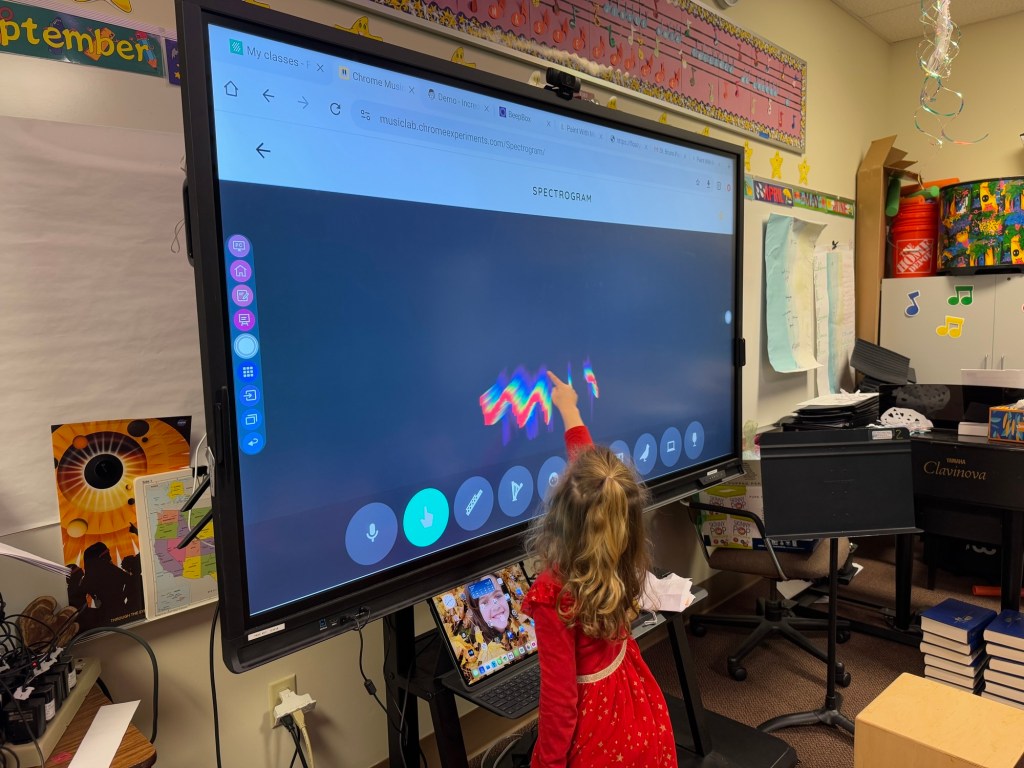
The next adventure the students and I embarked on was an up-close study of sound waves. Anyone who knows me, knows this is my passion! I have loved sound waves and all of the nitty-gritty physics of sound waves ever since my dad took me into his work when I was younger and showed me an oscilloscope. Then, in high school, I did my entire final physics project on the physics of music (this may have been a ploy to get to play with my dad’s oscilloscope again). Fast forward to my masters program where my final project was on tuning of all band instruments and how that relates to the physics of what’s going on with the ‘waves’ you hear when you are out of tune (another excuse to play with the oscilloscope!).

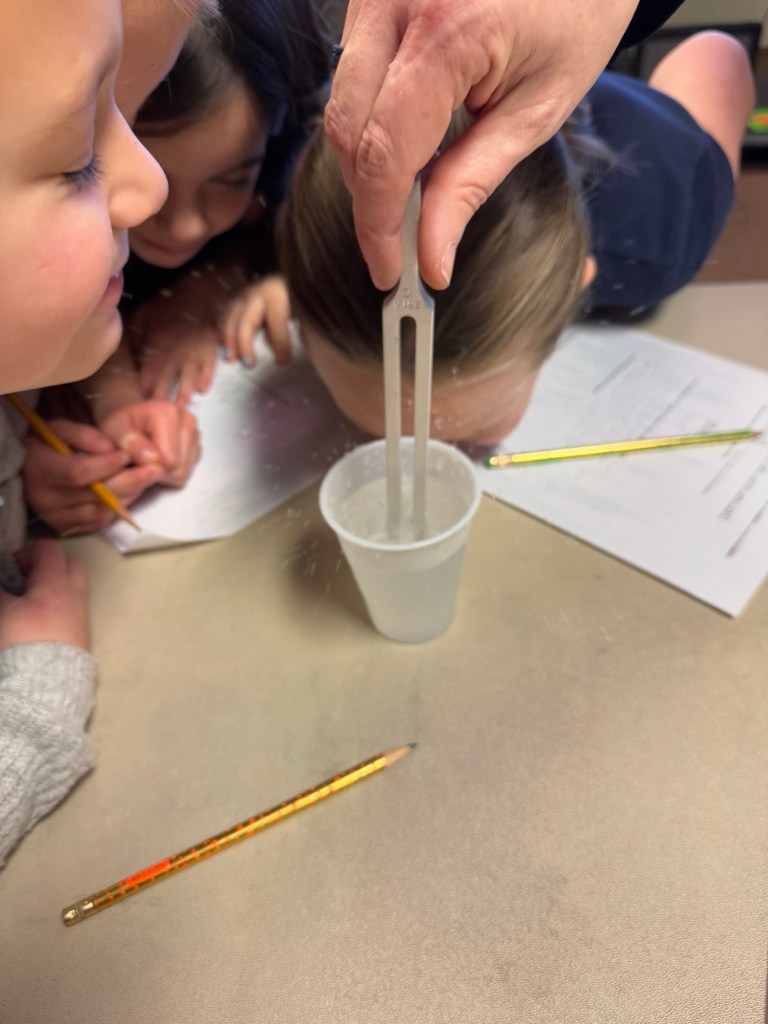
The students got to see sprinkles dance on a cup covered with plastic wrap, feel vibrations on crash cymbals, see vibrations when a violin string is plucked, experiment with putting tuning forks in water, checking out Kundt’s tubes when instruments play into them, discovering the beautiful artwork created by sound on chladni plates, and look at their voices on an oscilloscope.

Feel the sound!
Getting close to the tuning fork water explosion!
Chladni design!

We then compared what we could see about sound waves with what we knew about ocean waves. I showed the students videos of the Drake Passage crossing we did, and students enjoyed imagining themselves on a ship in those waves.

Water Color Painting with Antarctic Water (Kind of)

Our next project was another fun one. Students of all ages had the opportunity to paint to music. We listened to Ralph Vaughn Williams’s “Sinfonia Antarctica,” which he composed for a film on Robert Falcon Scott’s disastrous expedition. I did not tell the students what the music was written for at first, as I wanted them to decide what they thought Vaughn Williams was trying to tell us about his music.

While I was in Antarctica, I had the opportunity to kayak in the Weddell Sea. When I was out kayaking, I took out my Vernier water sensors, and tested the Weddell Sea. One of the measurements I took was the salinity (or saltiness) of the water. With that data, I was able to make my own saltwater that matched the salinity of the water I was in for the students to use when they did some watercolor painting to “Sinfonia Antarctica.”

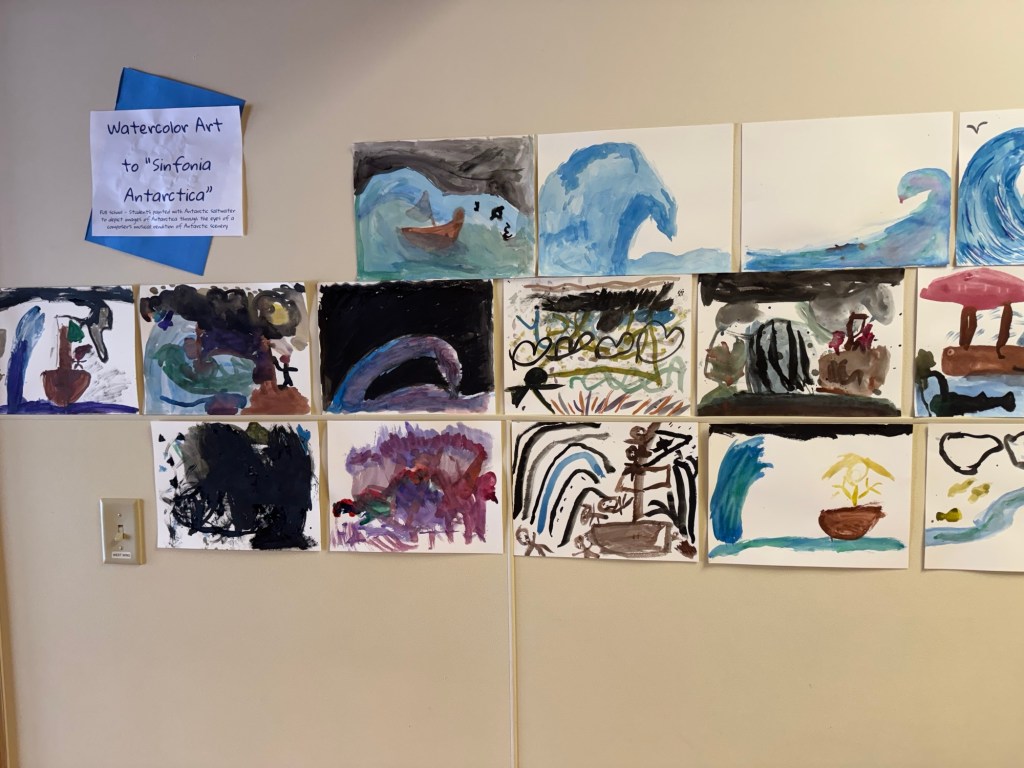
Students listened to Ralph Vaughn Williams’s piece, and created a painting to match what they heard through his music. Before we listened to the recording, we looked at famous artwork that was influenced by the water – such as Claude Monet’s “Impression: Sunrise,” Katsushika Hokusai’s “The Great Wave Off Kanagawa,” and Georgia O’Keefe’s “Blue Wave Maine,” among others. Students were then inspired to make their own art while listening to “Sinfonia Antarctica.” I was impressed by how many students heard moments that made them think of giant waves, shipwrecks, and other dark moments on that water.

Samples of student work!

It was a lot of fun, and I enjoyed collaborating with our school’s fantastic art teacher in planning the painting portion of the lesson! I hung up every student’s artwork in our hallway so that everyone visiting our school can see the work our students did!

Sea Chanteys in Antarctica!

Welcome to 2025! Now that our Christmas concert is in the books, and Christmas break has come and gone, it’s time to get rolling on some of our Antarctic work in the classroom! After our concert was over, we did our explorer photos in my orange parka, and I’ve got pictures of the students in the landscape pictures I took while on my expedition. Now it’s time to dig into the serious work!

The first project we’ve worked on is the study of sea chanteys. Our spring concert is going to be water-themed, and this is the start of the journey. I introduced students to #ShantyTok on TikTok, and we watched a few epic performances. The students then went on a tour of sea chanteys from around the world. We even watched a short clip from “Big Bang Theory,” where Sheldon and Penny were using a sea chantey to complete a task. Students then deduced the purpose of sea chanteys.

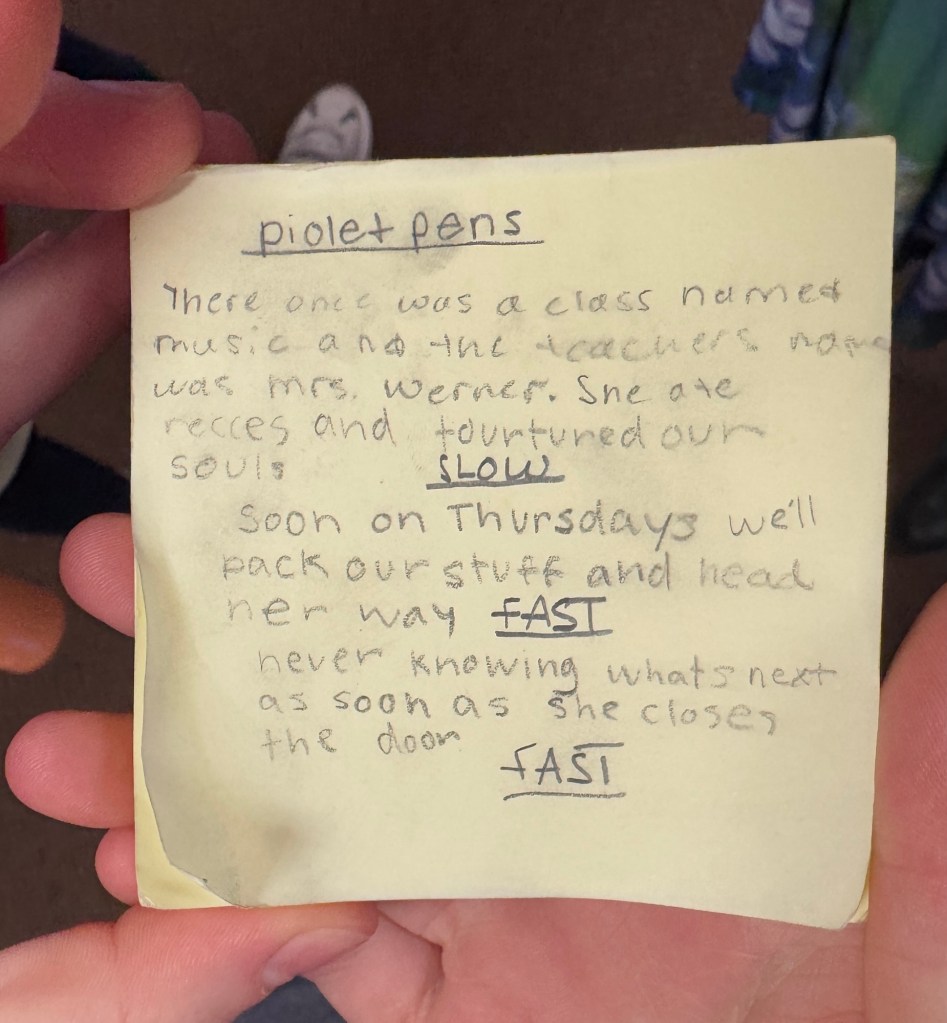
These girls cracked me up by writing a sea chantey about my music class! We all laughed about their lyrics!

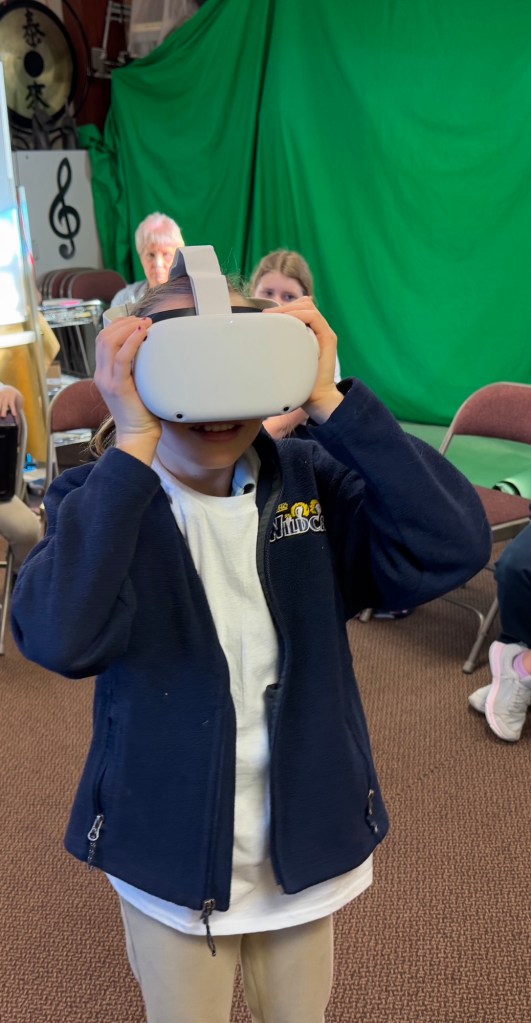
Once we figured out the purpose of the sea chantey, students got into groups to create their own sea chantey. They had to write it about an activity that is not enjoyable, goes on too long, or something they have to do often. Once they got done, they performed their sea chantey for the class while wearing VR headsets. I had recorded several 360-degree videos on my expedition, so students were able to perform their sea chanteys ‘at sea in Antarctica.’ Due to most of the students not having experience with VR, I did not have them perform while watching Drake Passage crossing footage!

Sea Chantey performed ‘in Antarctica’!

The littlest students worked as a full class to write ONE sea chantey, and then got to create their own composition using Google Arts Paint With Music (Ocean setting).

The students really enjoyed the unit (more than I thought), and I don’t think it was all because of the virtual reality – they really got into sea chanteys!

This is Travel

In case you are not the type of person who travels often, I will share my return flights adventures with you.

If you read the previous post, you know I flew from Ushuaia to Buenos Aires, and was about to fly from Buenos Aires to Dallas. Lucky me, I had the extra security designation on my boarding pass. In Argentina, they do a second security screening at the gate right before you board- searching every piece of luggage everyone is bringing on board by hand- kind of like if you bring a backpack to an amusement park or a sports stadium. The extra security screening means I had to remove my shoes for inspection and get the explosive residue testing on my hands, shoes, and all of my pockets. On the plus side, the Argentine security officer loved my necklace of all of the students and staff! We had quite a conversation about that, as the explosive detection computer was having some problems (the last before me got the explosives found alarm to go off, and mine just wasn’t reading at all).

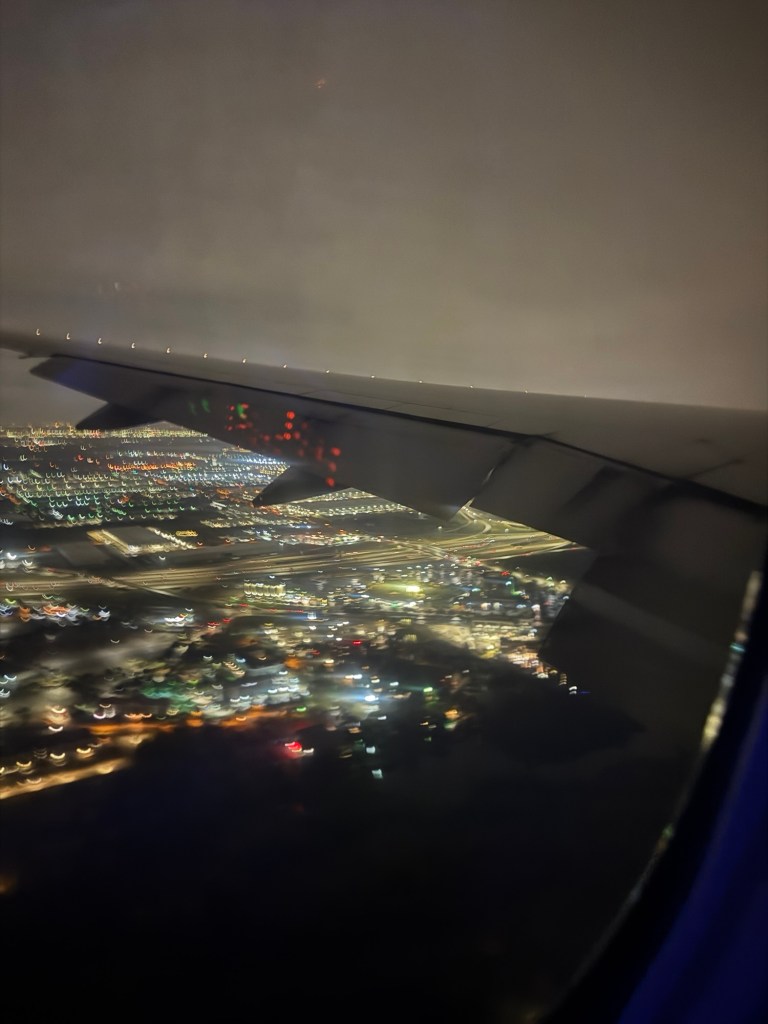
Once onboard, it was a battle for overhead bin space for my carryon. Then, it was settling in for a 10 1/2 hour flight in a roughly 4 square foot space.

This plane has a really long flap on the inside of the wing…

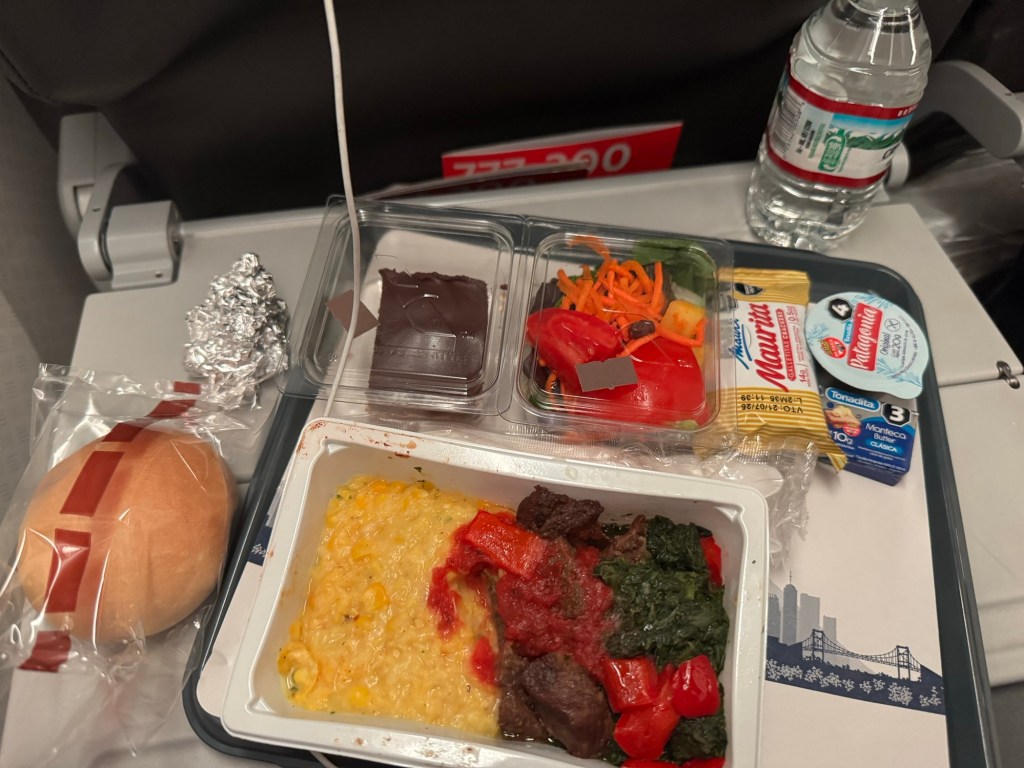
We got dinner on the flight- a choice of beef or pasta. Then it was time to check out the movies and try to fall asleep. Since there are only so many ways you can contort your body in that tiny space, so sleep is difficult. I had the window, which is what I prefer, as then I can lean against it with my travel pillow for an additional shape to fit my body into. About an hour before we were to land, we were served a ‘snack,’ which is actually a cold breakfast sandwich and a granola bar. Much bigger than your standard bag of pretzels, so that is appreciated.

I chose the beef
Breakfast of champions

Here’s where things get complicated. When entering into the US from a foreign country, you must go through customs. We were supposedly in a line that would take 14 minutes to clear customs, but I think the person who put that time in was dyslexic. It took me 41 minutes to get through customs. It has changed from when I was younger (although I’m sure it still depends on the airport). You walk up to a screen and it takes your picture. If it recognizes you, you get the green light and go on to collect your bags from baggage claim (even if you aren’t staying in this city). I don’t know what happens if the system doesn’t recognize you, but there is a security agent waiting at the lane you are in to assist with that.

After you collect your bags, you now go through the customs declaration process. If you brought in plants, fruit, vegetables, meat, really expensive goods, etc. then you need to declare these with the agent. If not, you go through ‘nothing to declare.’

Now you get to hand back your checked bags so that they can make it on your next flight. Now it’s on to security again, repeating the airport security process you did for every plane trip you’ve ever taken from the US. I happen to be TSA pre-check, and at Dallas-Fort Worth, the pre-check line took 20 minutes, and was wrapped around the corner from the security, into the ticketing area for American Airlines.

Very long TSA pre-check line

From the moment my plane touched down until the moment I made it to my gate for my flight to Milwaukee was an hour and sixteen minutes, in case you ever need to plan. And that was with the help of the tram I took from terminal D to terminal A in this airport.

And now I am sitting on my final plane with a flat tire. But my bags are on board, I’m on the plane, too, and I know I’ll get home eventually. I just wanted to share the nitty gritty of travel, as so often it looks glamorous. There’s always something that adds to the stress, but that’s what makes travel so good for people- it’s a reminder to be resilient and flexible. There are things that aren’t always in your control, but you just have to roll with it and do the best you can. People who tend to get very stressed in these situations tend to think that they are the only ones experiencing the trouble. I have experienced countless times over when a plane comes in late and someone is practically leaping over everyone to get out because they have a plane to catch. 9 times out of 10 the people in front of the impatient person are also trying to make connections, too. A little kindness and patience go a long way in traveling.

Back to civilization

It is so weird to see so many people again. I got used to hanging out with the same 102 passengers and the 30 or so crew I interacted with. It feels like we just broke up a band or something. We all got to know each other so well in the last 2 weeks- taking pictures for each other, celebrating birthdays and anniversaries, sharing unbelievable experiences…and now we all go our separate ways.

We started the morning with our last wake up call at 6:30. After eating breakfast, we disembarked and went to explore Ushuaia. E we went to the Maritime Museum, which is actually 5 museums in one building (that used to be the prison). It was fun to wander around and learn about Argentine military, prisons, and art.

Prison museum
Lighthouse

After that, we were dropped off at a local hotel that had a hospitality room for us to enjoy food, chat with our friends, and serve as a base camp for those who wanted to explore Ushuaia on foot. Knowing I was going to spend 18 hours on a plane, not counting layover time, I opted to walk around. I loved strolling the streets of Ushuaia, with its beautiful mountains and cute buildings. Some of the travelers in our group thought it looked like Switzerland, but I compared it to the town of Banff in Canada (mainly because I’ve never been to Switzerland)!

Beautiful town

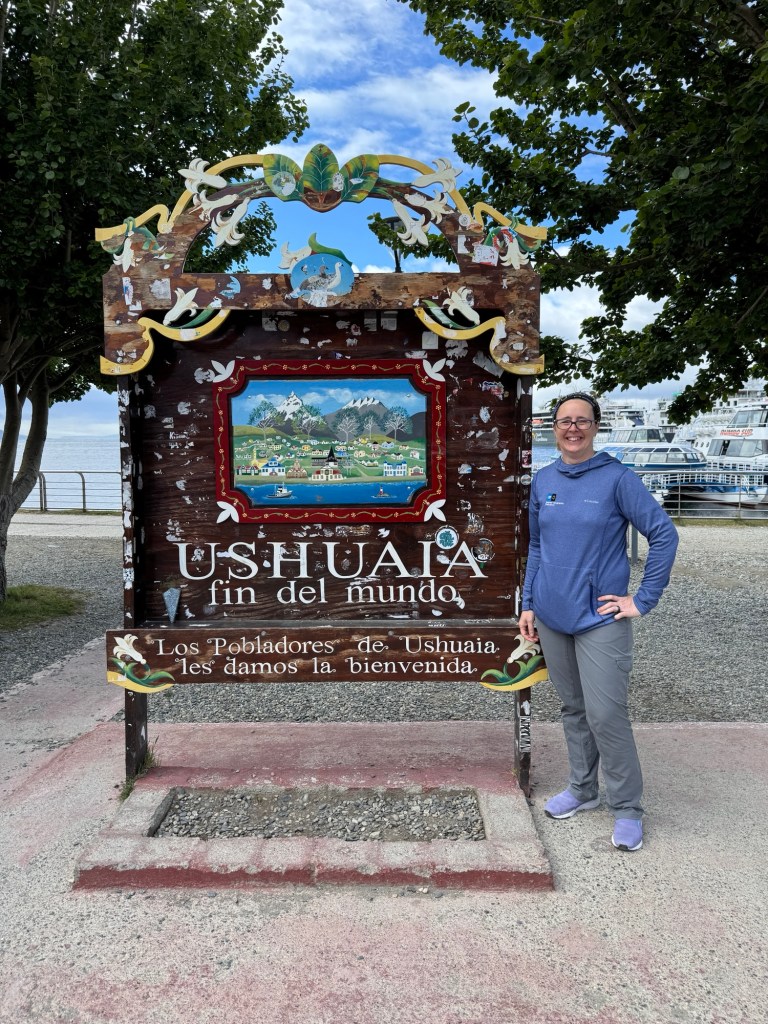
I went back to the hospitality room for food, as I’m now programmed to need to eat every two hours it seems. As I was finishing up, one of my new friends asked if I was interested in going for a walk with her. Again thinking of the hours I’d be in that tiny plane seat, I decided I didn’t mind another walking excursion. This time, I went in search of the “End of the World” sign, and then we walked along the water. We found a very cool convention center, and what we think was an emergency services station. We also stopped in the Hard Rock Cafe, as this town seemed like an interesting spot for that restaurant.

The end of the world
Cute Hard Rock Cafe

And then, before we knew it, it was time to board the bus to the airport. The takeoff (and landing) in Ushuaia is so gorgeous- flying between mountains in the lowest section of the Andes. It is always a bit turbulent, though, because of the heavy winds in this area, and I’m sure the mountains create some interesting air flow as well.

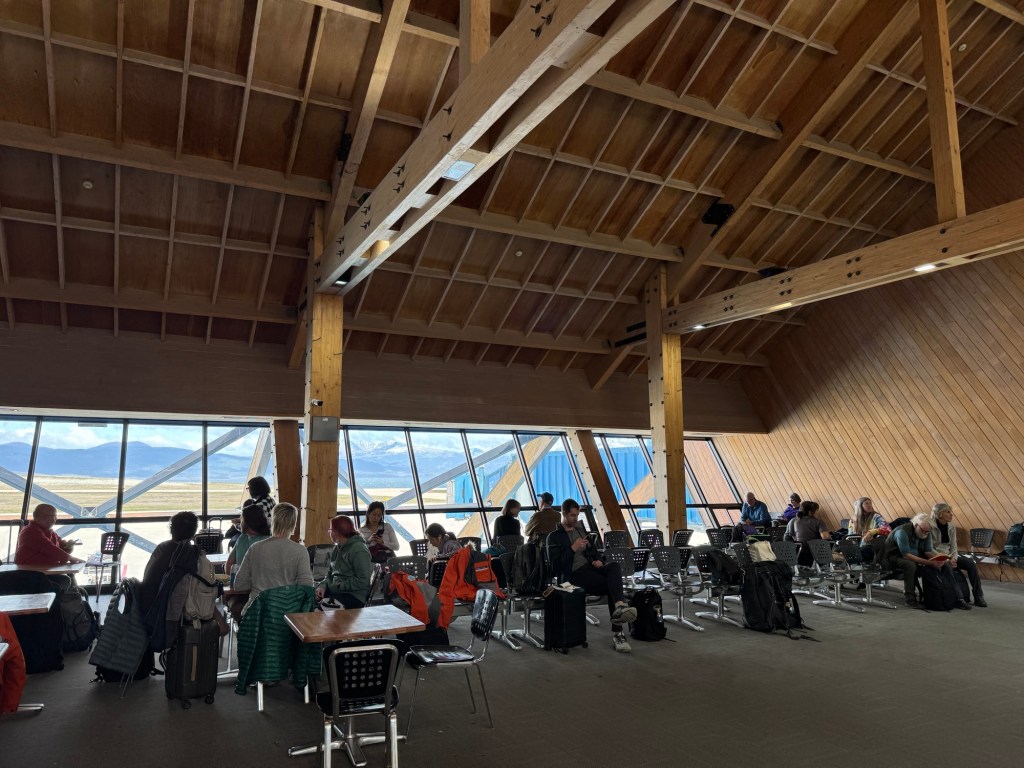
Inside of Ushuaia airport
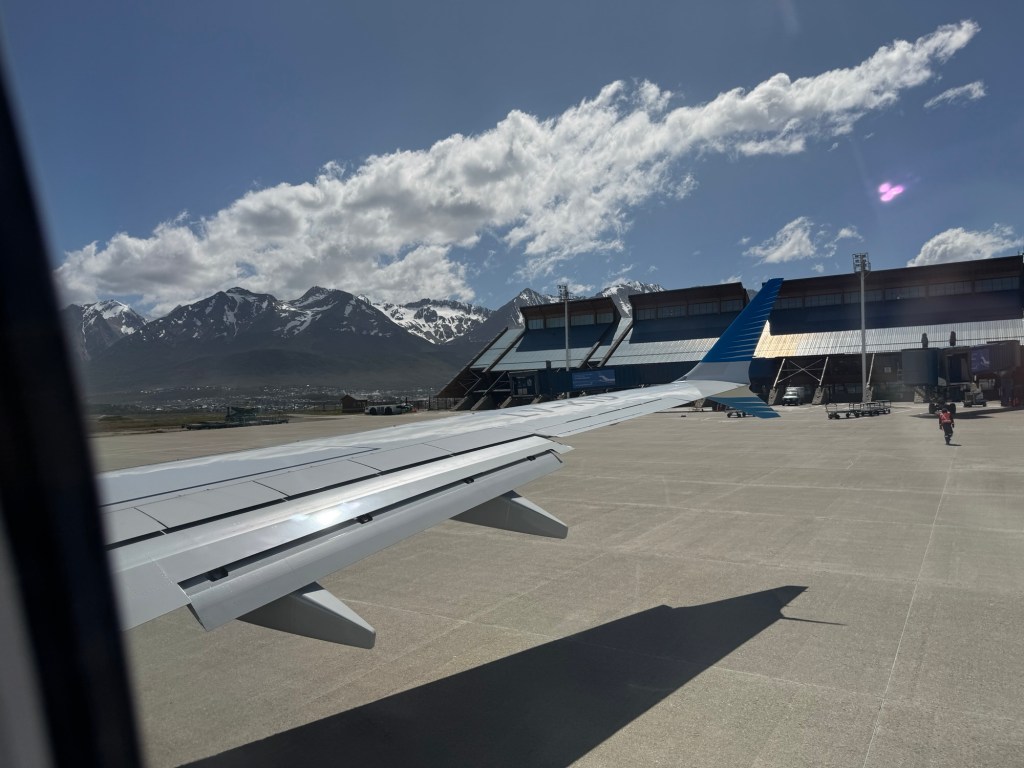
Farewell, Ushuaia airport

Once we landed in Buenos Aires, we had to collect our checked bag and check it with our homeward bound airline. Then we scanned our ticket for entry into the security area. Security happened next- Argentina requires you to remove jewelry, belts, and anything metal. They also require you to pull out your phone, computer, and tablet. Shoes stay on, however. After that, it was time for immigration. I stood in the line for quite awhile and met a woman from Michigan who had been on a ship bound for Antarctica, but it had trouble so they never made it to Antarctica. She left from Cape Town, South Africa and spent 20 days on the ship that limped along to Ushuaia. She said they were all pretty grumpy for most of the trip. She also said this was the 4th time that she had tried to get to Antarctica. The first time she had to back out because of a medical situation. The second time Covid shutdowns prevented her trip. The third time her trip got canceled because the crew of the ship she was going on got Covid. And now a broken engine. Talk about a lot of disappointment. I felt so bad for her.

After we had been in line for about 15 minutes, an Argentine officer came and told us that Americans can go scan their passports at the kiosks on the side for an easier and quicker time. We were in and out of there in a breeze. It was a simple scan of the passport, scan the boarding pass, take a picture, and scan your thumb. Then you proceed to the exit of the security area where a camera takes your picture again. I’ve also observed that there is additional bag screening at the gate when the airplane is boarding!

I am now awaiting my flight to Dallas/Fort Worth. It looks like it is about 10 hours, so I’m going to start making laps around the gate to stretch my legs. Hopefully next time I blog, I’ll be back on American soil!

Rounding Cape Horn

It’s the last full day on the ship, and it is so tough to say goodbye to the incredible people on this expedition. The National Geographic naturalists have been incredible- learning from scientists who have ongoing research projects on seals, ice, and underwater marine life, just to name a few, has been an unbelievable learning experience. Getting camera setting tips from National Geographic photographers is a wonderful learning experience! I knew when I left home for this journey that it would be the experience of a lifetime, but I never realized exactly how deep this adventure would go!

I think one of the greatest things about this journey will be how it is not over yet. I am collaborating with teachers all over the US and the world in a variety of subject matters- from high school physics, to 5th grade classrooms, to other music teachers. I have activities planned for my own teaching, and I did data collection for other teachers. This is truly a global project and I’m grateful to be a part of all of it.

Today featured more presentations from our naturalists, including a discussion on “Protecting the World’s Most Important Ocean” (how important the Southern Ocean is), “Photographing When it Hurts” (taking photographs in less than ideal situations), “Threats to Seabirds and the Marine Ecosystem” and “Natural History Behind the Scenes”

Land ho!

After lunch, we passed Cape Horn. It was beautiful to see those jagged cliffs coming into view – I never really knew how beautiful this area of South America is. It’s definitely a bit disappointing to see land again, but then I remember that a return to land means I’m that much closer to being reunited with my family!

The ship rounding Cape Horn

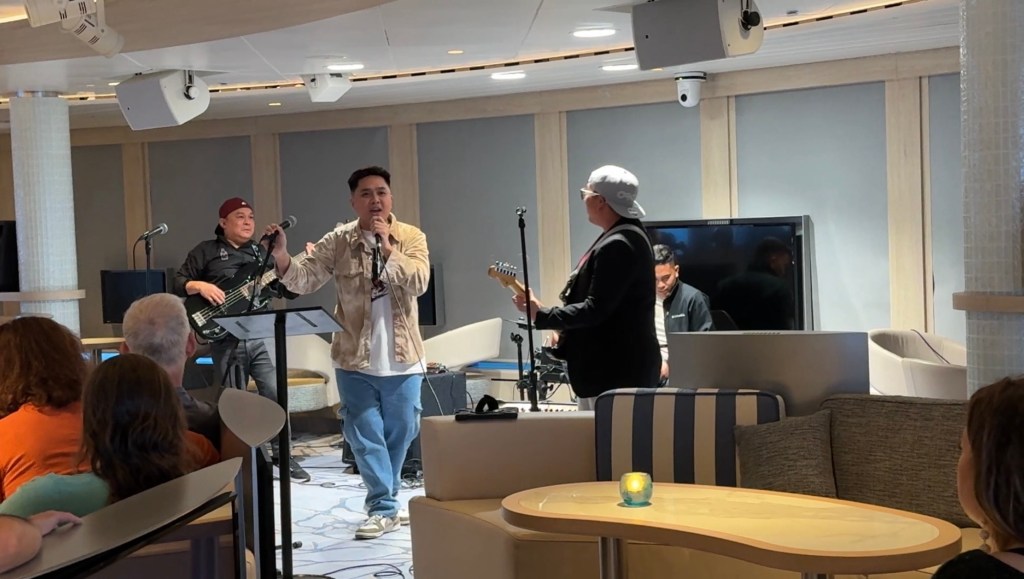
Tonight we got a treat- it was a dance party with the band “Shackletunes,” which is composed of waitstaff, stewards, and crew. It was quite the international event. What better example of how music brings people together than to have all of these people forming this band just for fun and playing for the guests! And, everyone- guests and staff- danced all night long. It was a wonderful celebration to end the night!

The band just getting started- it didn’t take everyone too long to get dancing!

Tomorrow we get the opportunity to explore Ushuaia for a few hours before the charter plane takes us back to Buenos Aires, and ultimately home. I doubt I’ll have a chance to blog, but I won’t rule out trying to do so in an airport.

Thank you all for coming along with me on this journey! Those of you who are teachers- consider applying so that you can have your own expedition. The deadline for the Grosvenor Teacher Fellowship has ended for this year, but that just gives you a longer amount of time to turn your classroom into its best explorer incubator in preparation for a great application ahead. And if you need any help in that regard, contact me. I’m happy to help.

I will be continuing to blog here as the lessons and projects that come from this experience are developed and executed with the students I teach. Feel free to continue to follow along, but I won’t be posting the links on social media every time I post a new blog entry.

Drake Passage, the sequel!

Nothing to see in any direction except the big ocean….I am again traveling in the spot where the Pacific Ocean meets the Atlantic Ocean. The reason why the Drake Passage gets such a bad reputation is because the winds around this area aren’t slowed by land as they spin around our globe in this area.

What is incredible about passing through the Drake is the number of birds who join us for the journey- these birds (albatross and petrels) have special modifications so that they can survive without land. They fly all day long without any spot to stop and rest.

Pintado petrel flying out our window at lunch

Since we were on the ship in the middle of the ocean, I do not have incredible views to share with you. However, I can tell you our day was still jam-packed with adventure. We started off the morning with a talk on the plankton of Antarctica. I really appreciated this talk because I knew of some of these species from my time on the NOAA ship a few months ago. It was really cool to see the differences in some of the plankton here vs off the coast of Oregon & California!

Following that presentation, we had the mandatory disembarkation briefing, where we got instructions on how to return our rented gear, when our luggage needs to be ready to be offloaded, and other logistical things like that. After that, we got to learn about the history of Antarctica – all the way back to when it was a temperate region closer to the equator.

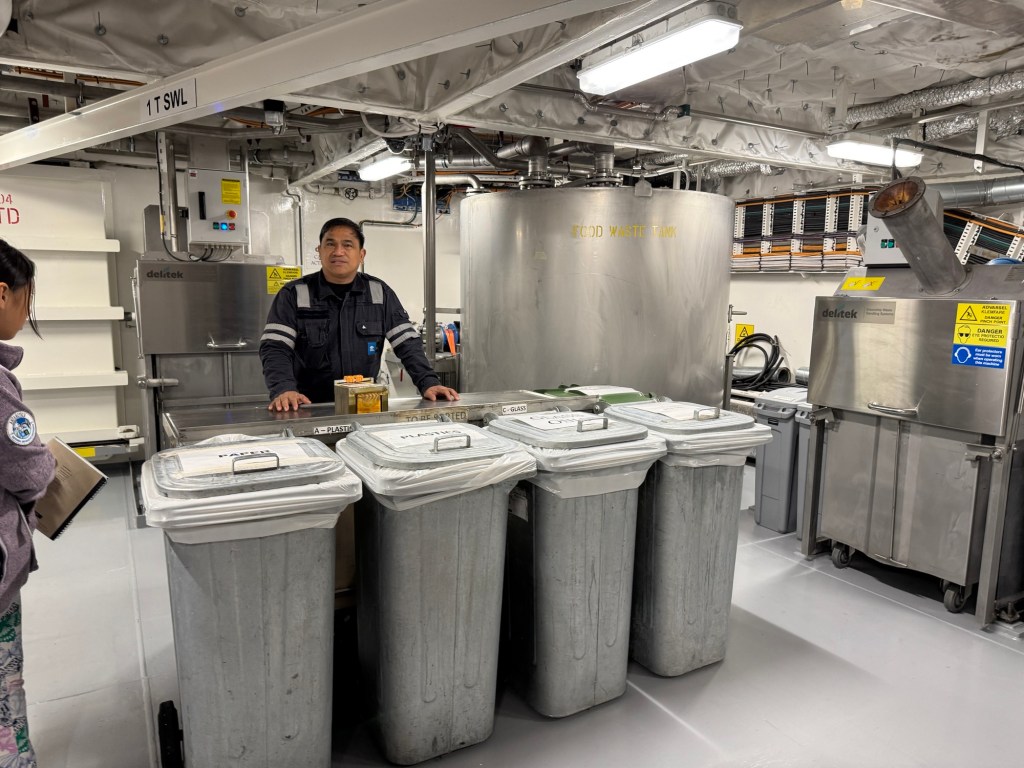
After lunch, we got to experience a tour of the garbage area of the ship. Jacqueline and I had learned a lot about Lindblad Expeditions’ commitment to being sustainable and eco-friendly, so it was fascinating to see how the crew has to sort out all of the garbage. Some things get incinerated, and a lot of it gets compacted.

Waste management room of the ship. This man has a very important job!

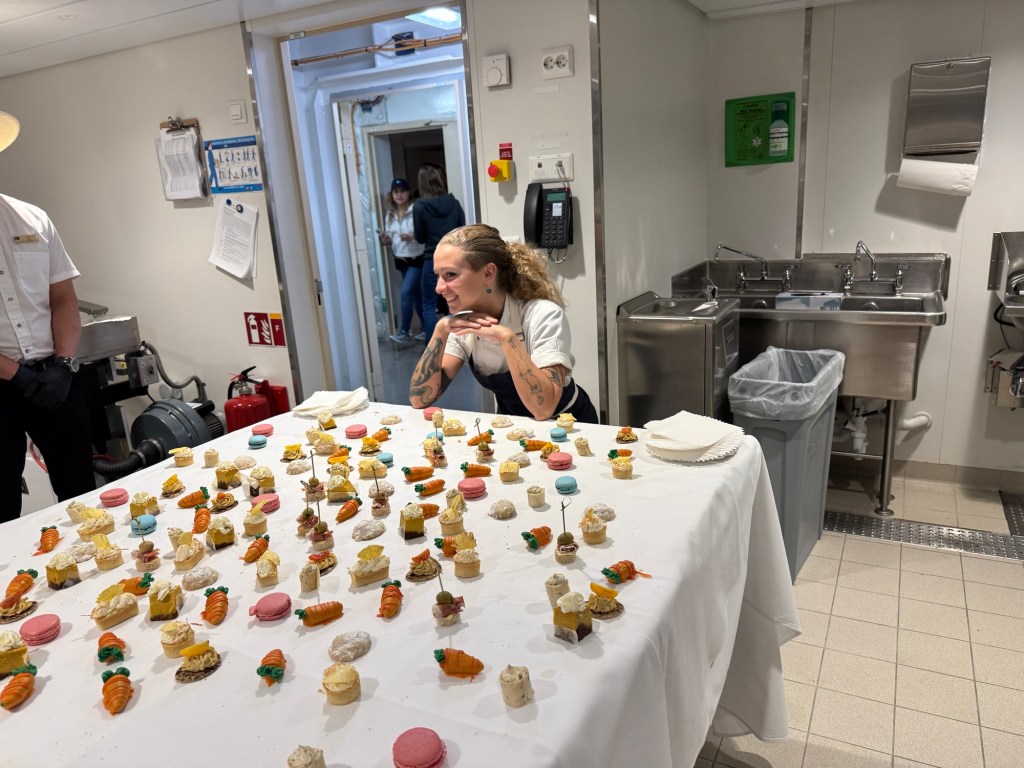
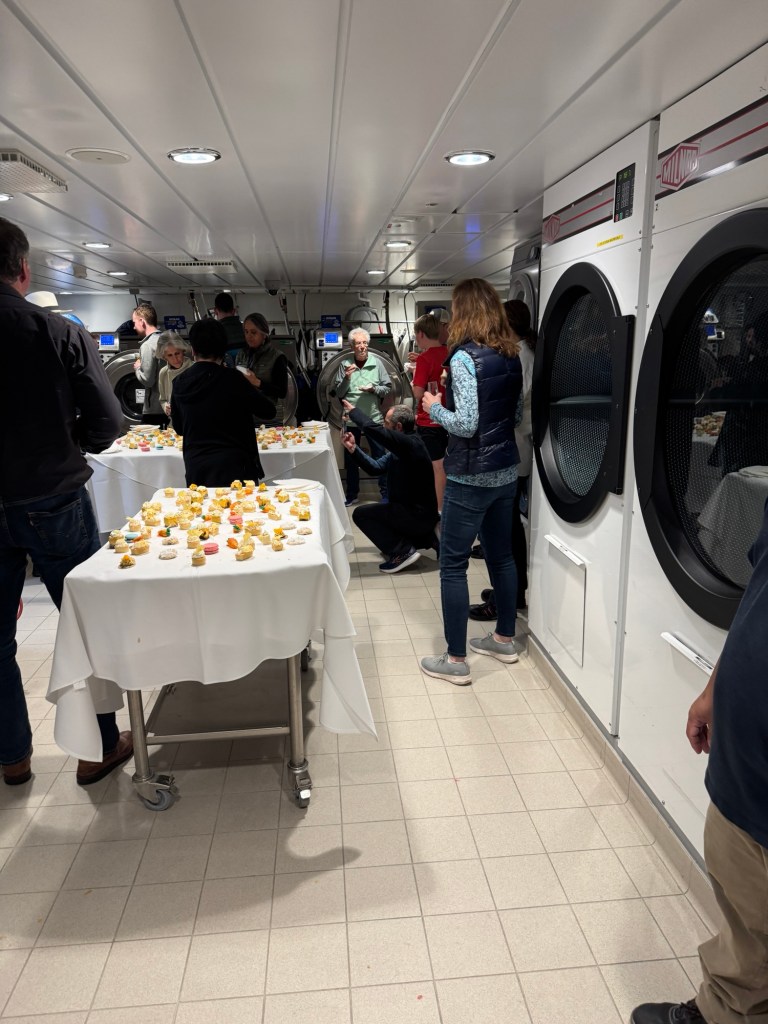
We were then treated to a presentation on the history of whaling. After that was done, it was tea time. Today’s tea time was special because the crew held it in the laundry room of the ship, and opened up the whole area for tours. We got to see the laundry room, the engine control room, the azipod controls, and the garage where they keep the zodiacs and kayaks. I was incredibly impressed by how pristine all of these areas were- it looked like our ship was brand new!

The pastry chef showing off her spread of desserts for our laundry room time
Look at those mega dryers!
Chief Engineer talking about fuel usage, and how if we jump up from 14 knots to 15 knots, our fuel usage goes up exponentially
Azipod controls – the azipod is the propulsion system for our ship, and allows the ship to direct thrust in 360 degrees for maneuverability
The garage where the zodiacs are kept
Kayaks!

Once done with our tea time tours, we had a fascinating presentation on Extreme Ice Surveying, which one of our naturalists aboard is involved with. He showed us time lapse videos of the receding and advancing of Antarctic glaciers. From there, we went into our recap meeting, where we got to learn about why this ship is so smooth in rough waters (the stabilization system and the hull), the history of the Antarctic treaty, and understanding survival of the fittest in terms of Antarctic animals. We also learned that one of our shipmates is leading the naming of a whale we saw on the trip through Happy Whale. Happy Whale is a citizen science program in which people who get pictures of a whale’s flukes can upload them to the Happy Whale website and help track the whale throughout its life. Our naturalists submitted fluke photos of the first whale we saw this trip, and found out it was not named yet. We thought it would be fun to all chip in and name it in honor of this expedition, and one of the guests on the ship is organizing it. We voted on the name and everything! What a cool remembrance of our whale siting!

After another delightful dinner, I’m writing this blog post and then going to bed. Tomorrow will be my last full day on the ship before entering the airport adventures coming up. And, fyi- my daughters have been sending me the weather the last few days, and southeastern Wisconsin is colder than I ever was in Antarctica! Good thing I’ve got all of this warm weather gear for when I get home!!!

Farewell, Antarctic Peninsula

Today was our last day in the Antarctic Peninsula before heading back in the direction of home. It was hard not to feel a bit gloomy about that, but the two stops we made today made it difficult to stay sad for long. We started off at Paradise Harbour, which featured palm trees and sand beaches. Just kidding. Maybe that’s just what I have thought of as Paradise before hitting this landing.

Paradise Harbour had dramatic cliffs with Antarctic birds nesting off the sides of those cliffs. It sounded like the aviary at the zoo with constant commotion. These birds were so active, that one of the zodiac cruises got ‘poop-bombed,’ as they told me- one whole side of the zodiac (4-5 people) got bird poop on themselves and their gear! Sounds like a very immersive experience that I’m ok missing out on.

Zodiac cruising around the cliffs

Paradise Harbour is home to the Argentine research station named Brown Base. The steps out front were shoveled, but the only inhabitants looked to be a large quantity of penguins.
Brown Base- maybe operated by penguins instead of the Argentinian government?

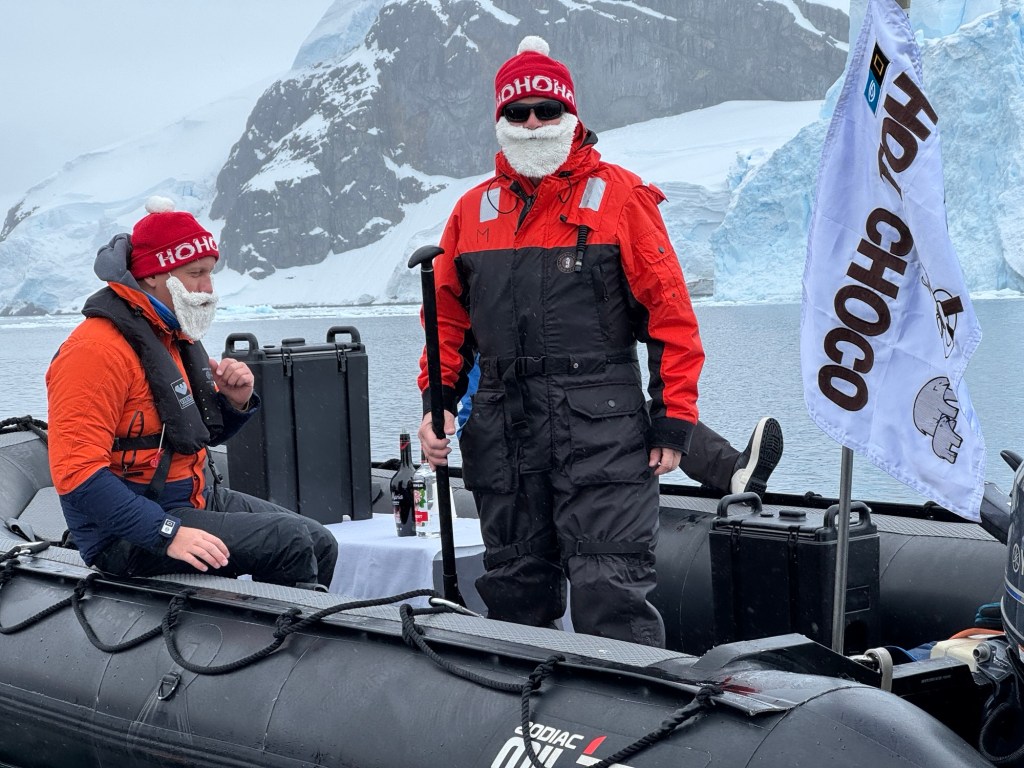
I’ve really grown accustomed to hitting the hot chocolate zodiac each time we are out exploring- the hotel manager of the ship and his crew always have hot chocolate for us, and they dress up as Vikings, or today they were dressed as Santa Clauses. They play music and keep the chocolate coming.
Warm liquid refreshment
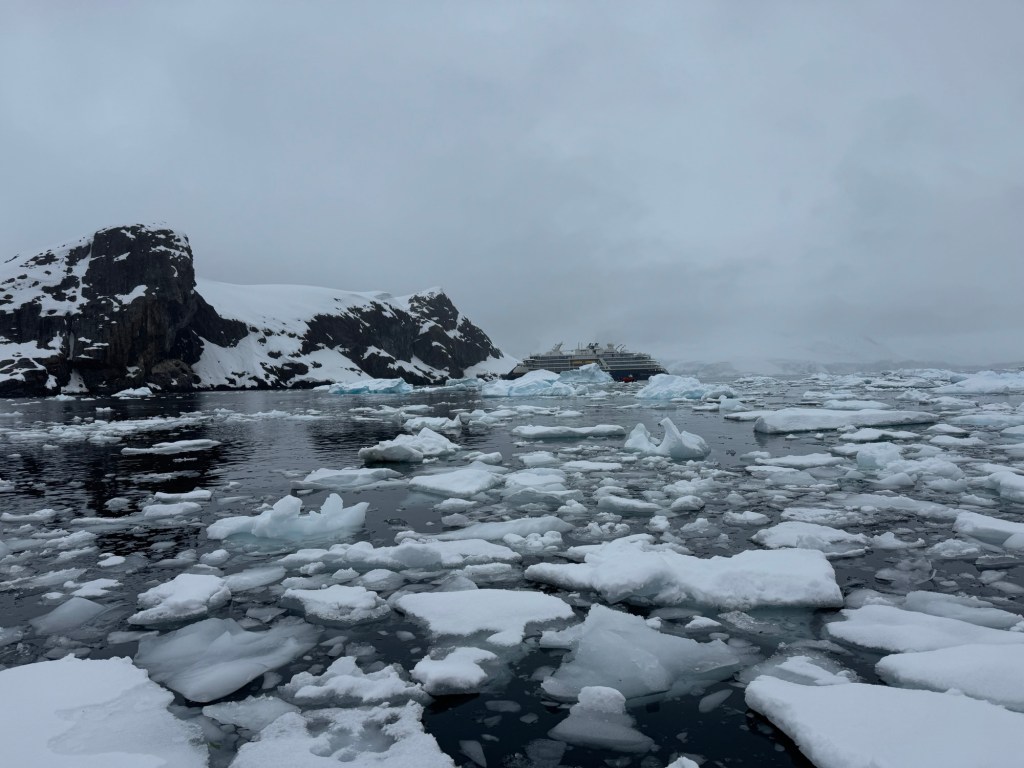
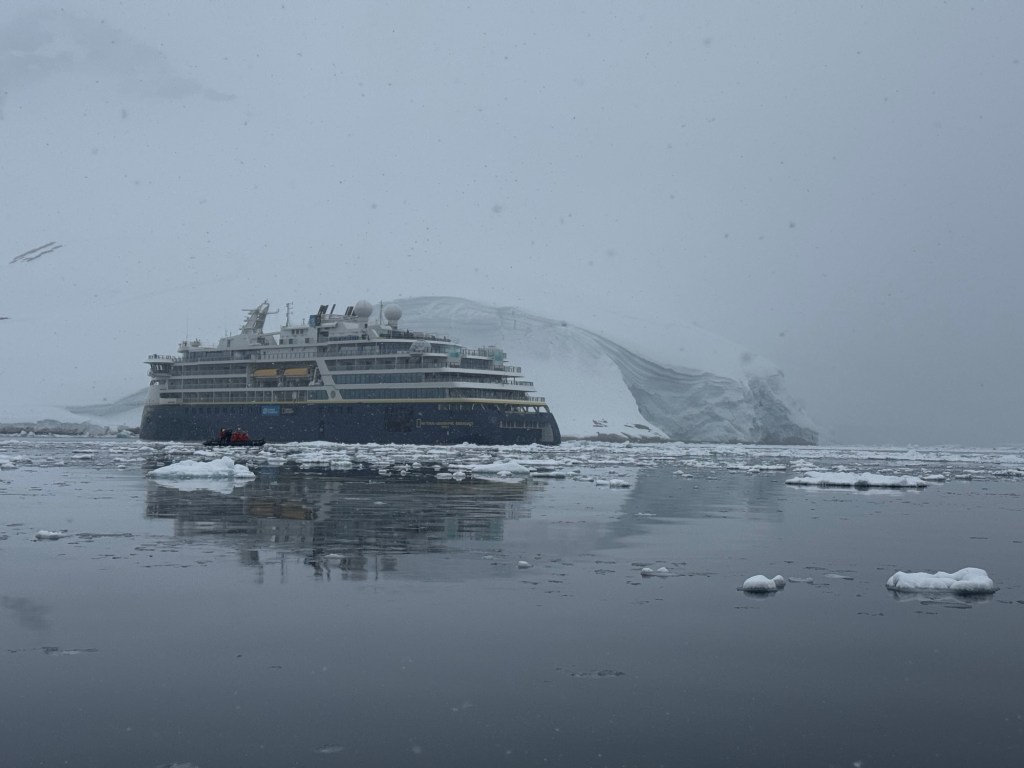
This is what the water looked like that our ship and zodiacs were traveling in. You can bet it sounded amazing!

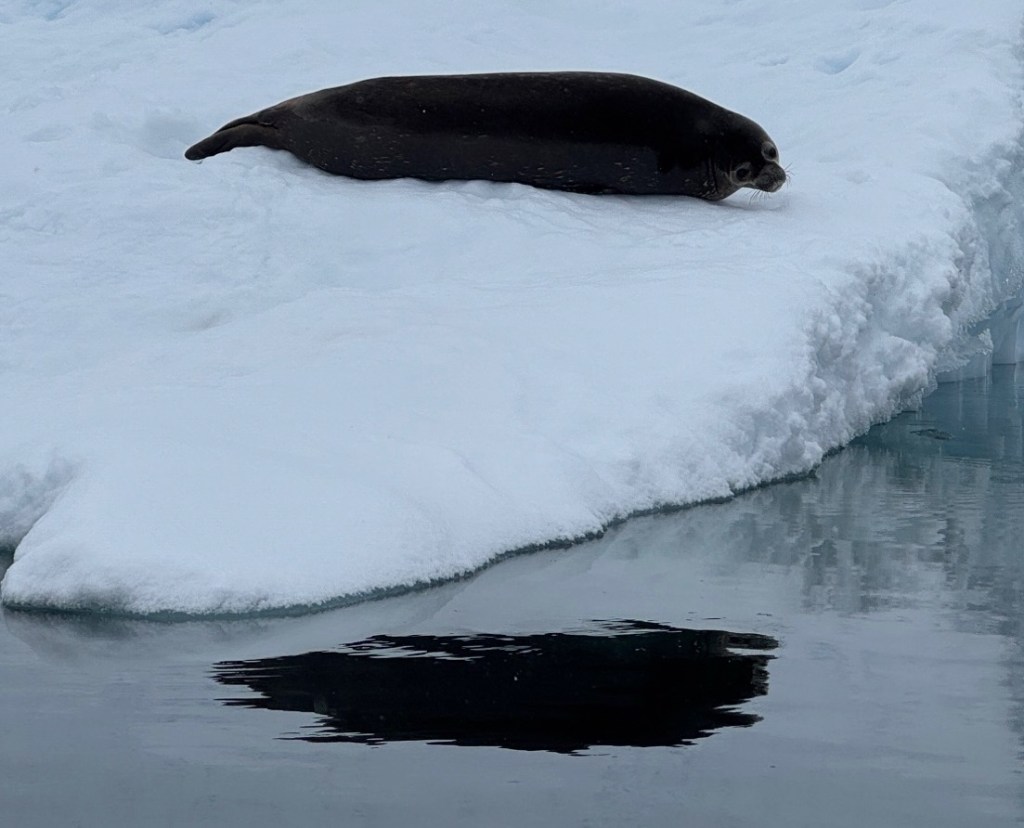
While we were out on our zodiac cruise, we found this Weddell Seal. He was rolling around, lifting his tail, making eye contact with us. To quote the naturalist piloting our zodiac “That was a great seal encounter!”

His (or her) face is SO cute!
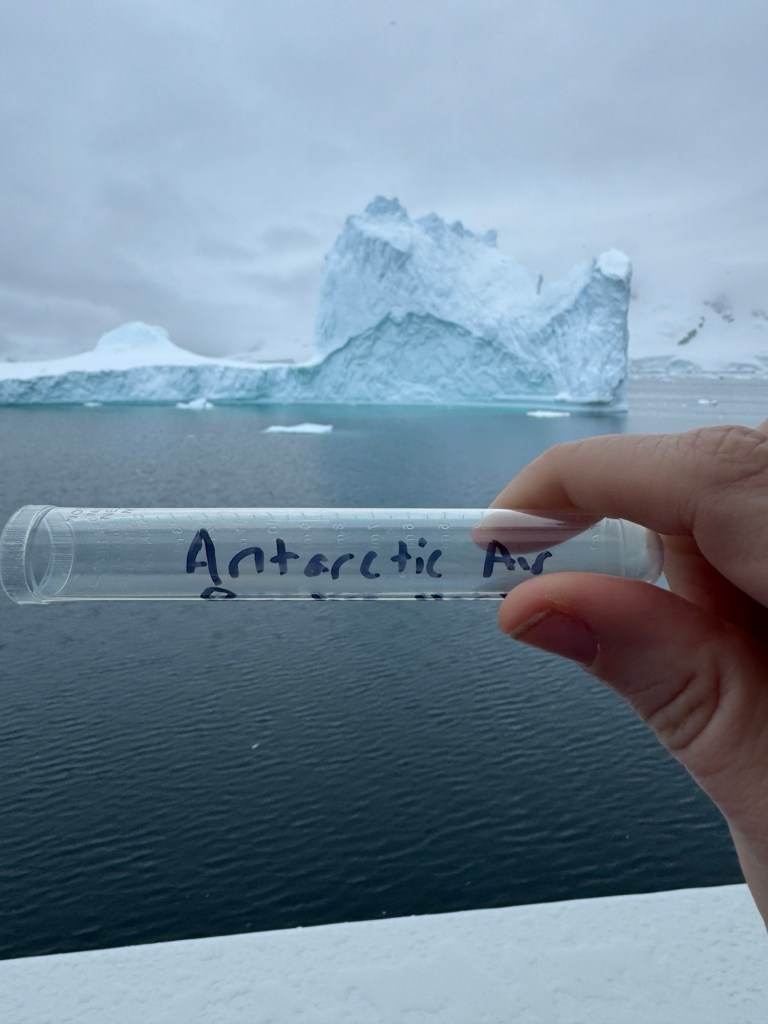
While here, I filled a vial with Antarctic air to take home as a souvenir!

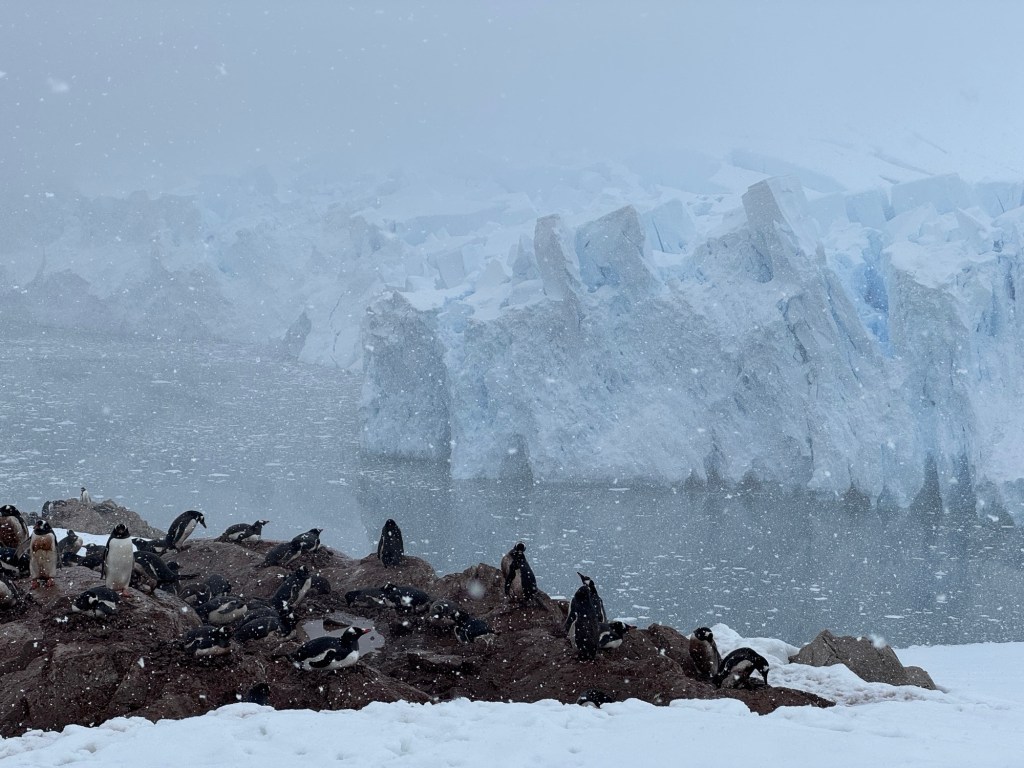
We went back on the ship for lunch, before entering Neko Harbor. For this stop, we had our very last Antarctic landing- we got to climb up the highest incline yet. I did not go up to the top, as I saw the fog/snow was obscuring the top view and I was enjoying watching the penguins. While we were there, we heard a massive glacier calving, but it was not visible to me or to those who went to the very top (they said the view was pretty foggy, so I was glad I assessed that situation correctly). It was snowing by this time- big, thick flakes, and so I headed back down to beach level. I enjoyed seeing the penguins traveling on their penguin highways. They really are comical creatures to watch.

If I were a penguin, I would probably nest here, too. I like a room with a view.

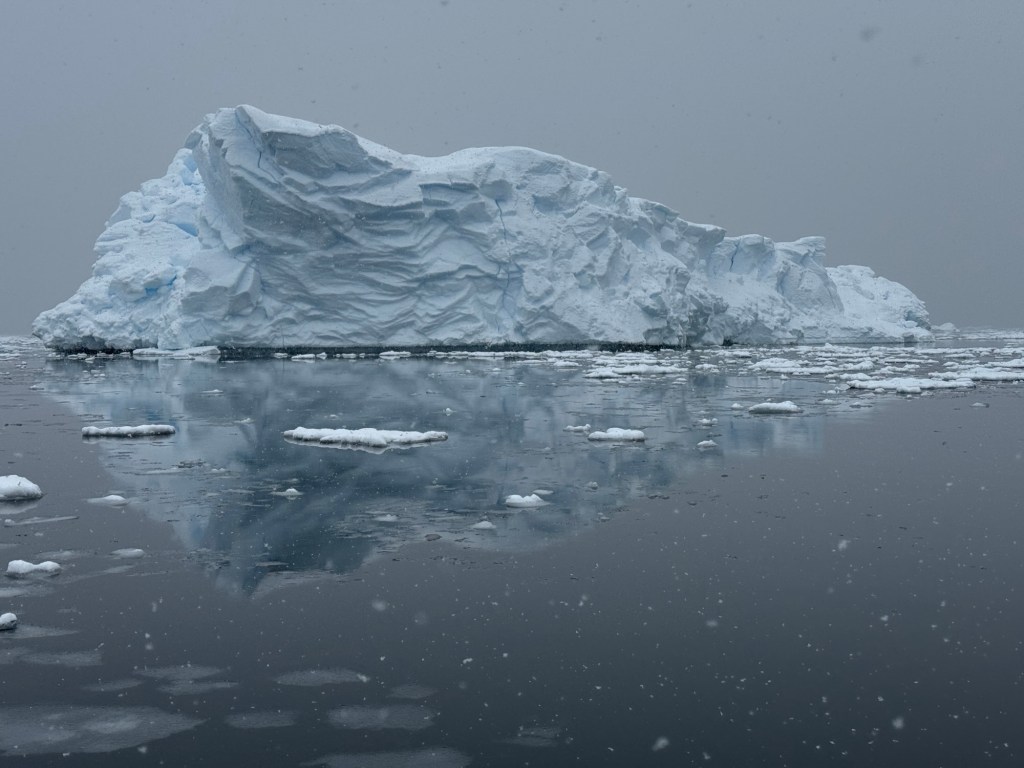
After our landing, we got our final zodiac tour. It was snowing pretty heavily now, but the water was so calm. It made for such gorgeous pictures with the glaciers and icebergs reflecting off of the water. What a dramatic last experience in Antarctica!

That reflection! That blue! Incredible!
Our zodiac tour was pretty quiet, with us all just enjoying the views
The way these glaciers weather is so fascinating
Back to the ship *sigh*

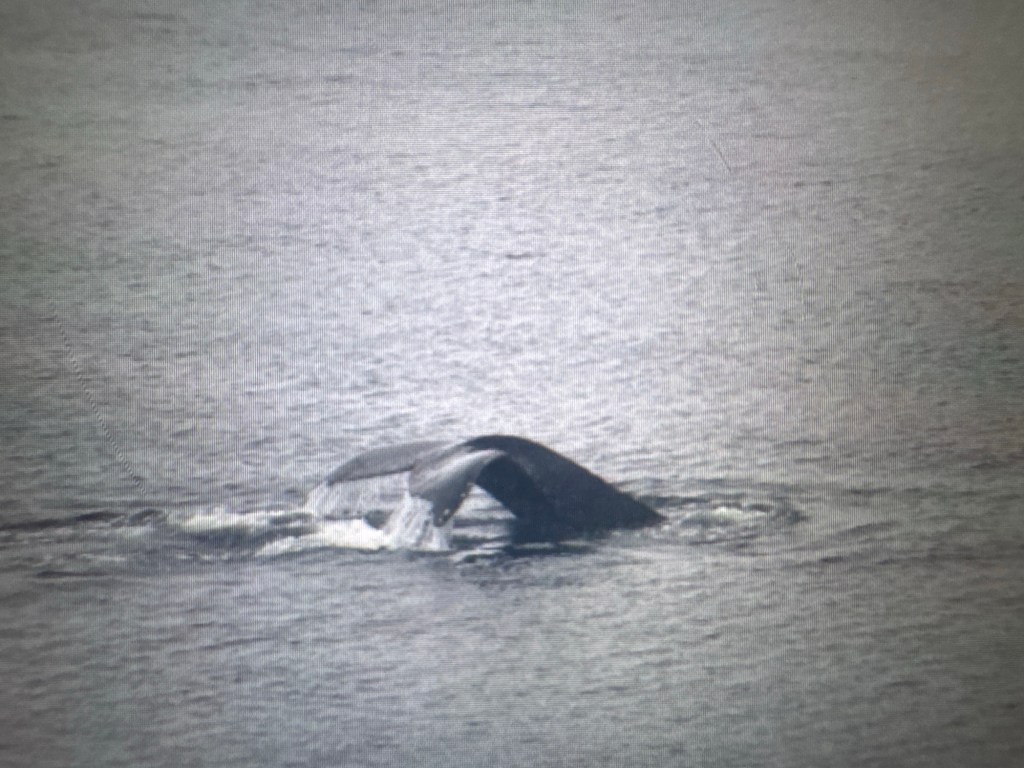
Throughout the day, we’ve been watching Humpback whales traveling with the ship. In fact, even as I am writing this blog, our ship is spinning in circles as we watch Humpbacks on all sides of us. It seems like they are waving us off from our journey. We just got to watch a mother Humpback whale and a baby Humpback whale feeding for over an hour!

What a great last picture from Antarctica! (And yes, it’s a picture of a picture I took on my camera)

I got to write the Daily Expedition Report for today. This report gets emailed out to all of the guests and their chosen family members. It was really fun to write, and hopefully people are receiving this, as mine keeps ending up in my junk emails.

Alright, tomorrow is the Drake…. Here’s hoping for the Drake Lake on the way back. I will spend the next 4 days working my way home, and will update along the way! Farewell, Antarctica…I am really going to miss you!