Bienvenue à Dakar!/Dalal jàmm ci Dakar

After 23 hours logged in airports or on planes, I have landed in Dakar! Even on approach, I could see the differences between Senegal and Wisconsin. Dakar was easily spotted below us, as it sticks out from the mainland. The ground is a beautiful red color, and neighborhoods are not set up in neat rows making shapes you can see from above. It was beautifully unique, which brought the excitement of arriving to an unmeasurable level.
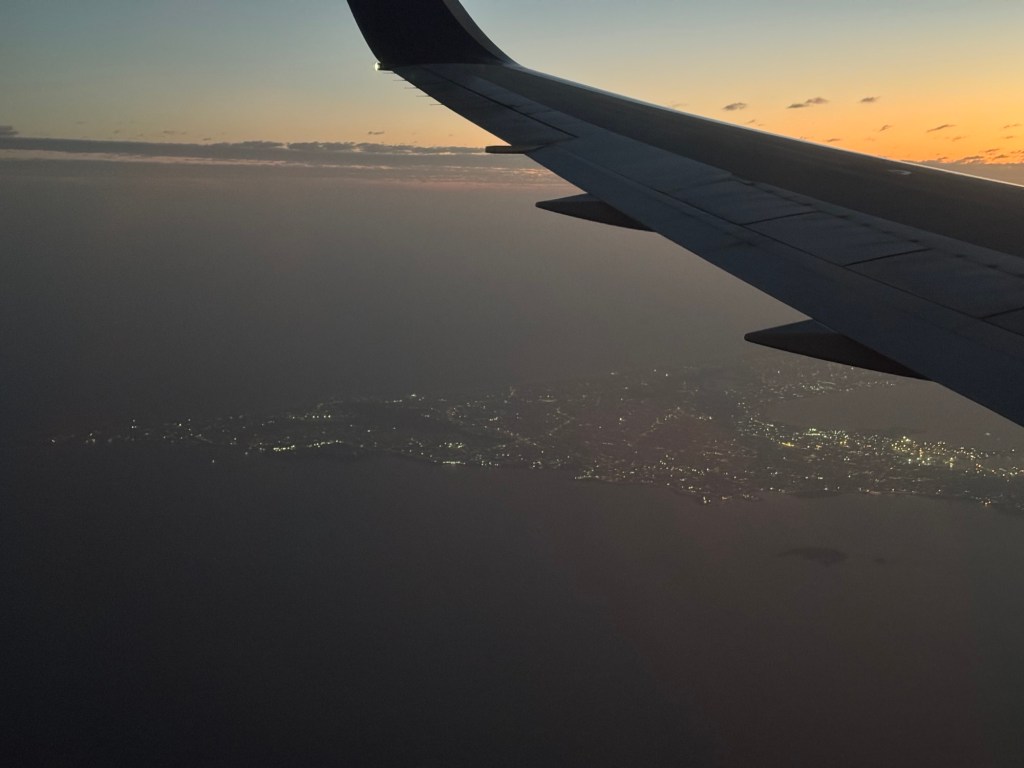
There’s Dakar!
Red color and dirt roads down below at sunrise with the moon visible

Upon landing, it was your standard customs/immigration scenario. Our bags seemed to trickle out slowly, but they all arrived allowing the adventure to begin! We left the airport to get into our vehicle. Our luggage was loaded on top of the van! We were impressed it all fit, but the driver did leave the tollway a little early on the way to our hotel because he was a bit worried about some police ahead not appreciating our load.

Don’t worry; it all got roped on, too. No luggage was lost in the journey!

On our drive to the hotel, we got lessons in Wolof, the cultural language of Senegal, which is not taught in schools at all! Students are taught in French (the national language), though they are starting to make the move to teach English in elementary schools now, as some nearby African countries have changed their national language to English. We also got a tour and some brief history of Senegal along our way, too! I was really struck by the contrasts in this country- really old buildings next to new ones, cars and trucks driving alongside horse and carriages…I can’t wait to see more!

Old and new
Just our van passing this guy and his horse on a major highway!

We arrived at the hotel and watched as our bags were untied and brought down off of the van. It was too early to check in, but they had a brunch for us – a nice buffet of many things. Some we knew what they were, and some we did not. We were a bit tired, but that didn’t stop us from creating some guesses on what we were enjoying! The star for me was a porridge with a sweet milk sauce, and a donut hole-like thing that tasted like oranges!

Plate of deliciousness

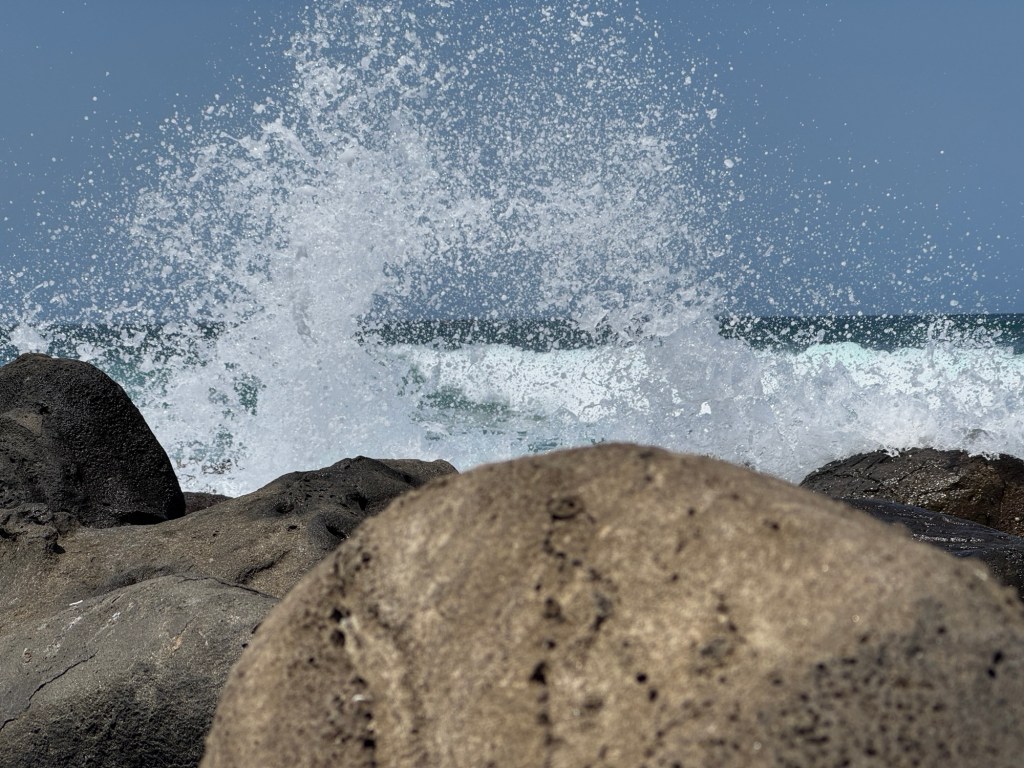
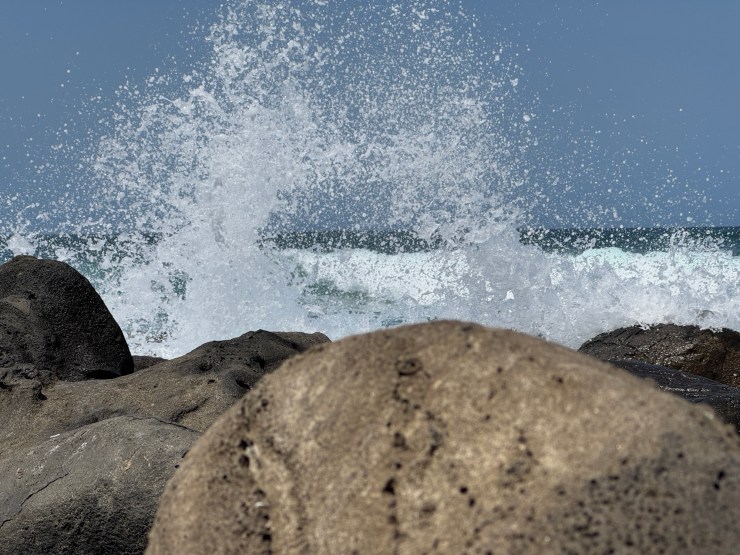
After that, we went outside to visit the ocean. We are staying right off of the Atlantic Ocean, and the view is incredible. I had seen in some of my pre-adventure research that Senegal boasts some of the best surfing in the world. It only took us a half of a second (and it would have been less if we had more sleep) to see why! Huge waves! We watched some guys diving under the water to catch some sea creatures, but couldn’t figure out what they were catching. The men looked so tiny out in those giant waves! The sun was shining, with not a cloud in the sky…temperature was in the 70s (unverified by any apps).

View from the hotel
This view cures exhaustion!
I could watch these waves all day!

We all went to our rooms then for a nap and to freshen up, and then we had our orientation meeting. At this meeting, we talked over the updated itinerary for the next few days and the nitty gritty details to get us by until our more detailed sessions start tomorrow.

We wrapped up the night with a delicious dinner at a restaurant with an incredible view! It actually got chilly at night (borderline cold…just not Wisconsin cold…according to my app this time, it’s 70 degrees 😂). We got to walk to dinner and back, and one of the members of the cohort and I went to the oceanfront to take a picture of the moon. There were a lot of people down there- we were very surprised!

I have taken my anti-malaria pills, and I’m finishing up my blog while watching Senegalese TV (entirely in French). For security reasons, I will not be giving you a teaser of what we’re doing tomorrow, but I promise it will be interesting!!!
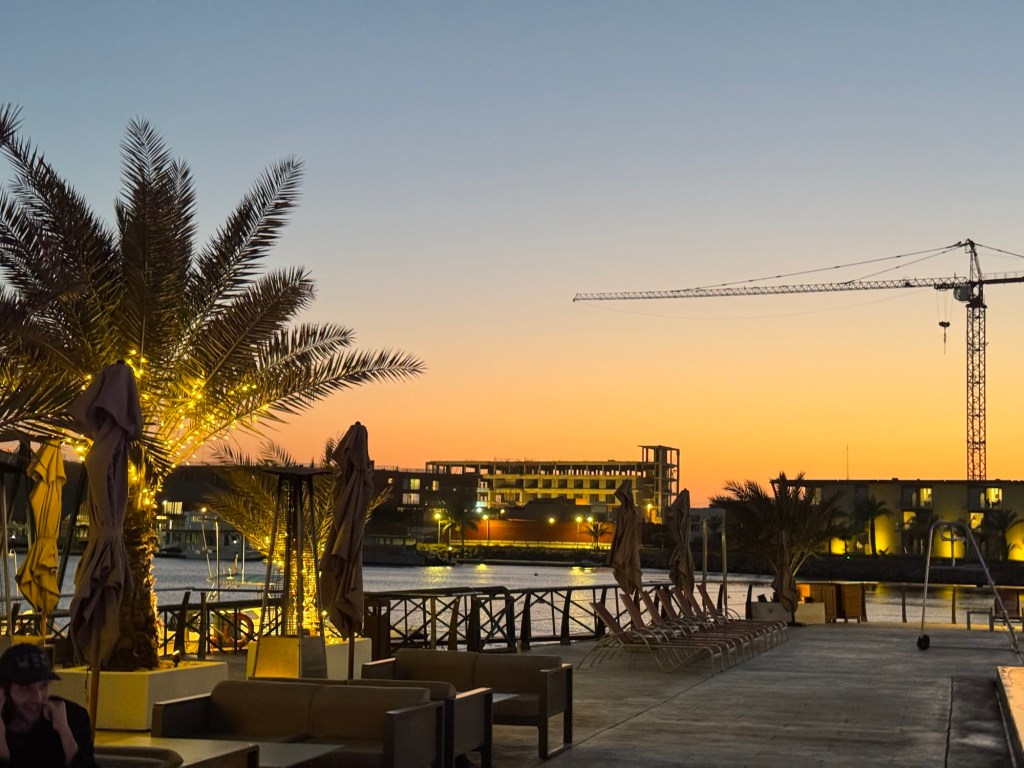
Sunset over the ocean while at dinner
Our dinner spot for tonight! What gorgeous views!
Yassa Chicken, rice, and Bouye to drink (made from the fruit of the baobab tree, milk, and sugar). Delicious!
Dessert was the Fruit Cloud, which was local fruit, crispy pieces, and a meringue top. I’ve got some great cohort members, so we all ordered different desserts so we could try each others’!
Why no brass instruments?!?!? Ok, just kidding!
This is the coolest no horn sign I’ve ever seen. So very detailed…
The moon and the ocean…final view of the night

It’s Happening!!!!

Last week, we got our official itinerary for the remaining portion of the trip, and I have started my anti-malarial pills. This journey is a GO! I repeat, this is not a drill!

I am off to Senegal on Saturday. The journey to this point has been long and, at times a steep climb. There was a 10-week course on global education that started the week I got off of the NOAA ship last fall, and ended a week after I got back from Antarctica. That was an intense time, as I had so much to do for the other experiences, and wanted to make sure I did those justice for the student experiences to follow.

I found out my placement in Senegal right before Christmas, but not where in Senegal I would be (that came in January). We traveled to Washington DC for our Fulbright Global Education Symposium , and met the other people traveling to Senegal with me. There were 15 of us, and every one of the teachers in my cohort inspire me! They are great people!!!

Fast forward to the anxiety of watching budget cuts at the federal level to the US State Department, Department of Education, and the US Embassies around the world (all of which are involved in the Fulbright programs). There was a Moroccan cohort that was supposed to depart before us (on April 4). They found out on March 21 that they would not be able to go due to their funds being frozen. At that point, I was pretty sure I would not be going to Senegal.

However, we ended up adding 5 of the Moroccan cohort members to our Senegal crew. Our hotels are booked, flights paid for, and it looks like We. Are. Going!

Once you have convinced yourself that you are not doing something, it’s a little hard to wrap your brain around the fact that you are indeed going to get there. I didn’t want to get excited, so that way I couldn’t feel disappointed. I kept telling myself that if I didn’t go then I would be able to be with my family for Easter. I would be able to accept a really incredible alumni award at my university. There were perks to staying home, for certain. But now it is time to get excited for the adventure.

Stay tuned for how this journey goes – it should prove to be another fascinating voyage. I am hoping to find examples of music being used as a means of cultural identity and storytelling, and I want to find examples of similarities between Senegalese students and the students at my school. I know there will be differences, but I think the students will be fascinated to find that they have things in common with students across the globe. I can’t wait to see what their schools are like! Bring on the adventure!!!!

One full suitcase of donations from my school! There’s more in my other suitcase, too! My host teacher is going to be so excited!!!!
Every day at 4 pm our time I’ll be taking this pill- 2 days before the trip, during the trip, and for a full week after. The state department video we were required to watch on malaria was terrifying!
Here I go! See you on the other side! This time tomorrow I’ll be in Dakar, Senegal! 🇸🇳
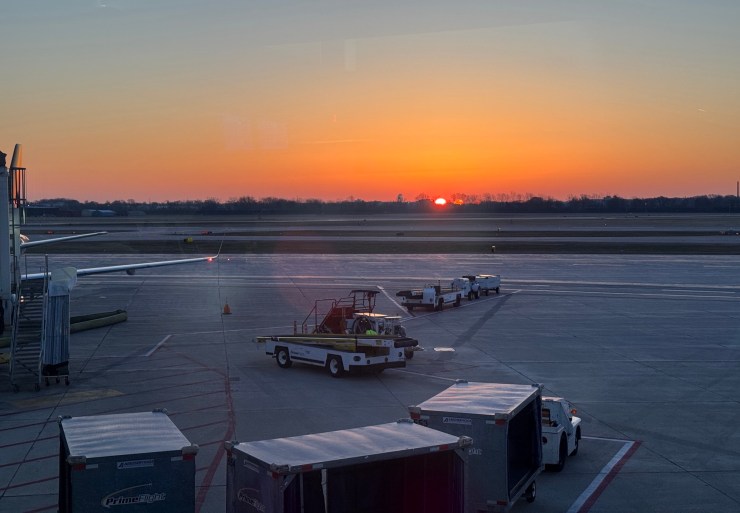
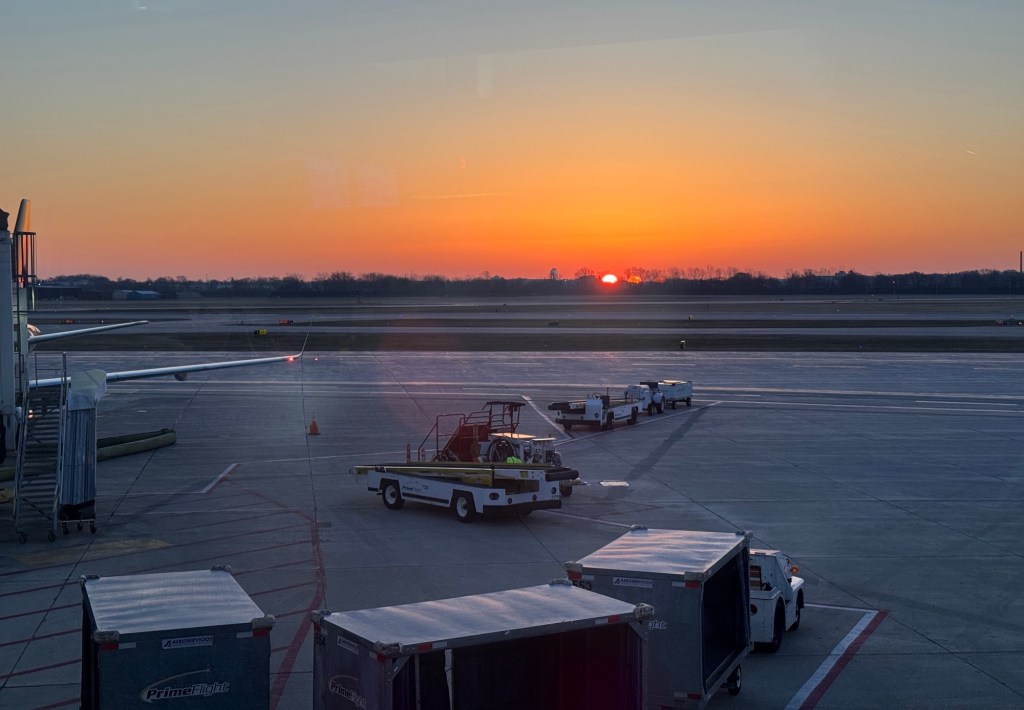
Watching the sunrise since I was at MKE at 5:30 am

Preparations Are Underway…..

For those of you who have never traveled out of the country, depending on where you go, you may need additional vaccinations. As it turns out, we didn’t NEED any additional vaccines (there had been a law that ended in December of last year that required all visitors to have a yellow fever vaccine before entering the country), but there are a mess of vaccines encouraged. I went to a travel clinic in Brookfield, as my doctor recommended going there for one-stop shop of all of the vaccines. Travel clinics don’t take insurance, though, and most travel vaccines are not covered by regular insurance anyway. The travel clinic that I went to was nice enough to let me know which vaccines I should get that my insurance would cover, and encouraged me to go to Walgreens or CVS to get those. I was very appreciative to them for that hint.

Yeah, I just casually had typhoid in my fridge for a few weeks. I had the choice of oral or injected typhoid. The oral lasted 3 years longer and cost $20 less, so I went with that. This also allowed me to take it home, keep it in my fridge, and take it anytime up to 2 weeks before I leave. I finished the doses last week, which was nice because I could wait a week after I had the yellow fever vaccine to start on typhoid (and wait until the musical I was playing in was over)!
Last day- thank goodness! That was the roughest as far as side effects went – YUCK.

Today I went and got the final vaccines from Walgreens – Meningitis, MMR booster, and a combo Hepatitis A & B. I have to go back right before I leave to get the 2nd dose of the Hep A/B, and then I’ll go when I get back to finish the 3-dose regiment, but then I’ll be immune for life. That’s the nice thing about the yellow fever vaccine, as well – it’s for life.

Even more shots!

Now, in addition to shots, our school is working on collecting donations for the Senegalese school I will be visiting and teaching at. My host teacher has asked for supplies to help students learn English – books, flash cards, and games. So far, everyone is so excited to help.

Additionally, the students are designing a sticker for me to give to the Senegalese students I meet that will symbolize the friendship we hope to develop with them. I’m so excited to see these made and to hand them out to everyone I meet!

Just a sample of the stickers the students are designing…there are so many great artists in our school! One elementary design and one middle school design will be made through an online sticker company for me to hand out in Senegal!

The students I teach are going to write postcards to the students in Wolof (the cultural language of Senegal), French (the formal language of Senegal), and English. I will then hand them out to the students, and maybe they’ll write back!

Finally, I am collecting questions from the students about what they want to know about students and schooling in Senegal – I love encouraging them to be curious explorers of our world, so the more questions, the better!!! I always learn the most interesting things when I take student questions along with me! The world is an incredible place, but looking at it through the eyes of young students makes it even more amazing!

Sonifying Data – How the Arts Convey Scientific Information!

Now we’re starting to get to the nuts and bolts of the culminating project that the students will be involved with for the remainder of the year. Today we explored how artists and musicians can take scientific data and adapt it to the arts. We looked at visual artists like Jill Pelto, who take an ice melt data graph and turned it into easy-to-understand art. We studied composers like Judy Twedt who wrote a piano solo that shows how Arctic Sea levels have changed between 1976-2006. We also looked at “Hebrides Redacted,” which is a piece of music that depicts the changes of whale population over time – with the musicians leaving out notes from Mendelssohn’s “Hebrides Overture” as the whale population decreases.

We had discussions on which is easier to understand – the art or the data. We noticed how some students preferred the graphs and data, while others felt that was difficult to understand and preferred the art and music.

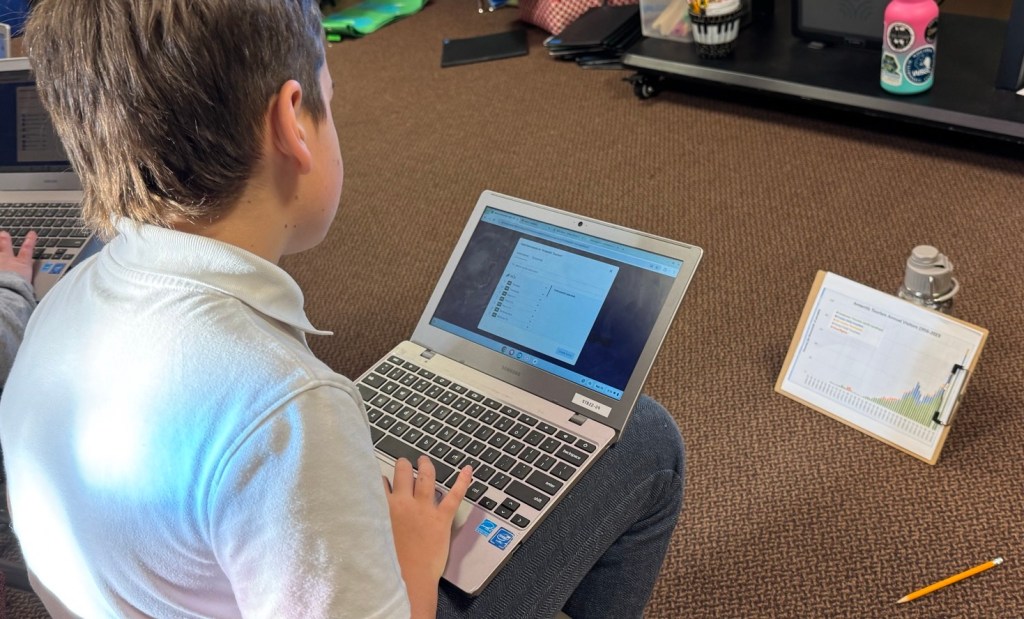
Next, students were tasked with creating their own music from data and graphs. The 7th and 8th graders have data they are analyzing from their science class project, so I had them take that data and compose music to represent what the graphs are trying to show. 5th and 6th graders were allowed to Google search something that they were interested in that would be displayed in graphs and charts. I had a collection of interesting graphs and charts for students in grades 3 and 4 to create their music with. Grades 1 and 2 had to find something they were interested in as a class, and then I guided them into making the music as students came up one at a time to select which notes should come next.

4th grader composing off of his data

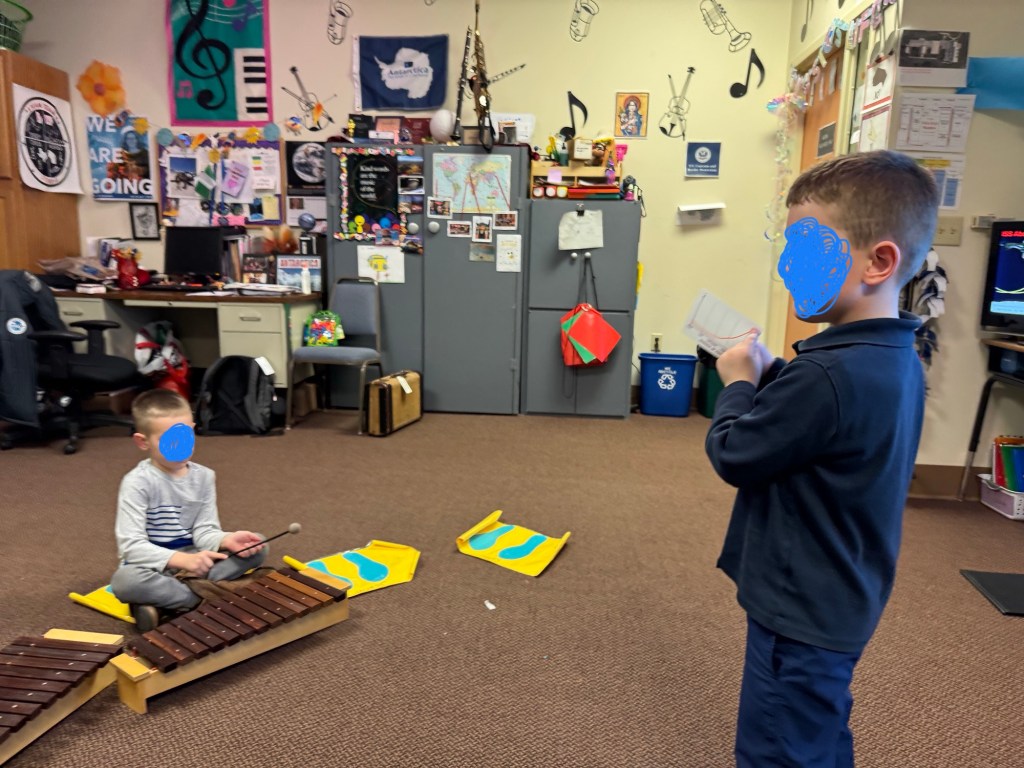
For the youngest kindergarten and preschool students, we used the science teacher’s game called “Charty Party.” I had one student come up in front of the class and be the “Scientist and Conductor,” and the rest of the class were musicians playing Orff instruments and Boomwhackers. The student playing the role of scientist and conductor had to look at the charts from the game, and then have musicians play their instruments in the shape of the graph. This was really fun to be able to show students how to read a graph, and to practice high and low sounds on our music instruments. Each student got a chance to be a Scientist/Conductor, and play each instrument!

Kindergarten students – one Scientist/Conductor, and a class full of musicians

Antarctic Treaty Musical Quilt

Today in music, we learned about the Antarctic Treaty. We explored the countries that have signed it and what the laws of the treaty entail. We then compared that to the Artemis Accords, which are a similar agreement to sharing resources and research in space. We compared which countries have signed both (and, even more interestingly, which countries have not along with the implications of why countries may not sign).

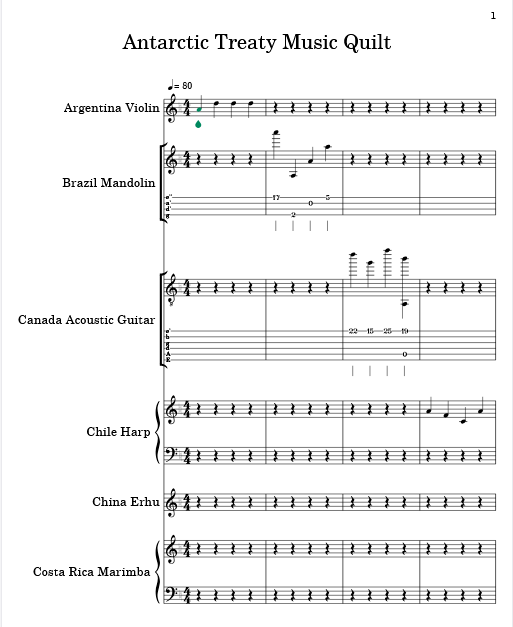
Students then had to pick a country from the Antarctic Treaty. They researched instruments that are traditionally used in the country’s music, and composed one measure to represent their country, based off of rhythms they hear in the country’s national anthem (thus testing their aural skills – requiring them to transcribe a rhythm from the national anthem).

Each country’s anthem was linked for students to explore

After each student was done, I compiled each student’s measure and added them together into one giant composition, much like different quilt squares come together to create a beautiful quilt. This piece of music represents the countries of the Antarctic Treaty!

Every country had its own instrument and measure in this musical quilt
Here’s the students’ work!

Music Mosaic of Southern Indigenous People

This week in music class, we toured the music of the nearest indigenous peoples to Antarctica. I created a tour for the students to explore the music of the Māori, Palawa, Noongar, Xhosa, Khoekhoe, Selk’nam, and Yaghan people. We reviewed the information related to Pangea, so that students could see that Antarctica used to be attached to other countries and continents.

In addition to listening to traditional music of these cultures, we learned facts about the people and looked at some of their artwork and symbols. The students were fascinated!

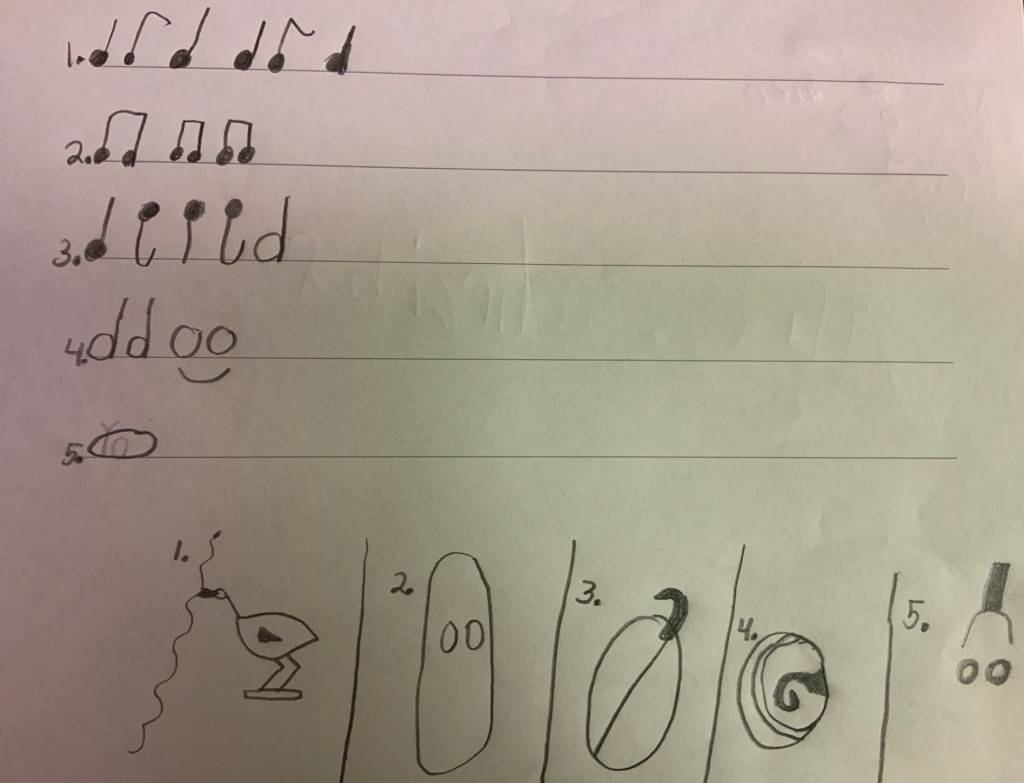
I had the students write one measure of music to reflect the style of music they enjoyed the best on the tour. They then decorated their music with the symbols and artwork of their chosen culture. I originally thought the students would use the 5 lines for composing their measure of music, but so many of the students really enjoyed the music of many cultures and turned their five lines into music from their 5 favorite cultures!

I had originally wanted students to pick the ONE tribe they liked the best, but I was surprised by how many students liked SO many of the recordings! I allowed them to create music and art for each tribe they connected with!

After the compositions were complete, I hung them all up in the hallway creating an artistic mosaic of the cultures we toured.

Antarctic Beatboxing!

Today was an interesting day, as we had the local news channel come in to observe how the students and I were making use of the Antarctic expedition. They had been in before I left, and were now doing a follow-up, which was great to be able to feature the students!

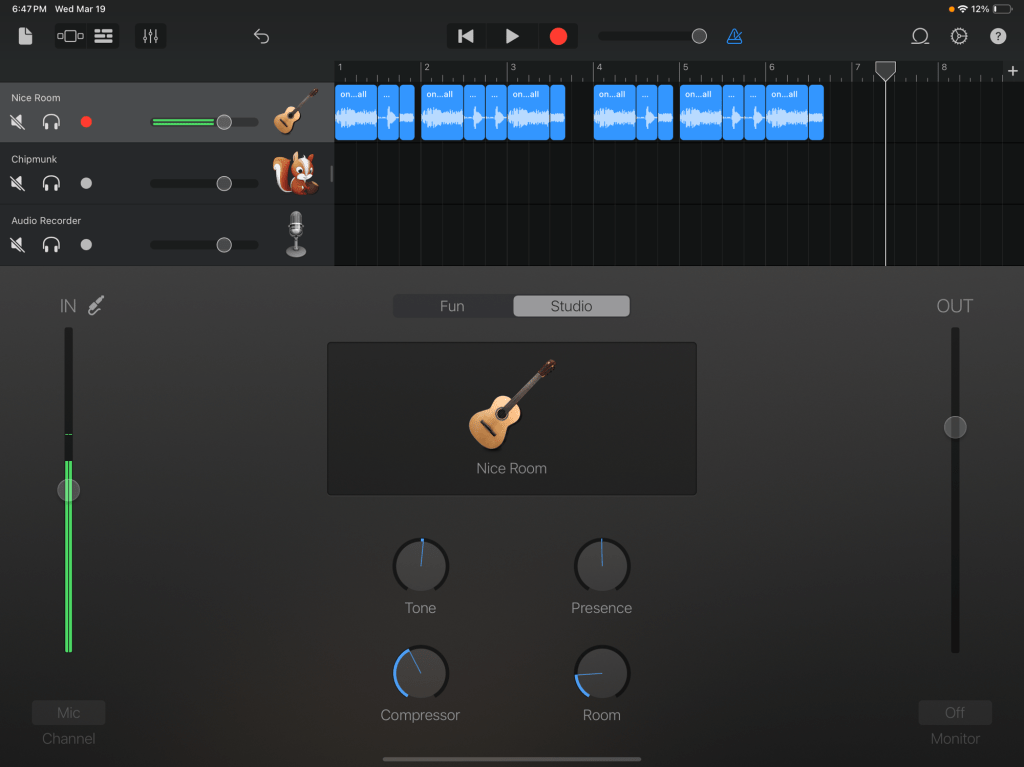
For today’s lesson, the students were going to take full-length recordings I had made on my expedition, trim them to isolate one sound and then create a beatbox-type composition from a collection of isolated sounds. Older students did this using an online-based platform found at audiomass.co, and worked individually. Younger students participated in this by composing the groove as a full class – each student picking out which sound they want to add next. I pre-isolated those sounds for them, and then we slid them in place using my iPad with GarageBand. This allowed us to drag and drop the sounds into our timeline until every student had gotten to pick out a song.

We talked a lot about repetition, and watched Pentatonix for a sample of real beatboxing in action. We also watched a video on YouTube called “Animal Beatbox,” where a collection of animal names are repeated to solidify the groove.

Students had a lot of fun with this, and surprisingly, the youngest students were actually the best at making the grooves, as they enjoyed the repetition of picking the same sound as their friend did earlier!

This is the 3K/4K beatbox. We then looped it while they danced to the groove!

Music in the Shape of Antarctica

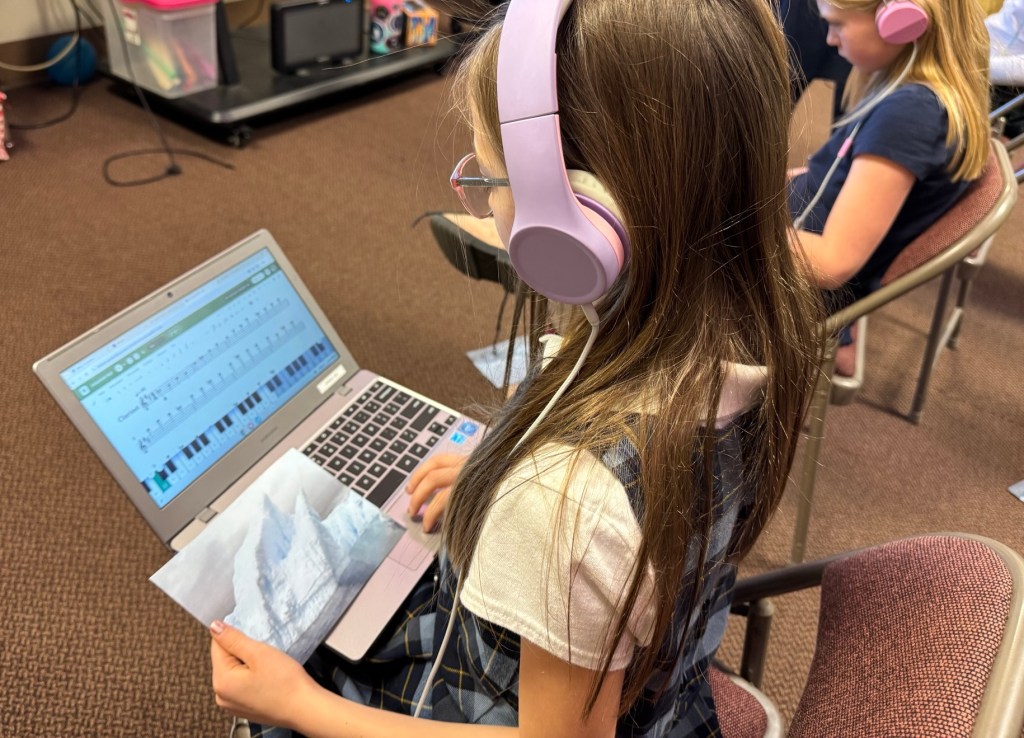
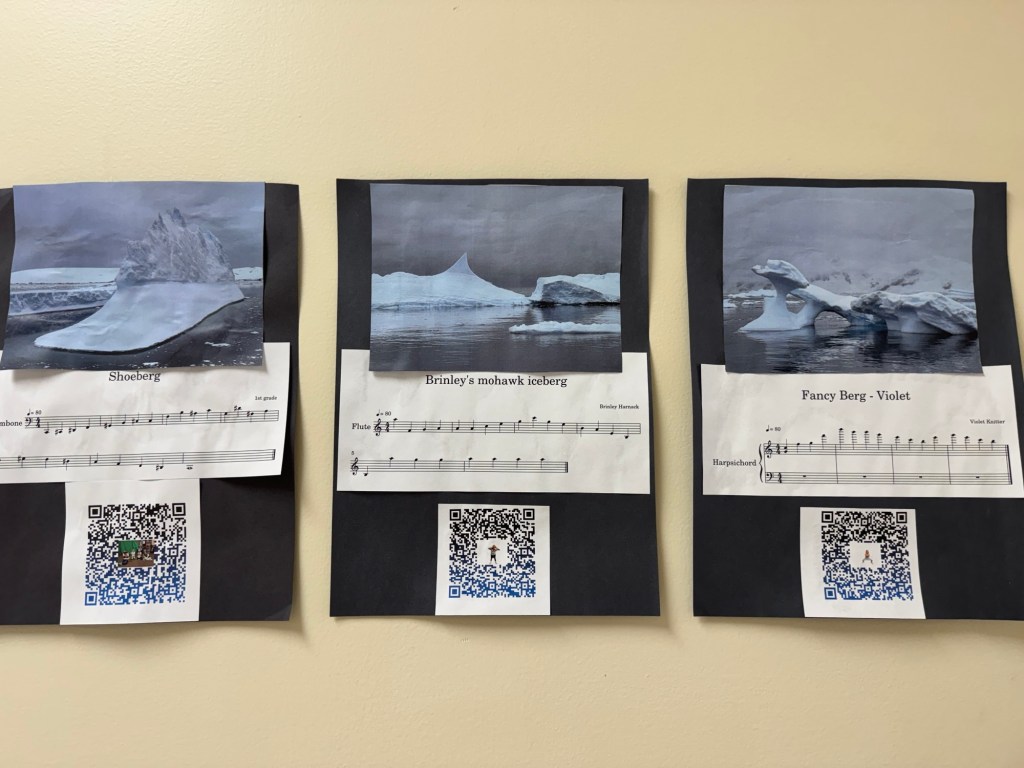
Our younger students are learning about high and low notes and the shape of music. To practice this, I let each student in grades PreK-4th grade pick out an iceberg photo that I took on my expedition. They then had to create music in the shape of the iceberg – the music needed to go up when the shape of the berg went up, and down when the iceberg sloped downward. We then hung up our work in the hallway, with QR codes so that people can listen to them.

Composing music to match the shape of the iceberg
Sample artwork hung in our hallway!

Antarctic Word Cloud

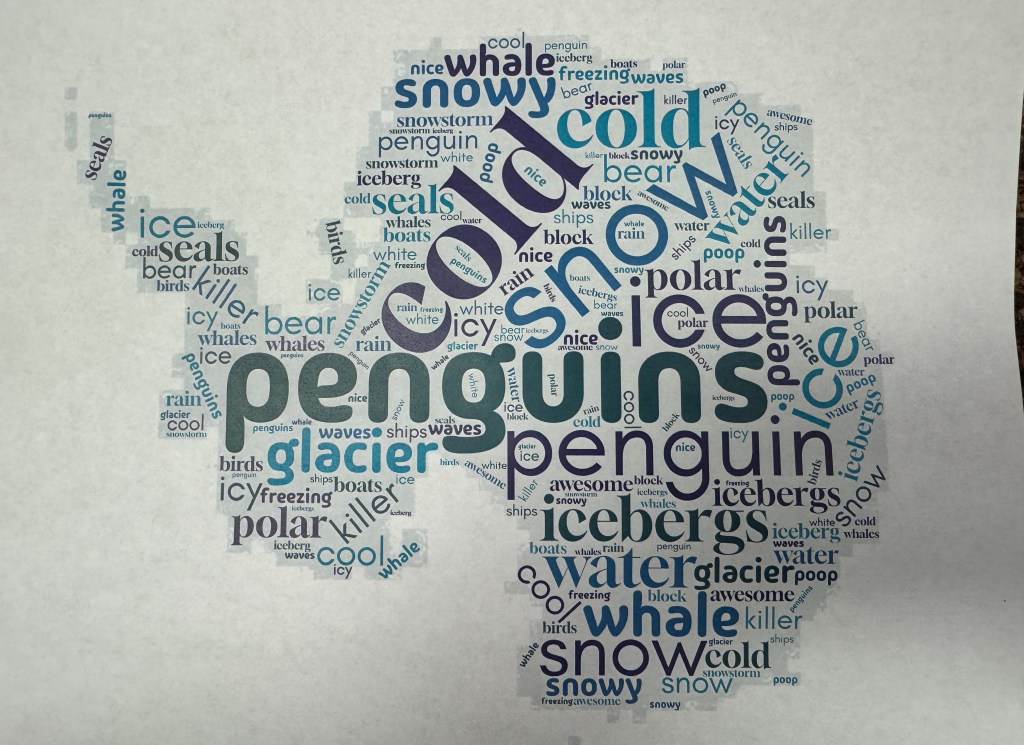
I’ve had students write words down after each lesson to see what lasting effects Antarctica is having on them. I created this word cloud to show how they’re doing. You’ll have to excuse the word ‘bear’ that shows up, as the students were talking about whether they could bear the isolation….they do know there aren’t polar bears in the Antarctic! I’m hoping to see how this word cloud changes as we continue our learning throughout the rest of the year!

Fulbright Teachers for Global Classrooms Symposium

I am so excited to share that I was accepted into the Fulbright Teachers for Global Classrooms program – I found out in August of 2024 (while I was out in Boston accepting an award). Last winter/spring, I applied for NOAA Teacher at Sea, the National Geographic/Lindblad Expeditions Grosvenor Teacher Fellowship, and the Fulbright Teachers for Global Classrooms (TGC) program. I thought if I was lucky, I would get one of them. Imagine my surprise when I got all 3! I am so grateful that I have an incredibly supportive principal, who instead of grimacing about the idea of her music teacher being gone during the school year for THREE programs, she was excited and congratulatory.

The Fulbright program is the final of those programs that I am so grateful to get to participate in this year. I found out in December that I will be traveling to Senegal in April! I was very excited, as I have never been to the African continent, and I know very little about Senegal. I also know that this will be incredible for the students I teach, as there are so many misconceptions about life in Africa – it has been a source of great frustration on the middle school social studies teacher (my friend and colleague) as she has noticed most of the students in our school think of Africa as a country, and make assumptions about the entire continent that just are not accurate.

The first part of this program involved a 10-week online course. Luckily, it started the week I got back from NOAA Teacher at Sea, and ended the week I came back from Antarctica (with a week off for Thanksgiving, which helped me stay on track while I was not able to do work while in the middle of the Drake Passage!). The course was very eye-opening, as I thought I was pretty good at global education. After taking this course, I learned so much more and feel set up to really take my teaching to an entirely new level. I am so excited to continue the work I did in that course as I plan more experiences for the students at my school.

Lessons like these were what we developed during our class. We also were required to partner with a classroom in a different part of the country, which the students of my school LOVED. They had the opportunity to write video game music for students in Kentucky who made their own video games! I used 1st-3rd graders since the teacher I was partnered with had 2nd and 3rd graders.

The next phase of the Fulbright TGC program is a Global Education Symposium in Washington, DC. I got to go in February, and my principal got to travel with me as part of this program. What a great treat to be able to travel with the woman who has been writing me these incredible letters of recommendation to get to participate in these amazing programs that have brought such wonderful learning lessons to the students of our school!

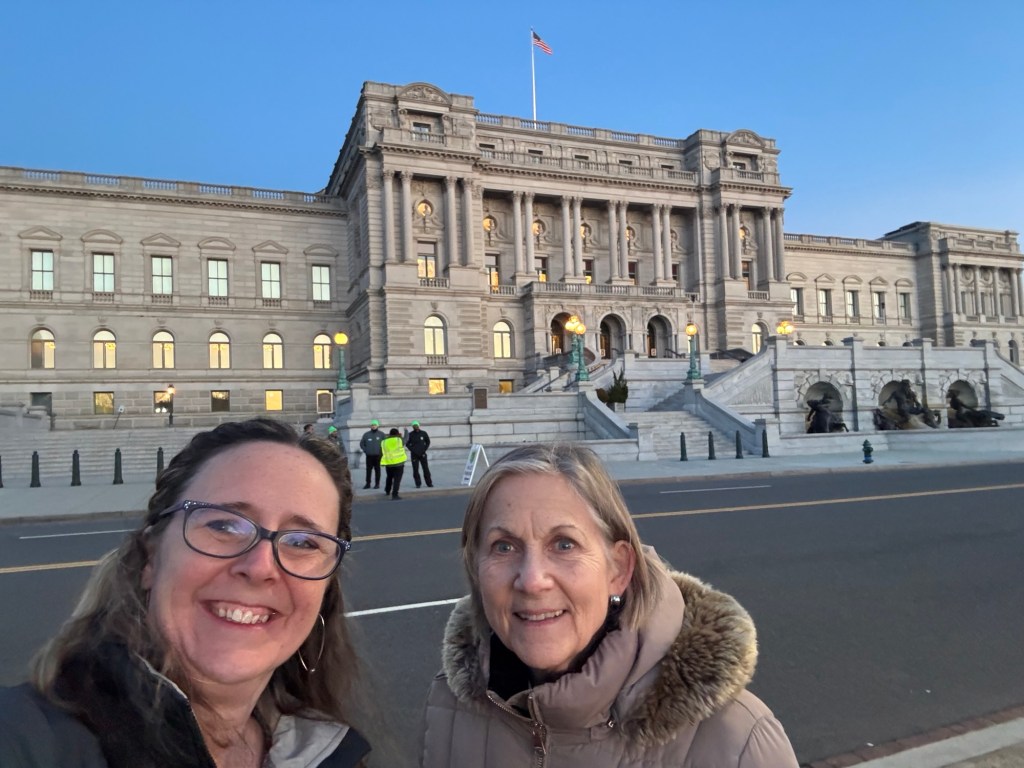
My principal and I outside the Library of Congress, where we were unsuccessful at acquiring library cards.

My principal and I wanted to travel together (apparently not all of the administrator/teacher duos did, and some administrators didn’t even come!). We arrived late morning on the first day, and navigated our way to the hotel using the metro. Then we walked to the National Museum of African American History & Culture, which is one of the newer Smithsonian museums in Washington, DC. We met a wonderful man who was working at the front desk, and he guided us in how to start our adventure in this incredible museum. I was excited to go to this museum, as I thought it would be the perfect way to ready for Senegal. Senegal actually was one of the deportation sites of slaves bound for America. I learned so much in this museum – a docent in the museum taught us that EVERY country/culture in the world has had slaves at some point. Even neighboring tribes would collect slaves from the tribes that they feuded with. I also learned that countries such as France and the UK sent slaves to America. It was an incredible museum that moved me just as much as the Holocaust Museum did a few years back.

‘Playing’ Charlie Parker’s saxophone at the National Museum of African American History & Culture

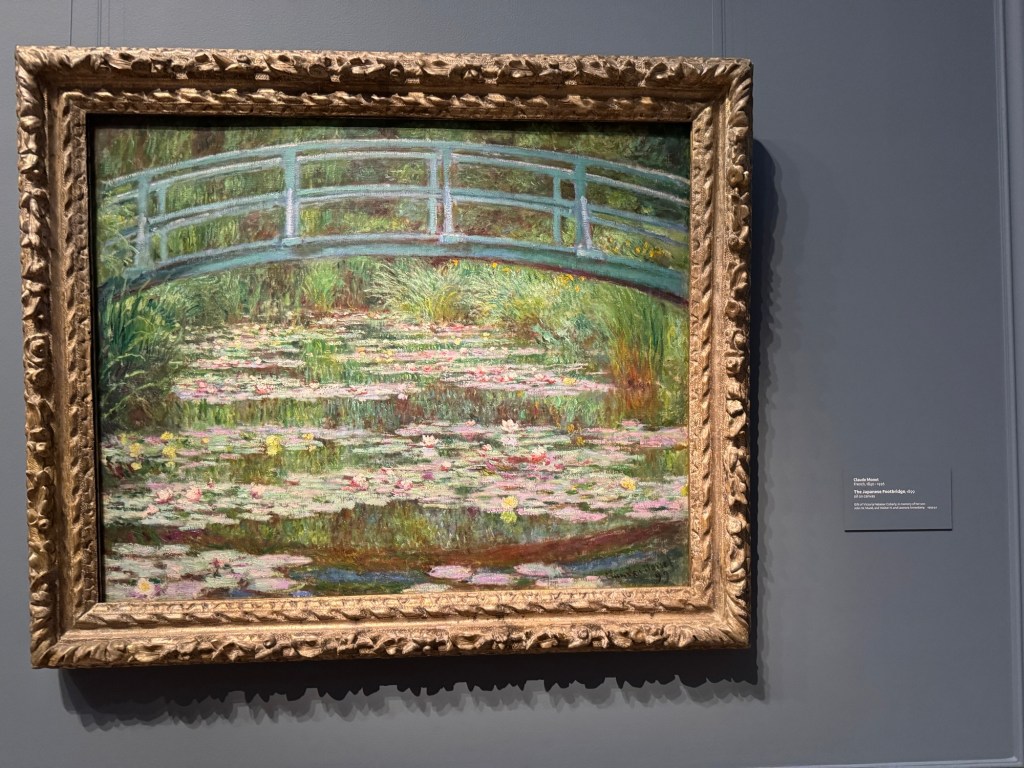
We also booked it on over to the National Gallery of Art. Unfortunately, we spent so many hours in the African American museum that we didn’t have much time to visit the National Gallery. However, we managed to find the Impressionists, which I was excited about. I had also never been to the National Gallery, so that was great.

Monet!

By that time, it was time to come back to the hotel to start our symposium with the welcome session.

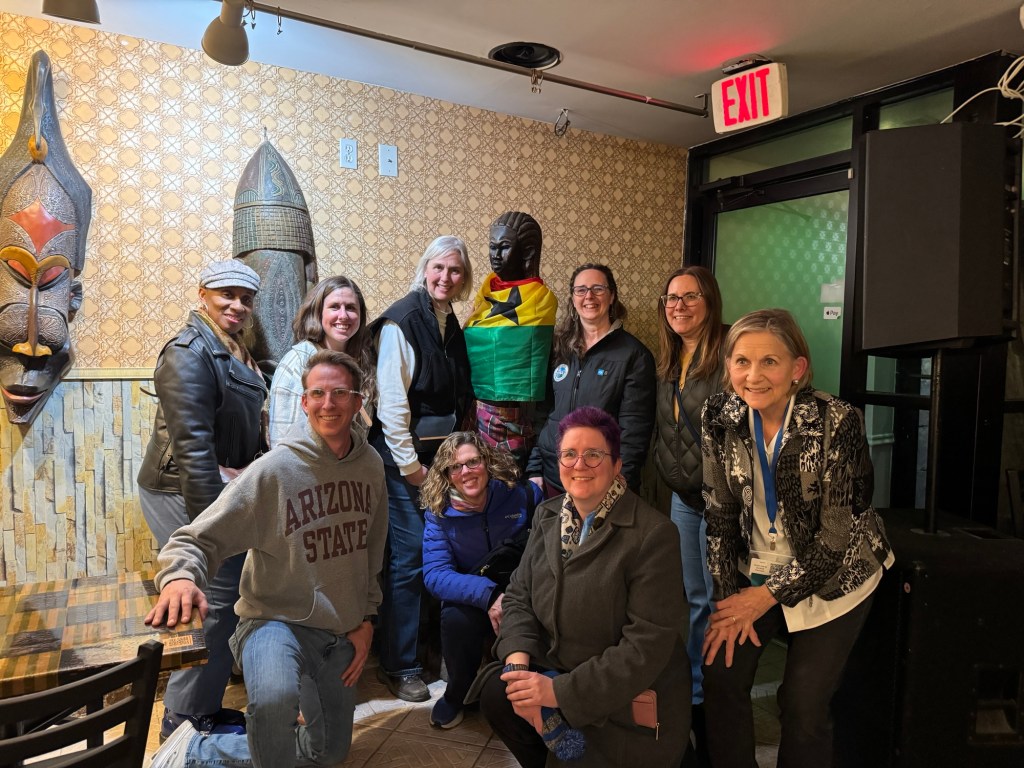
Some of my fellow Senegal cohort!

The symposium was great – we got to learn so much more about what our field experience would be like. The best part about it was that they divided us into our travel cohorts by country that we will be going to for our field work. It allowed us to get to know the people we would be traveling with from the very first moment of the symposium. We all clicked right away – meeting up and sitting together for all of our meetings, planning our dinners together, and making plans for our travels. We have been collaborating ever since, and sharing every little bit of information we hear. It is so nice to have such a wonderful group of teachers to share this experience with.

Pardon the inaccurate pointing…the globe kept rolling away! 😂

We learned about the country we would be traveling to, and about the expectations for our culminating project. We got to meet members of the US State Department, the International Research & Exchanges Board (IREX), and the Fulbright program organizers. We shared our global education lessons with each other in a gallery walk, which gave me so many ideas for my classroom, and let me get to know the people in my cohort even better! We also got to go to a Global Education Resource Fair, where we met with vendors of curriculum, research organizations, and companies that have resources, materials, opportunities, and experiences to help teachers with global education in their classrooms. It was really fun to find new organizations willing to help build music into global curricula! My fellow Senegal travelers, my principal, and I all went to a West African restaurant to get a taste of what we were going to experience when we go on our field experience.

Yummy food!
Dinner to experience Senegalese food…none of us had any trouble enjoying our orders!

To say that I left inspired feels like it is an understatement. I learned so much in the 10-week course, but I was most excited after leaving this symposium. So many great people have now joined my teaching and collaborating network. I’m traveling with a bunch of teachers who all have been musicians or are incredibly supportive of music education. I made fast friends with STEM teachers in my cohort, obviously. I now also have English and ESL teacher friends from around the country. It feels so good to continue to grow my network of teachers across the world!

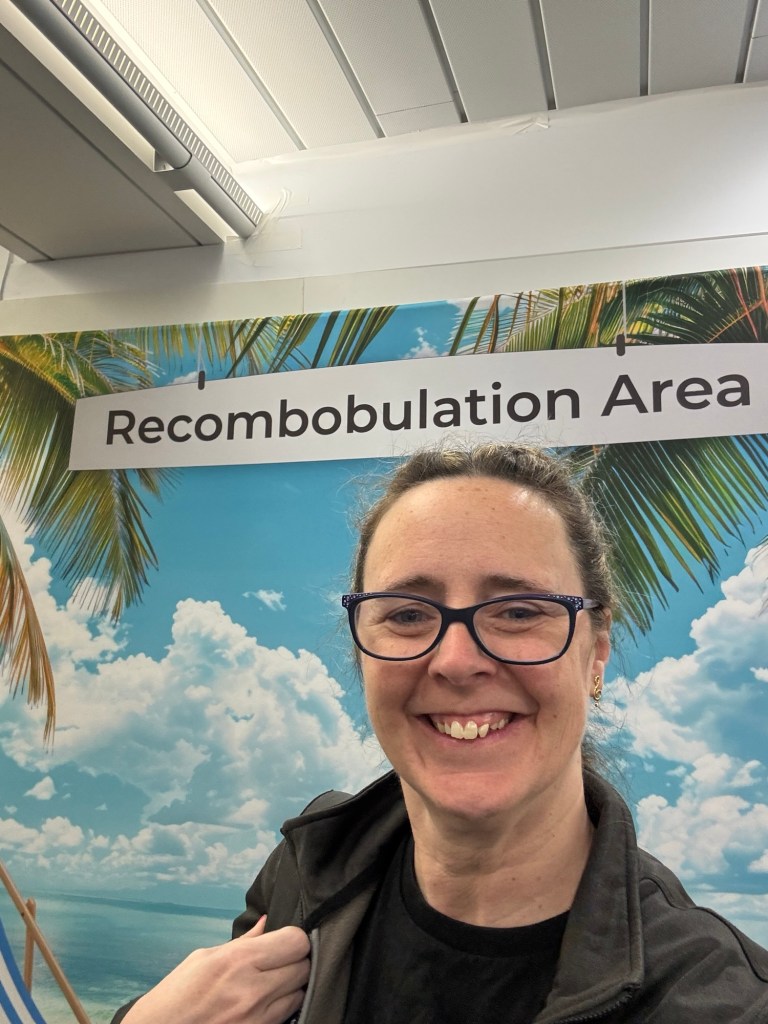
Ready to take on the world?!? We’ll see

Next up…..planning for a trip to Senegal in person! Time to get the students excited and curious!

So grateful to this woman for being my mentor, letter of recommendation writer, and greatest cheerleader!