
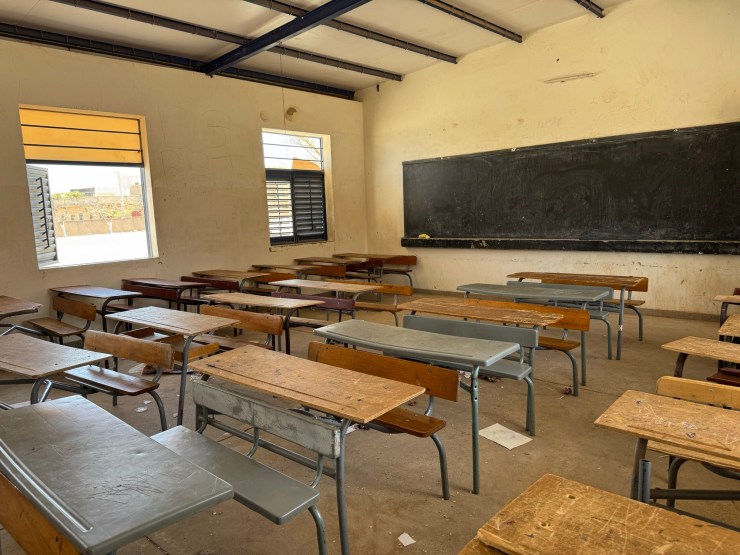
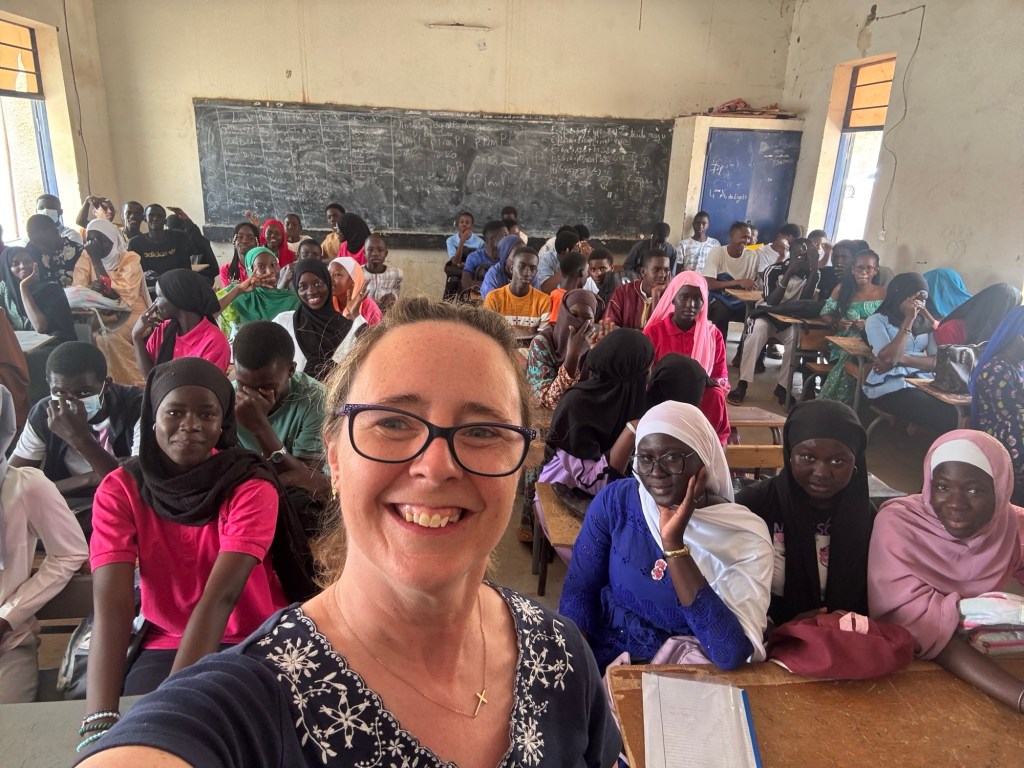
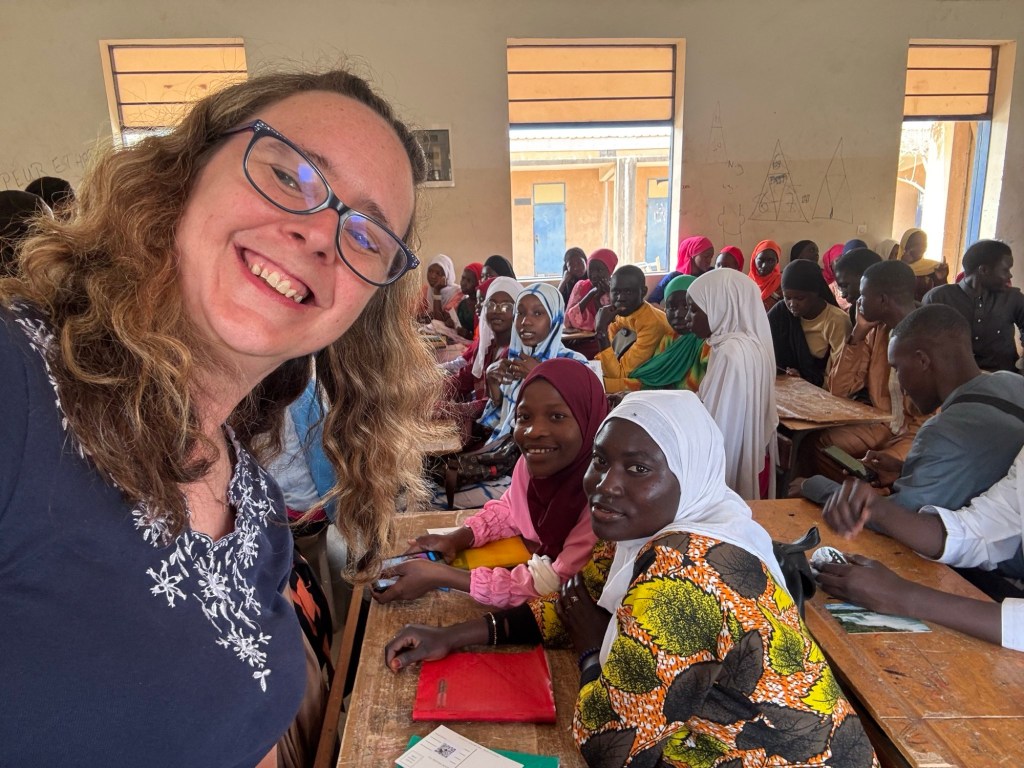
The absolute best part of the Fulbright Teachers for Global Classrooms program is visiting the schools, getting to know the students, and getting to teach with our host teachers!
Because of this experience, I really got to see what school in Senegal is like. These are my observations to help paint a picture of what life is like for Senegalese teachers and students. I know many of the people I’ve talked to have asked about schools in Senegal, so here you go!
1. There are anywhere from 60-90 kids in a class. I was in a school that housed middle and high school students, and the high school students all sat three to a desk. The room is FULL!
2. Everyone walks to school. It is really cool to see all of the students parading down the dirt road to get to school each day.

3. Teachers use a chalkboard and chalk to teach to their students. There aren’t projectors, wifi, computers, etc. in every classroom, though there were 3 computers in a room that could be used if someone needed them. However, don’t feel sorry for these teachers – they are incredible teachers regardless of what resources they have! In fact, I learned a lot by watching these masters hold the attention of a room packed full of students.

4. The classrooms have an open-air feel, as they don’t have window glass, and the doors are kept open for cross breeze. It never felt really hot in the classrooms, despite it being in the 90s temperature-wise, and having no air conditioning.

5. On Fridays, students can wear whatever clothes they would like, rather than the school uniform they wear the other days of the week. Friday is a religious day, so students come to school in fancy dresses and formalwear. It is very different than what the students in my school choose to wear on their Fridays (jeans and t-shirts)!


6. School break runs from June to October, as this is the rainy season. There is a lot of sand and dirt everywhere, and the classrooms would get horribly hot if they had to close up the windows and doors, so students have off.

7. Students have free periods in their schedule, where they hang out in the courtyard and just talk. This is unsupervised time.

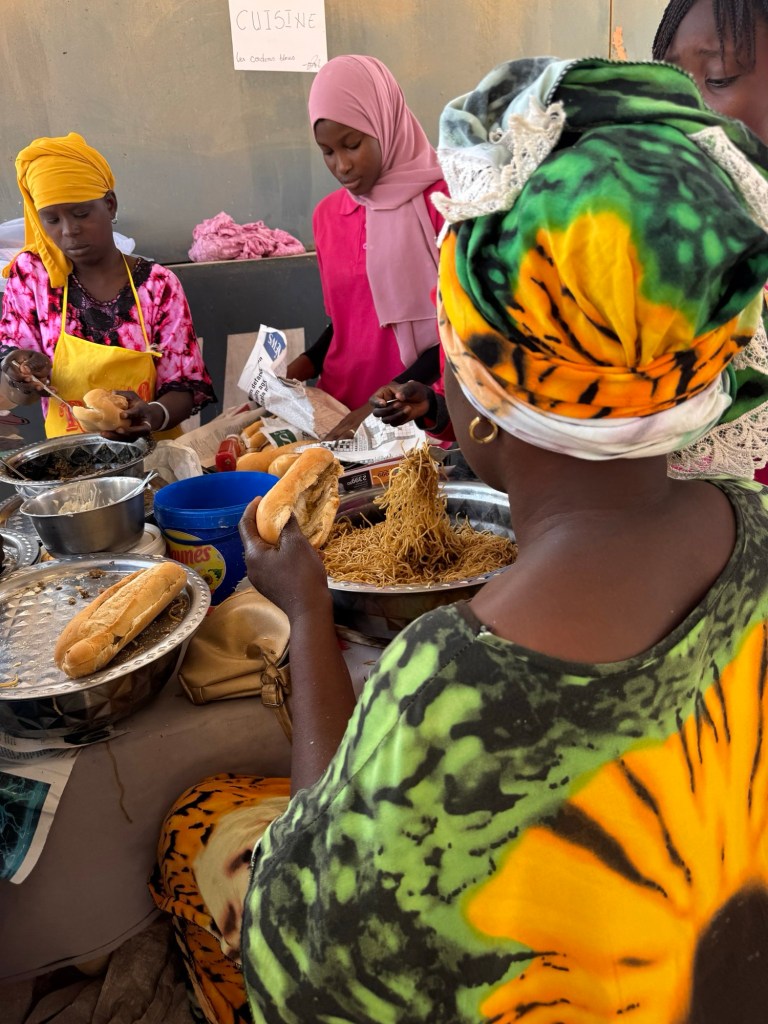
8. Food is sold for students during the day, and students eat it during their free blocks.


9. Substitute teachers don’t exist. If the teacher can’t come in (illness, family event, conference, etc.), then the students just don’t have class that day.

10. Punishment (both in class and with the headmaster) involves students kneeling on the ground with their head up against the wall or blackboard for a length of time. I did see this, but did not take pictures of that! It’s bad enough being in trouble – no one wants to see a picture of themselves in trouble on the internet!
11. Students generally like school. The majority of them have a positive attitude in class and really participate in classroom discussions.
12. The headmaster or headmistress (principal) is the teacher in the building with the most seniority.
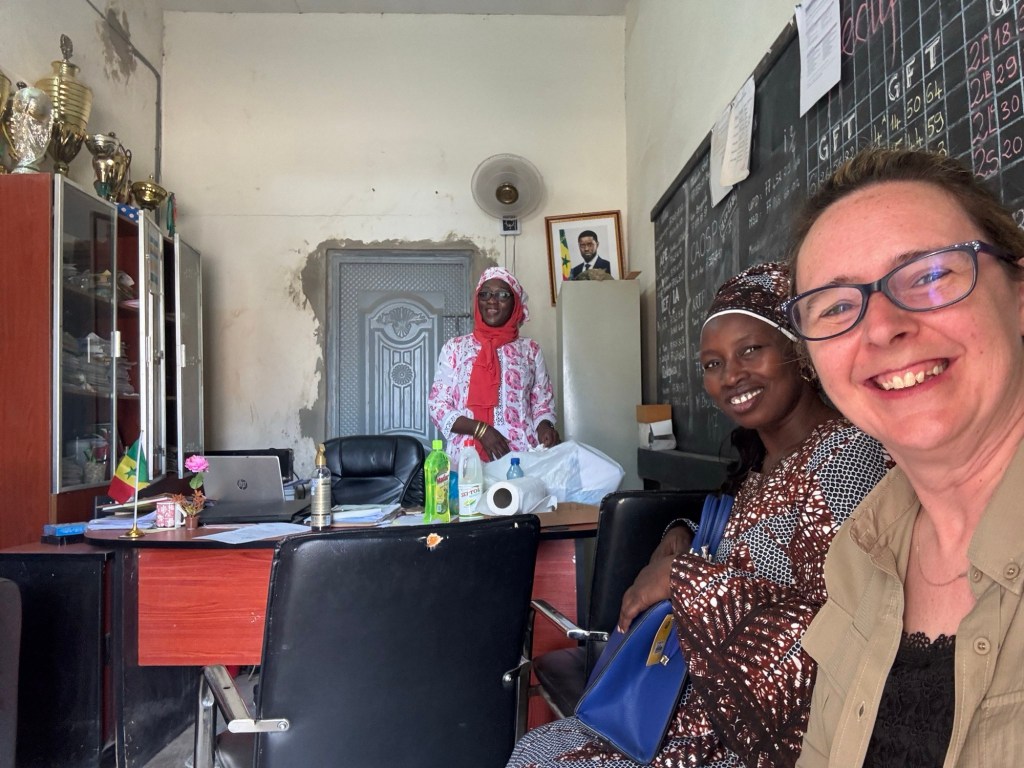

13. Teachers in Senegal are placed in their first teaching job. After that, they can choose to go wherever they would like to teach when an opening comes up.

14. Teachers are required to retire when they are 60 years old. The teachers are very upset about this, as once you are a teacher, you may not hold another job. Once you stop working your teaching job, you can’t make money anymore, so people go from a decent wage to getting paid nothing and living in poverty.

 Car Full of Harmony
Published by